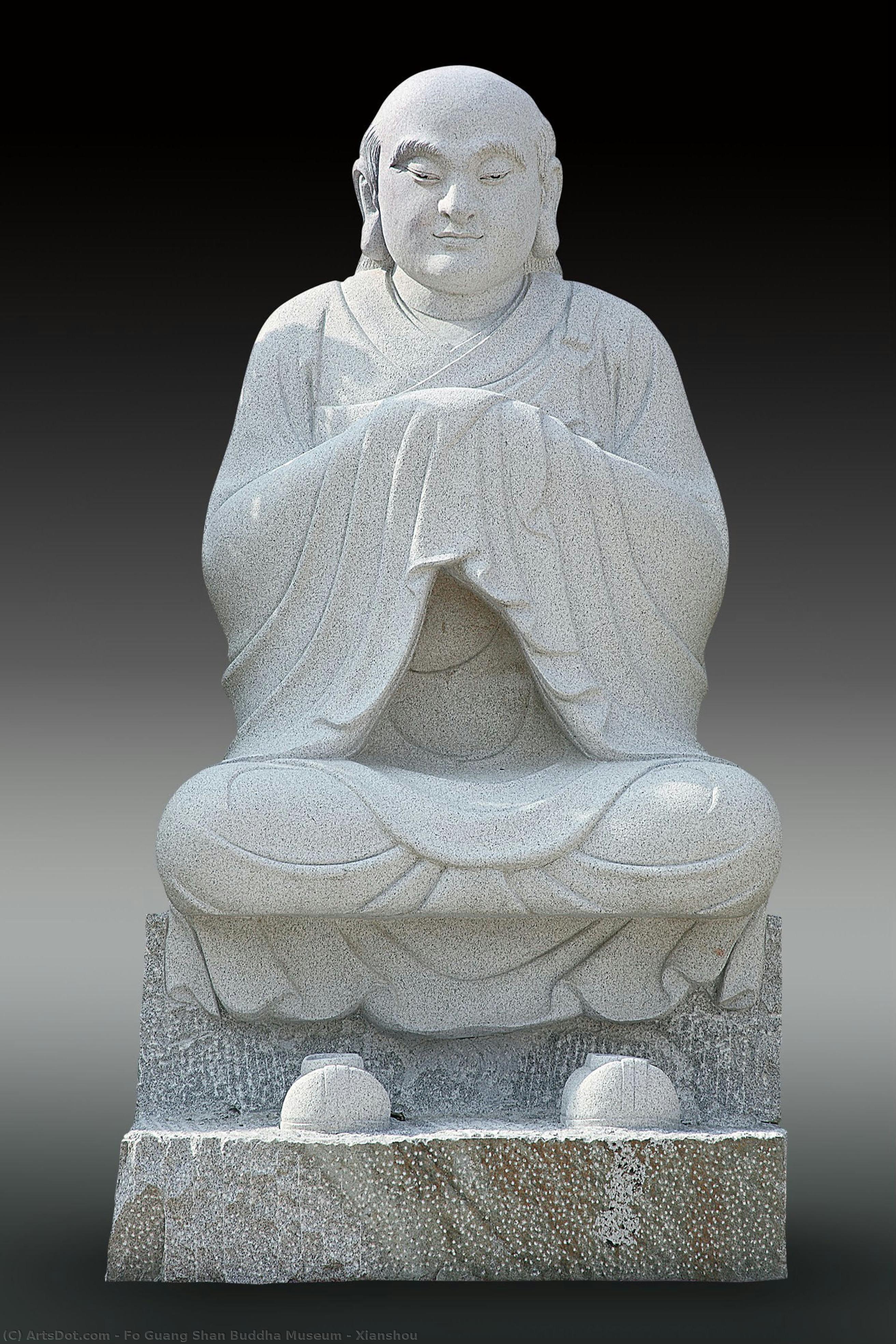
Xianshou: A Portrait of Enlightenment
“Xianshou,” meaning “The Venerable,” is more than just a depiction of a Buddhist monk; it’s an invitation into the heart of Huayan Buddhism, a school renowned for its profound understanding of emptiness and interconnectedness. Originally known as Fazang, this Third Patriarch embodies centuries of meditative practice and philosophical insight, rendered with exquisite detail in a masterful example of traditional Chinese sculpture. The piece, created in 2011 by the Fo Guang Shan Buddha Museum, transcends mere representation, offering a glimpse into the serene composure and deep wisdom associated with this pivotal figure.
The statue’s style is deeply rooted in Northern Song Dynasty artistic traditions, yet infused with the unique aesthetic sensibilities of the Huayan school. Notice the deliberate restraint – no flamboyant gestures or overly ornate robes. Instead, Xianshou sits in the lotus position, a posture signifying both humility and spiritual attainment. His hands are folded in the mudra of *bhumisthiti*, a gesture representing grounding and stability, reflecting his role as a teacher and guide. The drapery is simplified yet elegant, flowing around his form with a sense of quiet dignity. This deliberate minimalism allows the viewer’s attention to focus entirely on the face – an area of intense concentration for any Buddhist practitioner.
The Symbolism of Stone and Serenity
Crafted from meticulously carved stone or marble—the exact material remains unknown, adding to the piece's mystique—Xianshou possesses a remarkable sense of weight and solidity. This physicality is juxtaposed with his ethereal expression, conveying an inner peace that seems to radiate outwards. The serene gaze, framed by slightly furrowed brows, suggests deep contemplation and unwavering focus. The subtle lines etched into his face – the delicate curve of his lips, the slight wrinkles around his eyes – speak volumes about a life dedicated to rigorous self-discipline and spiritual exploration.
Beyond the individual figure, the composition is rich with symbolic meaning. The lotus flower, subtly incorporated within the robes, represents purity, enlightenment, and rebirth. The pedestal itself elevates Xianshou, symbolizing his position as a teacher and guide for all beings. The careful arrangement of the two smaller figures in the background—likely representing disciples or attendants—further emphasizes the importance of community and support on the path to enlightenment.
A Legacy of Dushun and Zhiyan
Xianshou’s significance extends beyond his individual biography; he represents a cornerstone of Huayan Buddhism, founded by Zhiyan and further developed by Dushun. This school is distinguished for its emphasis on *dharma-nature*, the inherent Buddha-nature within all sentient beings, and the concept of “empty interconnectedness,” where all phenomena are interdependent and devoid of independent existence. Xianshou’s teachings, particularly his explanation of the Huayan Ten Profound Gates to Empress Wu—a complex metaphor illustrating the path to enlightenment—demonstrates this school's unique approach to Buddhist philosophy.
The fact that he was a teacher to five emperors underscores his profound influence and respect within Chinese society. Despite his elevated status, Xianshou maintained a simple life, embodying the core values of humility, compassion, and detachment. This dedication to ethical conduct is powerfully conveyed in the statue’s posture and expression.
Bringing Xianshou Home
Reproductions of “Xianshou” offer a beautiful way to introduce the principles of Huayan Buddhism into any space. The meticulous detail and serene atmosphere of this artwork create a focal point that invites contemplation and reflection. Whether displayed in a meditation room, a study, or a living area, Xianshou serves as a constant reminder of the importance of inner peace, wisdom, and compassion—qualities that resonate deeply with viewers across cultures and generations. Consider commissioning a hand-painted reproduction to capture the essence of this iconic figure and bring its profound message into your home.