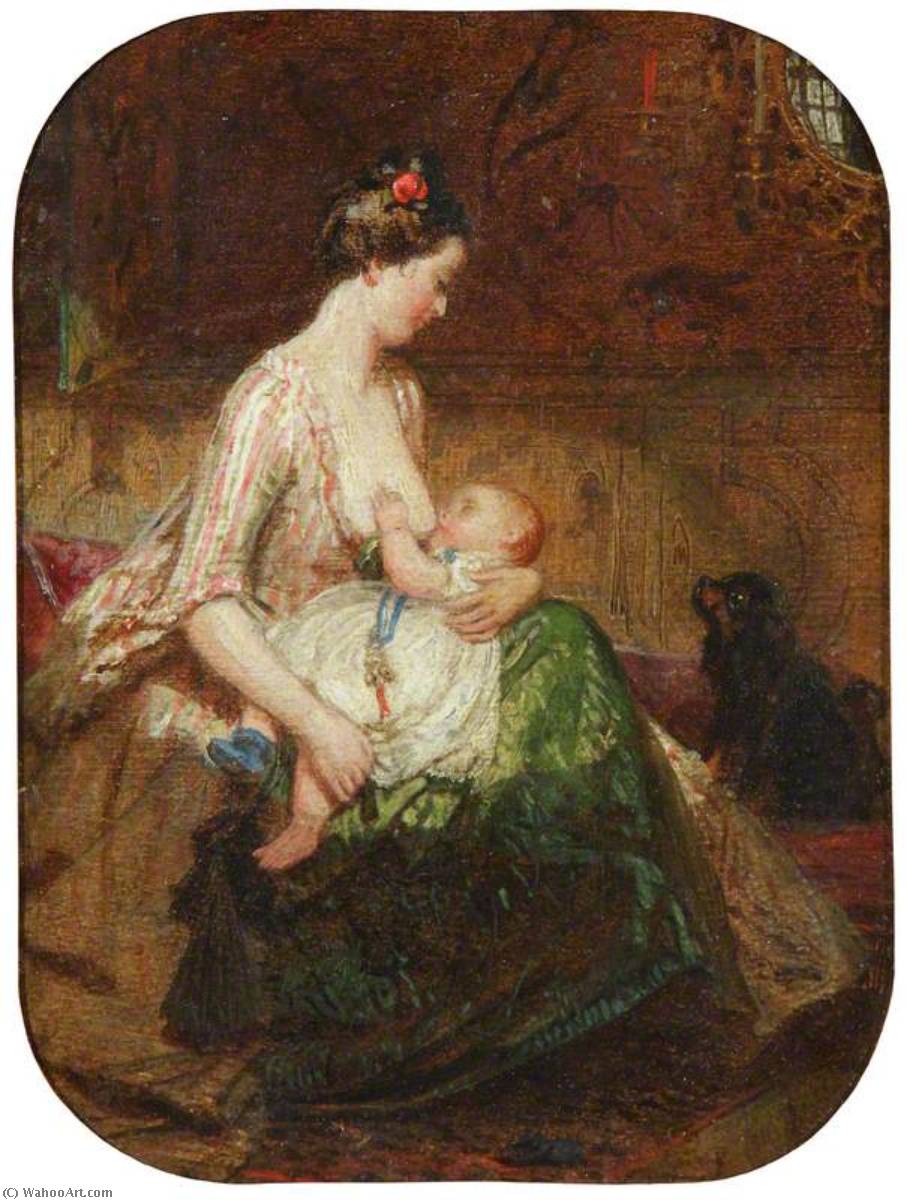
The Young Mother: A Romantic Vision of Domesticity
Ford Madox Brown’s “The Young Mother,” completed in 1848–1849, stands as a cornerstone of Pre-Raphaelite art and embodies the movement's fascination with moral seriousness alongside meticulous observation of natural detail. Painted on canvas measuring 31 x 22 cm, this intimate scene depicts a woman nursing her infant child within a richly furnished interior—a deliberate contrast to the prevailing societal trends of the Victorian era.
- Subject Matter: The painting centers around the profound bond between mother and child, exploring themes of nurture, protection, and vulnerability. Brown’s intention was not merely to depict a familial tableau but to convey a deeper philosophical reflection on the role of women in society and the sanctity of domestic life—a sentiment deeply rooted in Romantic ideals.
- Style: “The Young Mother” firmly establishes itself within the Romantic tradition, characterized by an emphasis on emotion and imagination. However, Brown’s artistic vision transcends simple sentimentalism; he skillfully blends Romantic sensibilities with elements of Victorian realism, resulting in a distinctive aesthetic that prioritizes psychological depth alongside precise rendering.
- Technique: Brown employed oil paints on canvas with remarkable precision—a hallmark of Pre-Raphaelite technique. Visible brushstrokes contribute to the painting’s textural richness and create an illusion of palpable warmth and luminosity. The artist meticulously captured the subtleties of skin tones, fabrics, and textures, demonstrating a mastery of chiaroscuro (light and shadow) that enhances the dramatic impact of the composition.
- Historical Context: Created during a period marked by significant social upheaval—the Industrial Revolution reshaping Britain’s landscape and economy—Brown's artwork reflects anxieties about societal progress alongside an enduring appreciation for traditional values. The painting served as a visual commentary on the changing role of women in Victorian society, questioning the prevailing notion that domesticity was solely confined to female responsibilities.
- Symbolism: Beyond its depiction of motherhood, “The Young Mother” is laden with symbolic significance. The dark dog lurking in the background represents societal pressures and anxieties—a subtle reminder of the challenges faced by women striving for independence amidst restrictive social conventions. Furthermore, the carefully arranged drapery and furnishings contribute to a mood of quiet contemplation and melancholy, inviting viewers to ponder on themes of innocence, compassion, and enduring human connection.
The painting’s palette leans towards warm earth tones—ochres, siennas, and umbers—accentuated by touches of cooler blues and greens. The subdued lighting emanating from an unseen source above casts dramatic shadows that sculpt the figures and imbue the scene with a palpable sense of intimacy. Perspective is somewhat flattened, typical of smaller paintings, yet Brown skillfully employs atmospheric haze to create depth and reinforce the painting’s emotional resonance.
“The Young Mother” continues to captivate audiences today due to its masterful blend of artistic innovation and humanist compassion—a testament to Ford Madox Brown's enduring legacy as one of Pre-Raphaelite England’s most influential artists.