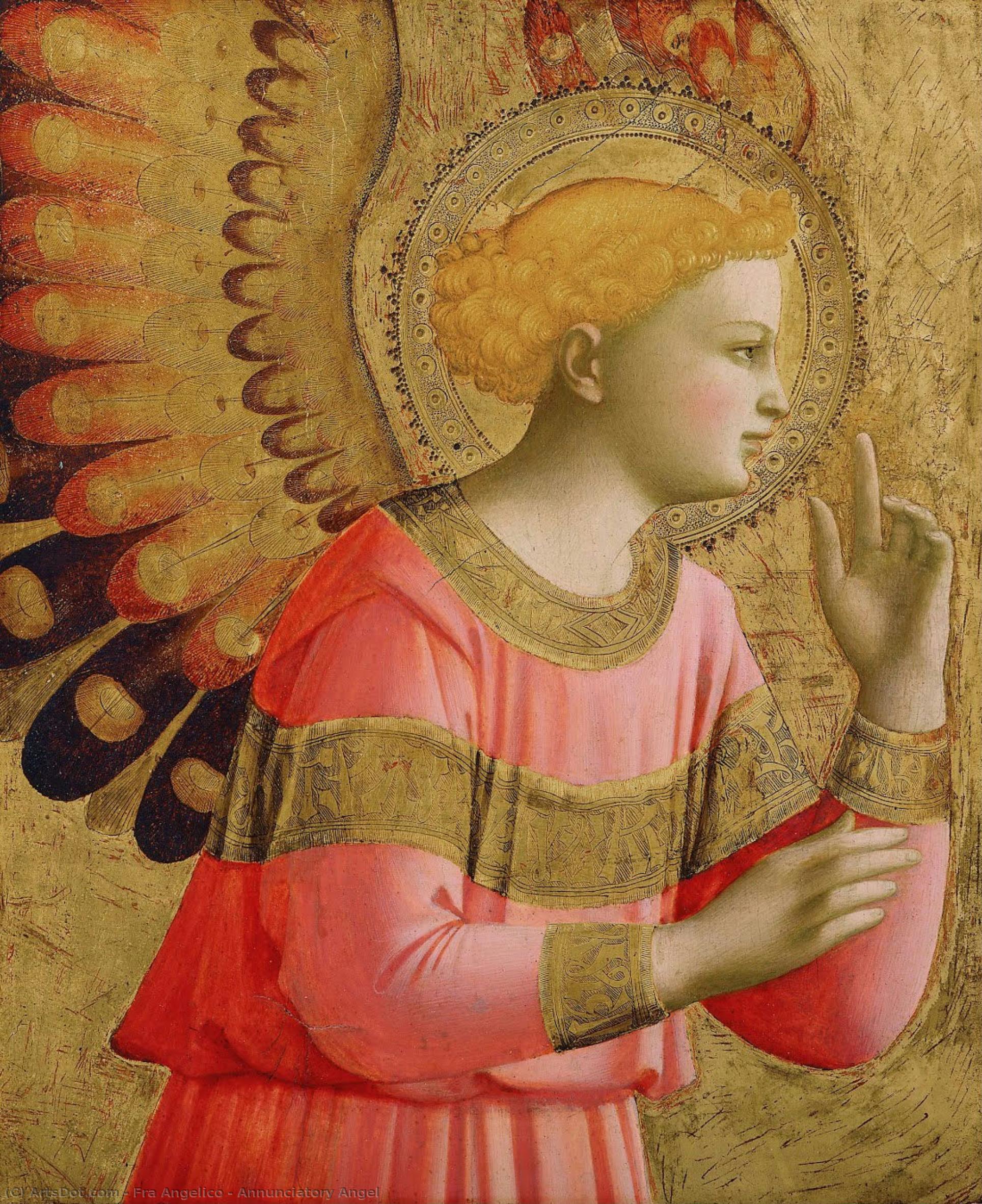
Das Flüstern des Engels: Eine Betrachtung über Fra Angelicos "Annunciatory Angel"
Fra Angelico’s “Annunciatory Angel” – currently residing within the esteemed Detroit Institute of Arts – is more than simply a religious painting; it's an immersion into a realm of profound spiritual contemplation. The work, shrouded in a gentle mystery surrounding its precise dating and dimensions, immediately captivates with its ethereal quality and the palpable sense of hushed reverence that permeates the scene. It’s a testament to Fra Angelico’s extraordinary ability to translate theological concepts into visual poetry, capturing not just an event but the very essence of divine revelation.
Die stille Botschaft: Symbolik und Komposition
At first glance, the painting depicts a serene encounter between the angel Gabriel and Mary. The angel, rendered with exquisite delicacy, extends his hand towards Mary’s lips, a gesture that has been interpreted in various ways – some suggest he is silencing her, preventing her from speaking prematurely about the miraculous conception; others believe he's imparting a secret message, a divine instruction too profound for immediate articulation. The positioning of the angel and Mary creates a powerful dynamic: she stands poised, receptive, while he offers a carefully guarded revelation. The background, subtly rendered with a simple chair – a symbol of earthly comfort and domesticity – anchors the scene within a recognizable space, yet simultaneously emphasizes the transcendent nature of the event unfolding before us.
Technik und Materialität: Tempera auf Holz
Fra Angelico’s mastery lies not only in his composition but also in his meticulous technique. The painting is executed in tempera on panel, a medium known for its luminosity and ability to retain vibrant colors over centuries. This careful choice of material contributes significantly to the work's luminous quality – the colors seem to glow from within, creating an almost otherworldly effect. Observe closely the layering of pigments, the delicate gradations of tone, and the precise detailing of the angel’s wings and robes. The artist’s dedication to his craft is evident in every brushstroke, a testament to his commitment to both spiritual truth and artistic excellence. The panel itself, likely crafted with great care, adds another layer of tactile beauty to the piece.
Historischer Kontext und der Künstler: Fra Angelico im Kontext des Spätmittelalters
To fully appreciate “Annunciatory Angel,” it’s crucial to understand the historical context in which it was created. Fra Angelico, born Giovanni da Fiesole around 1395, emerged during a period of profound religious fervor within the Italian Renaissance. He initially trained as a scribe, meticulously illuminating manuscripts – a demanding profession that honed his eye for detail and appreciation for beauty. His subsequent entry into the Dominican Order marked a dramatic shift in his career, leading him to embrace painting as a means of expressing his faith. His work during this period is characterized by its serene spirituality, its emphasis on humility, and its profound connection to the lives of Christ and Mary. “Annunciatory Angel” embodies these core tenets perfectly, reflecting the artist’s deep-seated devotion and his unwavering belief in the transformative power of grace.
Emotionale Wirkung und Interpretation: Ein Fenster zur Seele
Ultimately, "Annunciatory Angel" transcends its purely representational function. It's a painting that invites contemplation, prompting viewers to consider themes of faith, obedience, and divine revelation. The quiet intensity of the scene, coupled with the angel’s gesture, evokes a sense of profound mystery and spiritual yearning. It is a work that speaks directly to the soul, offering a glimpse into the heart of Christian belief and reminding us of the enduring power of grace—a sentiment that continues to resonate deeply with audiences today. A reproduction from ArtsDot.com allows you to bring this timeless masterpiece into your own space, fostering a daily connection to its profound beauty and spiritual depth.