The Enigma in Profile: A Renaissance Encounter
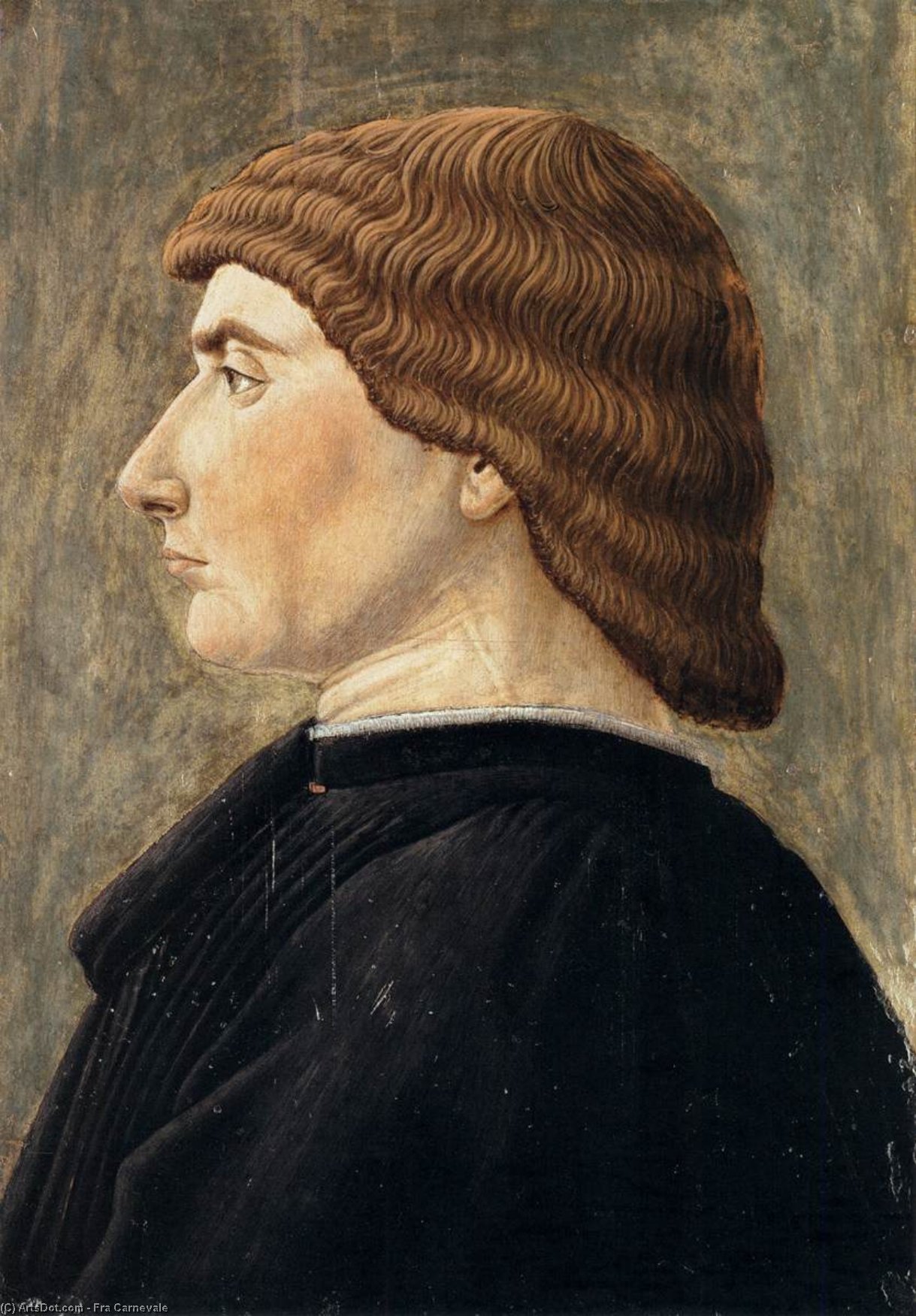
In the quietude of the Early Renaissance, few images command the viewer's attention with such focused intensity as Fra Carnevale’s Portrait of a Man. Painted around 1460, this masterpiece serves as a profound window into the soul of the Quattrocento, capturing a moment of eternal stillness. The subject is presented in a striking profile, a choice that immediately strips away the distractions of the external world and forces an intimate confrontation with the sitter's features. Set against a deep, shadowy background, the man’s face emerges with a startling clarity, as if stepping out from the very mists of history. This deliberate use of negative space does more than just highlight the subject; it creates a vacuum of silence around him, inviting collectors and art enthusiasts to contemplate the dignity and gravity of a life lived during one of humanity's most transformative eras.
The technical brilliance of Carnevale is revealed through a meticulous application of glazing, a technique where thin, translucent layers of oil paint are built upon one another to create an incomparable sense of depth. As light interacts with these microscopic layers, the skin appears to possess a lifelike warmth, and the voluminous mane of the subject’s hair takes on a tactile, sculptural quality. Every strand seems to hold its own shadow and highlight, rendered with brushstrokes so precise they mirror the mathematical rigor of the era's architectural principles. For those looking to adorn a sophisticated interior, this painting offers a masterclass in texture and tonal balance, providing a focal point that is both visually rich and intellectually stimulating.
A Symphony of Humanism and Geometry
Beyond its surface beauty, the portrait is a testament to the humanist ideals flourishing in the court of Federico da Montefeltro in Urbination. During this period, the pursuit of anatomical accuracy and the application of geometric order were seen as reflections of divine harmony. Carnevale subtly integrates these concepts, using soft ovals for the mouth and precise circles to define the eyes, creating a composition that feels both organic and architecturally sound. This marriage of the natural and the mathematical imbues the work with a sense of permanence; the man is not merely a fleeting figure, but a monument to human intellect and character.
To possess or display a reproduction of this work is to invite the contemplative spirit of the Renaissance into a modern space. The subdued palette—rich in earth tones and deep shadows—complements a wide array of interior aesthetics, from classical traditionalism to contemporary minimalist settings. It does not merely decorate a wall; it anchors a room with its weight of history and its quiet, commanding presence. For the discerning decorator or art lover, this portrait remains an enduring symbol of the strength, mystery, and profound dignity that define the human experience.