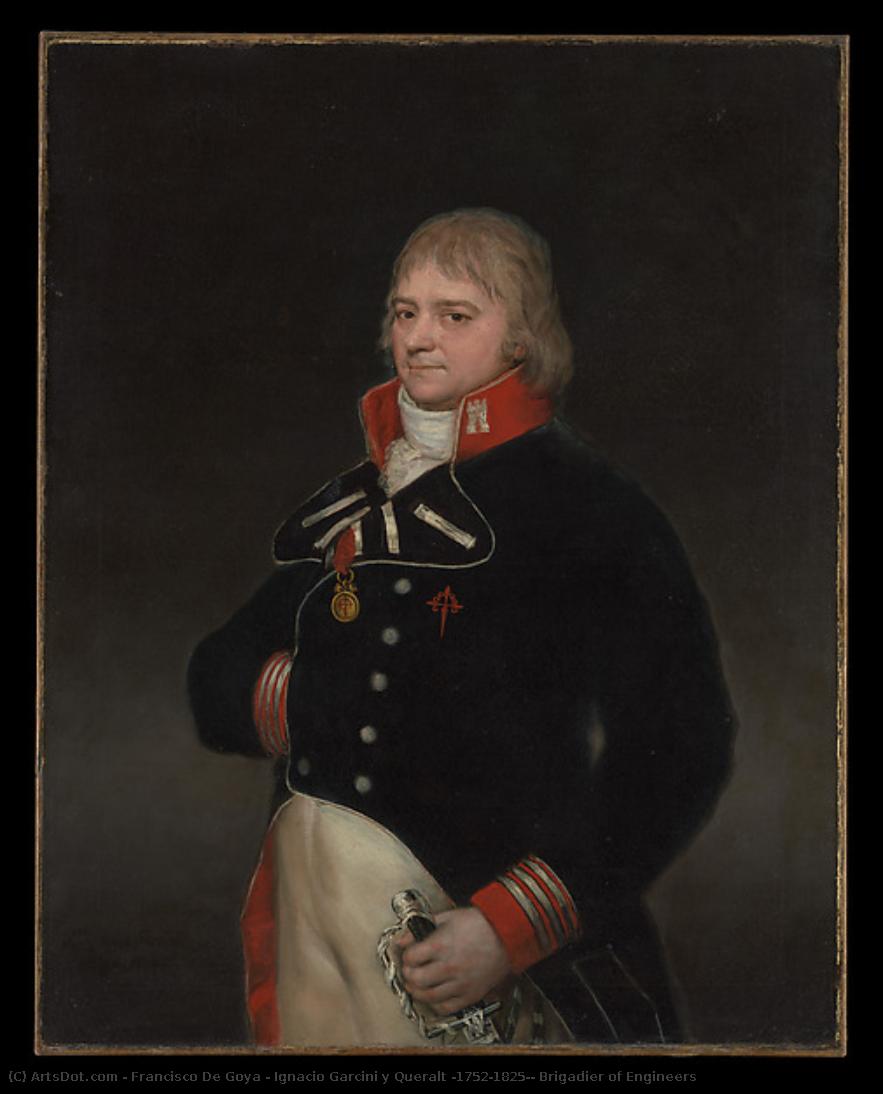
Ignacio Garcini y Queralt (1752–1825), Brigadier of Engineers
Francisco de Goya’s portrait of Ignacio Garcini y Queralt stands as a testament to the artistic sensibilities of the Spanish Romantic era, capturing not merely an individual likeness but also the spirit of his time—a period marked by political upheaval and intellectual ferment. Painted in 1804 during Napoleon's invasion of Spain, this artwork transcends mere representation; it delves into themes of honor, duty, and the anxieties surrounding national identity.
- Subject Matter: The portrait depicts Ignacio Garcini y Queralt, a Brigadier of Engineers serving in the Spanish War Department. He is portrayed in formal military attire against a muted, neutral backdrop—a deliberate choice that emphasizes his status and authority within the hierarchy of power.
- Style: Goya’s style embodies the Romantic movement's preoccupation with emotion and dramatic expression. While adhering to traditional portrait conventions, he subtly infuses the image with dynamism through compositional elements like the slight off-center positioning of Garcini’s figure and the careful arrangement of his uniform decorations.
- Technique: Executed in oil on canvas, Goya employs a masterful brushwork that conveys texture and depth—particularly noticeable in the folds of his jacket and the rendering of skin tones. The artist's meticulous attention to detail contributes to an overall polished finish, reflecting the high standards of artistic craftsmanship prevalent during the period.
Historical Context: Napoleon’s invasion triggered a profound crisis within Spain, galvanizing resistance movements and fostering a fervent desire for national unity. Goya's depiction of Garcini reflects this sentiment—the prominent Order of Santiago badge symbolizes honor and nobility, emblems deeply intertwined with the values championed by the Spanish people during the war years. The inclusion of the red cross further underscores the importance of religious faith in shaping moral convictions.
- Composition: The portrait follows a classic three-quarter pose, allowing for a comprehensive portrayal of Garcini’s facial features and uniform. The gaze directs the viewer's attention towards his chest area where the insignia of distinction are prominently displayed—a visual cue reinforcing his position as a respected military officer.
- Color Palette: Dominant hues include reds, whites, blacks, and golds—colors that convey both grandeur and solemnity. The scarlet jacket contrasts sharply with the ivory shirt beneath, creating visual interest while simultaneously symbolizing courage and resilience. Subtle variations in skin tone add realism to the portrait, enhancing its emotional impact.
Symbolic Elements: Beyond mere likeness, Goya’s artwork communicates deeper symbolic meanings. The puffed-up posture of Garcini suggests pride—perhaps even arrogance—a characteristic that resonates with anxieties surrounding social status and political power during a turbulent era. Simultaneously, the portrait embodies the Romantic ideal of portraying human dignity amidst adversity—a timeless message conveyed through masterful artistic technique and evocative visual language.
Emotional Impact: Viewing Goya’s portrait evokes contemplation on themes of honor, duty, and resilience—qualities celebrated by Spanish society during Napoleon's occupation. The artist’s subtle brushwork captures the psychological complexity of his subject, inviting viewers to engage with the profound emotional resonance inherent in this iconic image of the Romantic period. It serves as a poignant reminder of a pivotal moment in Spanish history and artistic achievement.