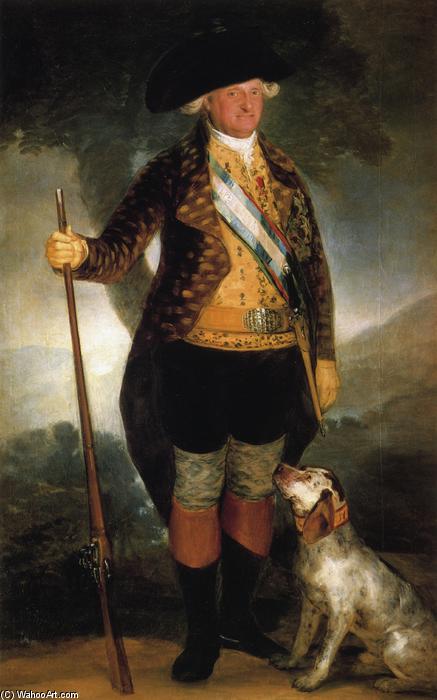
King Carlos IV in Hunting Costume
Francisco de Goya, one of Spain’s most celebrated artists, gifted us with a portrait that transcends mere representation—a captivating glimpse into the grandeur and anxieties of his era:
King Carlos IV in Hunting Costume. Painted in 1799, this artwork isn’t simply a depiction of royalty; it's a masterful exploration of power, tradition, and the creeping shadow of uncertainty that permeated Spanish society during the Napoleonic Wars. Let’s delve deeper into the intricacies of Goya’s vision and its enduring significance.
Artistic Style and Period
Goya’s approach to painting firmly establishes him within the Romantic movement—a reaction against Neoclassicism's rigid formalism and a fervent embrace of emotion and imagination. Executed in oil on canvas,
King Carlos IV in Hunting Costume utilizes rich pigments and textured brushstrokes to convey a palpable sense of atmosphere—a deliberate departure from the polished surfaces favored by earlier artistic styles. The artist’s sensitivity to light and shadow contributes powerfully to the painting's dramatic impact.
Composition and Details
Measuring 210 x 130 cm,
King Carlos IV in Hunting Costume resides within the Palacio Real (Madrid, Spain), a testament to Goya’s position at the heart of Spanish artistic patronage. The central figure is King Carlos IV himself, portrayed in opulent hunting attire—a scarlet coat adorned with a cape, a feathered hat proclaiming his royal status. He holds a rifle poised for action, symbolizing both authority and vigilance against external threats. Beside him stands a loyal dog, representing companionship and unwavering devotion. Subtle additions to the scene – two figures positioned discreetly off-center – heighten the composition’s dynamism and invite contemplation about the broader context of the time.
Artistic Significance
Goya's genius lies in his ability to fuse portraiture with landscape—a technique that elevates the subject beyond mere likeness, embedding him within a symbolic realm. The serene backdrop of trees and foliage serves as a counterpoint to the king’s assertive posture, suggesting a harmonious balance between regal dignity and natural tranquility. However, beneath this surface serenity lurks an unspoken awareness of impending danger – mirroring the anxieties gripping Spain during Napoleon's invasion. Goya’s meticulous attention to detail—from the folds of fabric to the texture of the dog’s fur—underscores his commitment to realism while simultaneously conveying profound emotional depth.
Other Notable Works by Francisco De Goya
Goya’s prolific output encompasses a diverse range of artistic endeavors, cementing his legacy as one of Spain's greatest painters. Among his most celebrated masterpieces are
The Duke of Osuna and his Family, a psychologically astute portrayal of aristocratic life;
The Fair at Madrid, capturing the vibrant energy and social complexities of Madrid’s annual festival; and
Queen María Luisa Wearing a Mantilla, an exquisite depiction of royal elegance and grace. For those seeking to immerse themselves in Goya’s artistic universe or explore similar stylistic explorations,
The Museum Escuelas Pias De España Tercera Demarcacion (Madrid, Spain) offers a remarkable opportunity to encounter Goya’s oeuvre firsthand. At
ArtsDot, we pride ourselves on offering meticulously crafted oil painting reproductions of iconic artworks—allowing you to bring the brilliance of Goya's vision into your home.