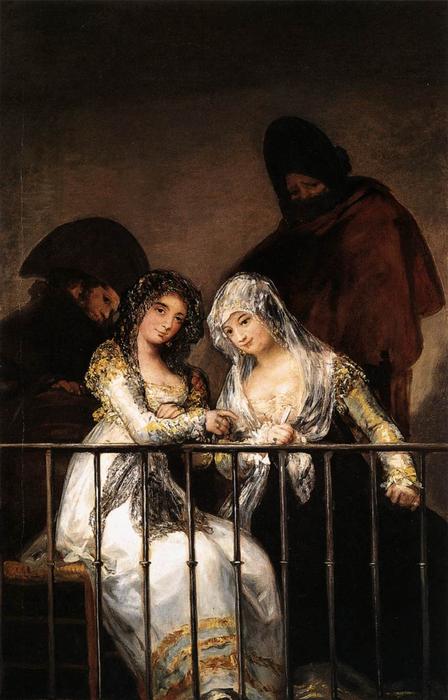
Ein Meisterwerk von Francisco Goya: Majas auf einem Balkon zeigt drei Frauen im Gespräch und wird im Metropolitan Museum of Art bewundert. Romantik und Realismus verschmelzen in diesem ikonischen Gemälde.
Francisco Goya (1746-1828): Spanien's Meister der Romantik! Bekannt für Porträts, düstere Satire und "Kriege". Ein Schlüssel zum modernen Kunstgeschichte.
Entdecken Sie das Metropolitan Museum of Art! Tausende Jahre Kunst aus aller Welt – von antiken Artefakten bis zu Meisterwerken. Ein Muss für Kunstliebhaber!
Majas on a Balcony: A Study in Romantic Intrigue
Francisco de Goya’s “Majas on a Balcony,” completed between 1808 and 1814 amidst the turbulent backdrop of Napoleon’s invasion of Spain, transcends mere visual representation; it embodies the very spirit of Romanticism—a movement characterized by emotional intensity, fascination with darkness, and an exploration of the human psyche. Held prominently in the Metropolitan Museum of Art, this monumental oil canvas (193 x 124 cm) offers a glimpse into Goya’s masterful blend of realism and imaginative vision, cementing its place as one of his most enduring masterpieces.
The Painting: A Window Into Intimacy
At first glance, “Majas on a Balcony” presents a deceptively serene scene. Three women occupy the balcony railing—a commonplace element in Spanish domestic life—engaged in conversation or simply basking in the afternoon sun. However, beneath this tranquil surface lies a profound complexity. The artist’s meticulous attention to detail—the folds of fabric, the subtle expressions on their faces, the carefully positioned figures—creates an atmosphere thick with unspoken desires and veiled secrets. One woman is draped in a veil, immediately establishing an aura of mystery that draws the viewer's gaze inwards. Her attire speaks volumes about her social standing – opulent silks and lace indicative of aristocratic lineage. The other two women are equally richly adorned, reflecting the prevailing fashions of the Napoleonic era.
Artistic Style and Technique
Goya’s stylistic evolution is palpable throughout “Majas on a Balcony.” Departing from the decorative conventions of Rococo—the favored style of his early career—he embraces Romanticism's emphasis on emotional expression and dramatic contrasts. The painting utilizes chiaroscuro—the interplay between light and shadow—to sculpt the figures, lending them an almost sculptural quality. Goya’s masterful brushwork captures the textures of fabric and skin with remarkable accuracy, conveying a palpable sense of immediacy. Furthermore, the muted palette—dominated by warm browns and ochres—contributes to the painting's melancholic mood, mirroring the anxieties and uncertainties of the era. The artist skillfully employs perspective to create depth and dimension, guiding the viewer’s eye across the composition.
Historical Context and Significance
“Majas on a Balcony” emerged during a period of profound political upheaval in Spain—the Peninsular War against Napoleon's forces. Goya himself witnessed firsthand the horrors of conflict, experiences that profoundly shaped his artistic sensibility. The painting serves as a commentary on societal hypocrisy and moral decay—themes prevalent throughout Goya’s oeuvre. Unlike many portraits commissioned by the royal family during this time, which aimed to portray grandeur and stability, “Majas on a Balcony” confronts viewers with uncomfortable truths about human nature. It is considered one of Goya's most psychologically astute works, reflecting his fascination with the darker aspects of human experience.
Relevance in Modern Art
Goya’s influence extends far beyond the Romantic period, resonating throughout subsequent artistic movements. Artists such as Édouard Manet and René Magritte have drawn inspiration from “Majas on a Balcony,” recognizing its innovative use of perspective and its exploration of psychological complexities. The painting continues to captivate audiences today with its haunting beauty and its enduring message about human vulnerability—a testament to Goya’s genius as both an artist and a humanist. Its presence in the Metropolitan Museum of Art ensures that this iconic image will continue to inspire generations of art lovers for years to come.