Francisco José de Goya y Lucientes: A Shadowed Vision of Spain
Francisco José de Goya y Lucientes (1746–1828) stands as an unparalleled figure in Spanish art history, a painter whose oeuvre transcends mere representation to embody the anxieties and profound emotional depth characteristic of Romanticism. Born in Fuendetodos, Aragon, his artistic journey began humbly but swiftly ascended to extraordinary heights, culminating in a legacy that continues to captivate audiences worldwide. Goya’s distinctive style—marked by an unflinching gaze at human suffering and societal injustice—established him as the last bastion of the Old Masters while simultaneously foreshadowing the expressive innovations of the modern era.
- Early Years & Training: From his formative years under José Luzán y Martinez, Goya honed his skills in traditional techniques before immersing himself in Neoclassicism with Anton Raphael Mengs. This initial exposure instilled a mastery of form and composition that would permeate his subsequent works.
- Court Painter & Rococo Influence: His appointment as court painter to King Carlos IV marked the beginning of a prolific period characterized by portraits of the Spanish aristocracy—often imbued with subtle rococo ornamentation—and elaborate tapestry cartoons designed for the royal palace.
- The Dark Turn: Despite his initial success, Goya experienced a debilitating illness in 1793 that profoundly impacted his artistic output, propelling him toward a darker aesthetic and exploring themes of madness and decay.
“Y se le quema la Casa”: Technique & Emotional Resonance
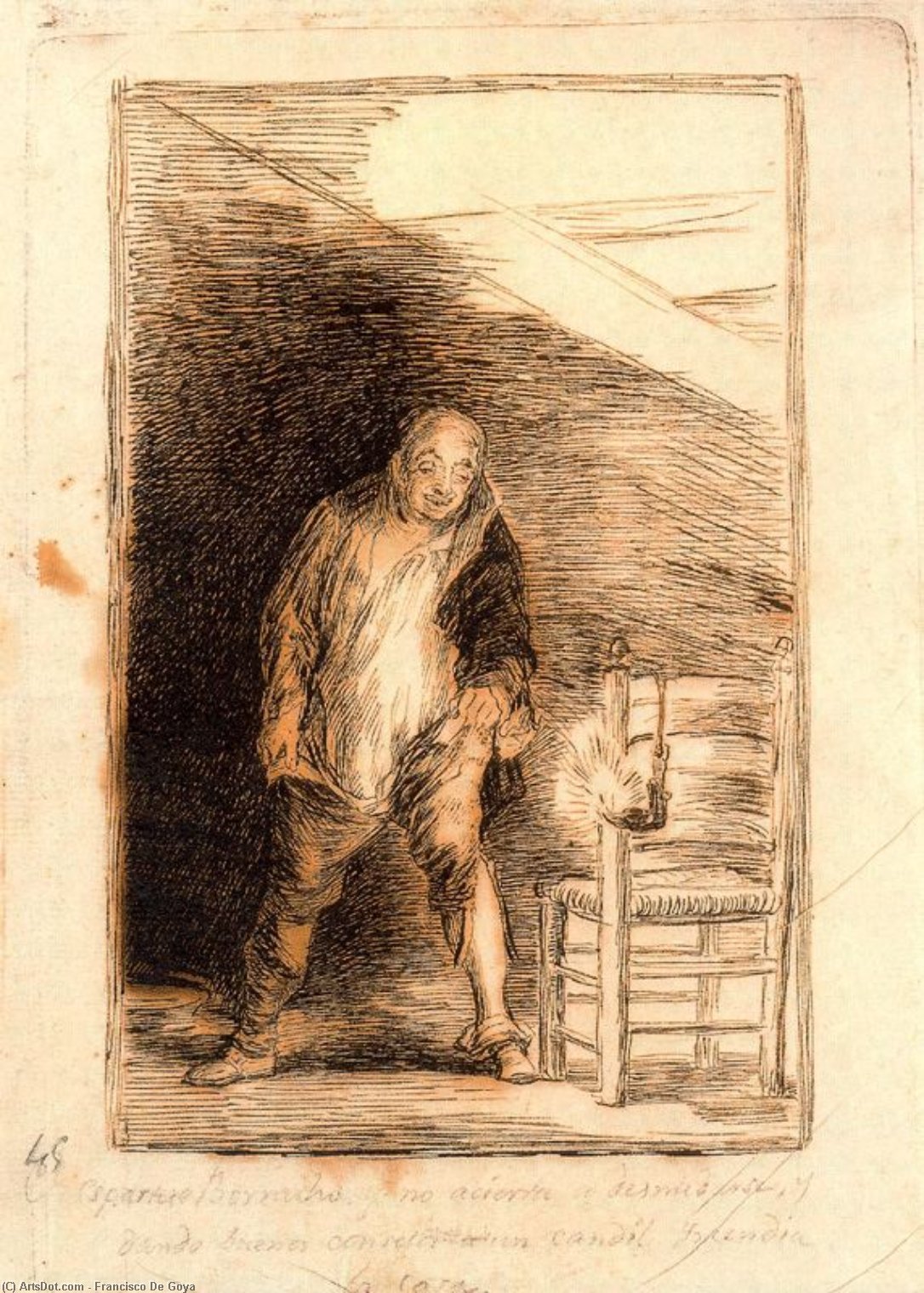
“Y se le quema la Casa” (“And the house is burning down on him”), etched in 1799, exemplifies Goya’s masterful command of tonal variation—a technique central to his artistic vision. He skillfully builds form and texture through meticulous cross-hatching and stippling, creating an illusion of depth that transcends mere visual depiction. The artist doesn't aim for spectacle; instead, he presents a quiet desperation that resonates with universal human experience. This deliberate choice reflects Goya’s engagement with the turbulent social and political landscape of Spain during his lifetime—a period marked by war, oppression, and intellectual ferment.
- Cross-Hatching & Stippling: The intricate patterns created through crosshatching and stippling imbue the image with a palpable sense of texture and volume, mirroring the psychological state of the solitary figure depicted.
- Monochromatic Palette: Goya’s masterful use of a monochromatic palette—primarily shades of grey—amplifies the emotional impact of the scene, focusing attention on the subject's slumped posture and melancholic expression.
- Symbolic Lighting: The sparse illumination casts dramatic shadows that heighten the sense of isolation and vulnerability, reinforcing the artwork’s thematic concerns about suffering and despair.
Historical Context & Societal Critique
“Y se le quema la Casa” is inextricably linked to Goya’s broader engagement with the Disasters of War series—a monumental undertaking that documented the horrors of Napoleonic invasion and its aftermath in Spain. Like these prints, it serves as a searing indictment of societal ills and an empathetic portrayal of human vulnerability during times of crisis. The title itself—“And the house is burning down on him”—speaks volumes about the subject’s helplessness against overwhelming forces—a motif recurring throughout Goya's oeuvre.
- The Napoleonic Wars: Goya witnessed firsthand the devastation wrought by Napoleon’s armies, fueling his artistic preoccupation with themes of violence and oppression.
- Social Commentary: The image subtly critiques the complacency and moral failings of those in positions of power—a characteristic element of Goya's artistic ethos.
- Universal Themes: Beyond its historical context, “Y se le quema la Casa” explores timeless themes of loneliness, despair, and the fragility of human existence.
A Timeless Legacy & Emotional Impact
“Y se le quema la Casa” remains a profoundly evocative artwork—a testament to Goya’s ability to transform observation into emotional expression. Its stark simplicity belies its depth of meaning, inviting viewers to confront their own anxieties about mortality and the burdens of responsibility. The work transcends stylistic conventions, establishing itself as an enduring symbol of human suffering and resilience—a poignant reminder that art possesses the capacity to illuminate even the darkest recesses of our inner lives. It is precisely this timeless resonance that secures Goya’s place among the greatest artists of all time.