A Celestial Handover: The Grace of Rococo Narrative
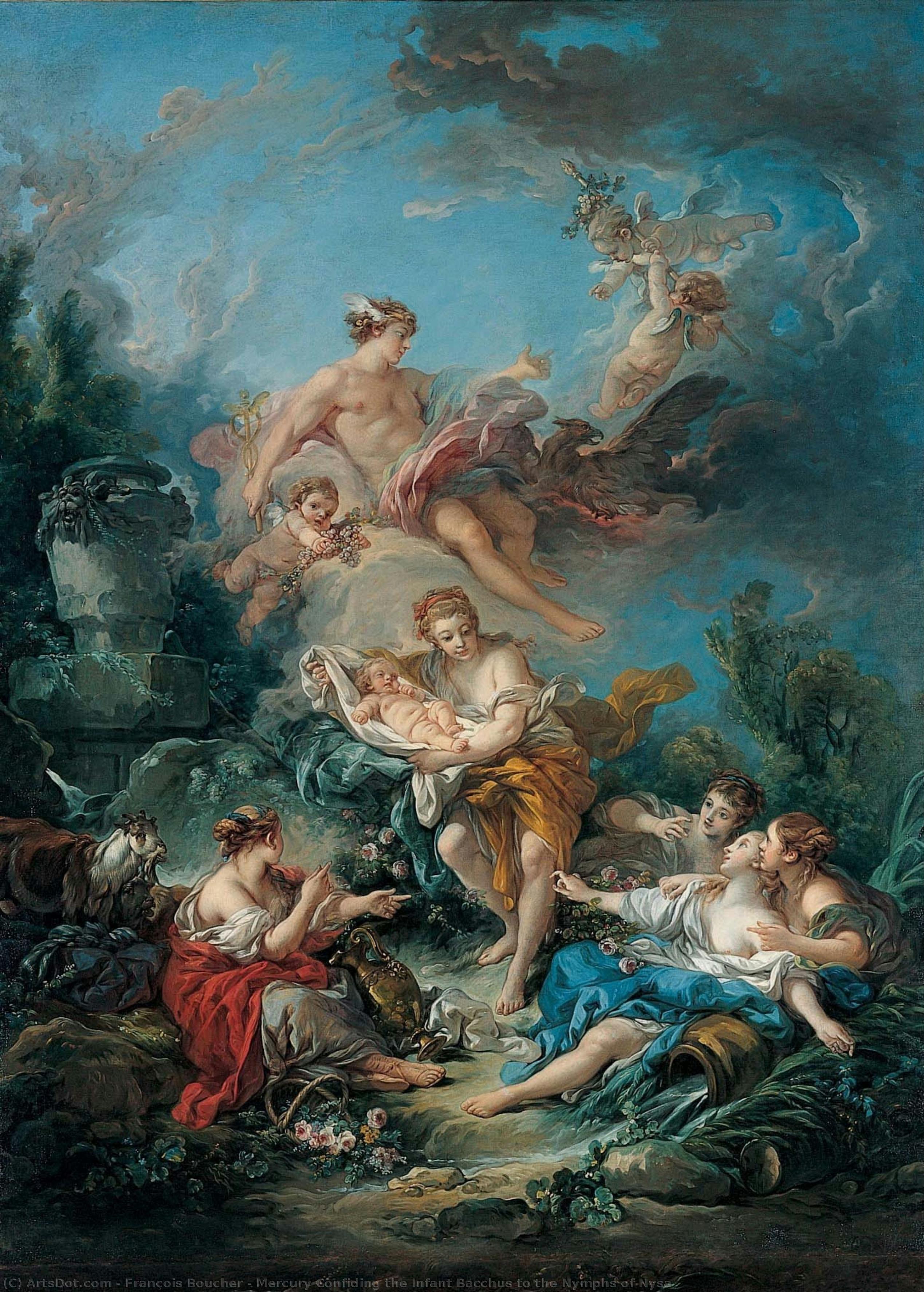
In the luminous realm of François Boucher’s “Mercury Confiding the Infant Bacchus to the Nymphs of Nysa,” the boundaries between the divine and the earthly dissolve into a dreamlike pastoral vision. Painted before 1738, this masterpiece serves as a breathtaking window into the heart of the Rococo era, capturing a moment of profound mythological significance with unparalleled elegance. The scene recounts a pivotal chapter from Ovid’s Metamorphoses: the survival of the infant Bacchus. Following the tragic death of his mother, Semele, the god Jupiter sought to preserve his son by shielding him within his own divine form before entrusting the child to the care of the nymphs. In Boucher's hands, this high-stakes drama is transformed into a scene of serene tenderness, where the weight of destiny is lightened by the soft touch of a protector.
The composition is a masterclass in balanced movement and emotional warmth. At the center of this celestial exchange stands Mercury, the messenger god, whose posture radiates both strength and benevolence as he cradled the infant Bacchus. Surrounding him, the nymphs of Nysa emerge from the lush, verdant landscape like spirits of the forest, their faces alight with wonder and maternal instinct. This interaction creates a rhythmic flow across the canvas, guiding the viewer's eye through a tapestry of soft limbs, flowing drapery, and the gentle greenery of a primordial Eden. For the collector or designer, this painting offers more than mere decoration; it provides a focal point of narrative depth that invites contemplation on themes of guardianship and the cyclical nature of life.
The Artistry of Light and Pastel Splendor
Boucher’s technical prowess is nowhere more evident than in his command over the Rococo palette. Eschewing the heavy, somber tones of the preceding Baroque period, he embraces a spectrum of delicate pastels—shimmering blues, tender pinks, and ethereal greens—that imbue the work with an almost pearlescent glow. His technique involves meticulous glazing, a process that allows light to penetrate successive layers of paint, creating a luminous surface that seems to radiate from within the canvas itself. This luminosity is essential to the painting's emotional impact, fostering an atmosphere of dreamy serenity and idealized beauty that feels both timeless and otherworldly.
The brushwork, while precise in its depiction of textures—from the soft skin of the infant to the heavy silk of divine robes—possesses a fluid, painterly quality that prevents the scene from feeling static. Every stroke contributes to the sense of airiness and movement, making the lush hillside feel alive with the breath of the gods. For those seeking to infuse an interior space with sophistication, a high-quality reproduction of this work brings with it this unique ability to brighten a room, offering a sense of airy opulence and classical refinement that complements both traditional and contemporary luxury settings.
Symbolism and the Legacy of the Rococo Spirit
Beyond its visual splendor, the painting is rich with symbolic resonance. The presence of the eagle, often seen bearing the lightning bolts of Jupiter, serves as a subtle reminder of the divine power that orchestrated this miraculous rescue. The nymphs themselves are not merely background figures; they embody the primordial forces of fertility and nature, representing the nurturing environment necessary for greatness to grow. This interplay between the powerful (Mercury and the legacy of Zeus) and the gentle (the nymphs and the infant) creates a profound tension that is resolved through the beauty of the composition.
To possess or display such a work is to engage with the very essence of 18th-century French culture. Boucher, as the Premier Peintre du Roi, defined the aesthetic tastes of an era characterized by pleasure, elegance, and a celebration of the idyllic. This painting remains a quintessential emblem of that spirit, offering a sophisticated escape into a world where even the most turbulent myths are resolved through grace and beauty. It is an enduring choice for the discerning eye, promising to bring a sense of historical prestige and poetic enchantment to any curated collection.