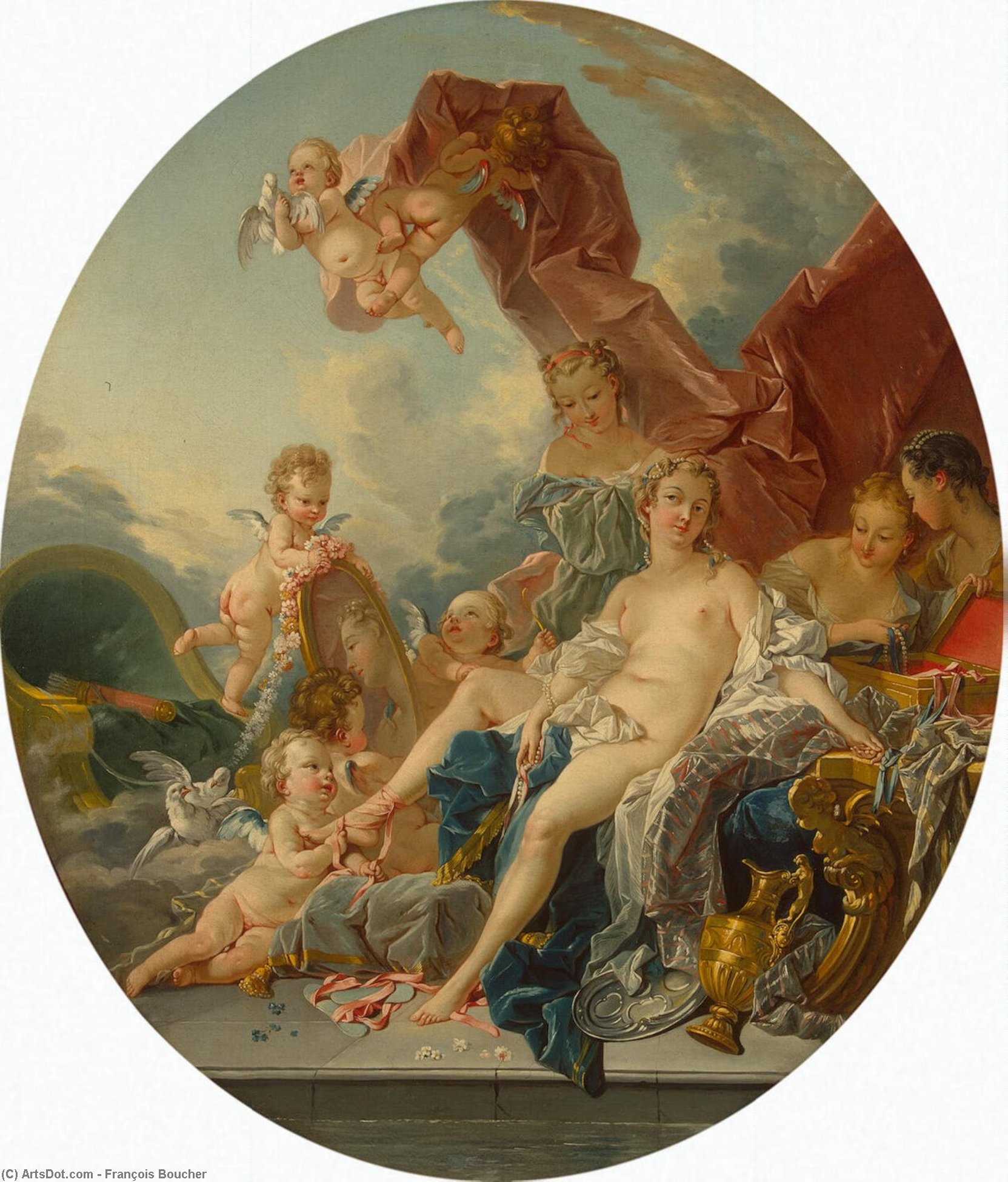
Experience Rococo sensuality with Boucher's Toilet of Venus; explore this masterpiece of 18th-century elegance and grace to bring art home.
François Boucher (1703-1770): Meister des Rokoko! Entdecken Sie seine sinnlichen Gemälde, mythologischen Szenen & idealisierten Landschaften – ein Fenster zum französischen Adel.
Entdecken Sie die Kunstschätze des weltberühmten Eremitage Museums in St. Petersburg! Renaissance bis Moderne – ein kulturelles Erlebnis erwartet Sie.
A Symphony of Sensuality and Classical Grace: Exploring François Boucher’s “Toilet of Venus”
François Boucher's "Toilet of Venus," completed in 1751, stands as a quintessential emblem of Rococo artistry—a movement characterized by opulent decoration, pastel hues, asymmetrical compositions, and an unabashed celebration of beauty and pleasure. Commissioned for Madame de Pompadour’s private sanctuary within her Parisian residence, this monumental oil painting transcends mere portraiture; it embodies the very ethos of aristocratic taste during Louis XV's reign. The artwork is a testament to Boucher’s mastery of technique and his profound understanding of artistic conventions rooted in classical ideals.
The Architectural Echoes of Antiquity
Boucher’s inspiration stemmed directly from the architectural principles championed by Palladio and Michelangelo Buonarroti—specifically, the Tempietto, a small circular church situated in Rome's Piazza San Pietro Montorio. As historians have meticulously documented, Boucher deliberately incorporated elements reminiscent of Roman temples into his canvas, mirroring the building’s structural framework. Columns adorned with Corinthian capitals ascend gracefully towards the vaulted ceiling, subtly reinforcing the impression of grandeur and stability amidst the delicate ornamentation. This conscious reference to classical architecture wasn't merely stylistic; it signaled a deliberate assertion of humanist values—a belief in reason and proportion as guiding forces within artistic endeavor.
A Portrait Steeped in Symbolism
The central figure is undeniably Venus, goddess of love and fertility, depicted reclining on a chaise longue draped in sumptuous fabrics – a hallmark of Rococo interiors. Her pose exudes effortless repose, conveying both physical beauty and psychological serenity. Surrounding her are angelic attendants and cherubs, meticulously rendered with luminous pigments—a deliberate invocation of Christian iconography intended to elevate the scene beyond earthly concerns. The inclusion of a vase or bowl on the right side adds another layer of symbolic significance; it represents abundance and nourishment – mirroring Venus’s role as protector of marriage and motherhood. Boucher skillfully employs chiaroscuro—the dramatic interplay between light and shadow—to sculpt the forms of his subjects, enhancing their tactile presence and imbuing them with an aura of ethereal grace.
Technique and Color Palette: The Painter's Delicate Touch
Boucher’s technique exemplifies the meticulous precision demanded by Rococo painting. He achieved remarkable tonal subtlety through layering thin glazes of oil paint—a painstaking process that allowed him to capture the nuances of skin tone and fabric texture with unparalleled accuracy. The dominant color palette consists of pastel shades – peach, rose pink, ivory – creating a harmonious visual experience that aligns perfectly with the prevailing aesthetic sensibilities of the period. These muted hues contribute to the painting’s overall atmosphere of refined elegance and tranquility, reflecting Madame de Pompadour's desire for an intimate space infused with beauty and artistic contemplation.
Emotional Resonance: Capturing Ideal Beauty
Ultimately, “Toilet of Venus” succeeds in conveying a profound emotional resonance—a celebration of sensual pleasure tempered by spiritual aspiration. Boucher’s masterful depiction captures the essence of Rococo ideals: idealized femininity, harmonious composition, and an unwavering devotion to classical beauty. It remains a captivating masterpiece that continues to inspire admiration for its technical brilliance and artistic sophistication. Its enduring appeal speaks volumes about the power of art to transcend time and evoke feelings of wonder and delight.