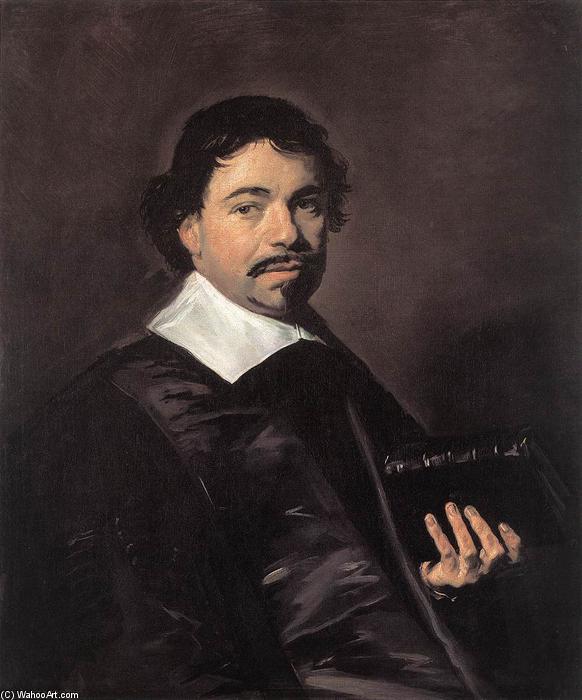
Johannes Hoornbeek 1645 is a Baroque portrait by Frans Hals I, created in 1645. It depicts a man wearing a black suit with a white collar and holding an instrument – likely a violin or guitar – against a backdrop featuring two additional figures. Known for his loose brushwork and ability to convey personality, Hals’s technique exemplifies the artistic spirit of the Dutch Golden Age.
Erkunden Sie Frans Hals I: Meister der Porträtmalerei und Genreszenen aus dem Goldenen Zeitalter der Niederlande. Bekannt für seine lockere Pinselstrichtechnik und die Fähigkeit, Persönlichkeit einzufangen! #FransHals #NiederlandischeKunst
Entdecken Sie Kunstgeschichte! Die Königlichen Museen Brüssels beherbergen Meisterwerke von Rubens, Magritte & mehr. Ein einzigartiges Erlebnis für Kunstliebhaber!
Johannes Hoornbeek: A Portrait of Dignified Presence
Johannes Hoornbeek, painted in 1645 by Frans Hals I, stands as a quintessential example of the Dutch Golden Age’s fascination with portraiture – specifically, the genre of marriage pendants. These paired portraits were commissioned to commemorate unions and served as tangible expressions of familial bonds during a period marked by significant social and economic advancement. The artwork resides in a private collection, ensuring its preservation for future generations to appreciate.
Style and Technique: Hals’s Revolutionary Brushstroke
Frans Hals I revolutionized portrait painting with his distinctive technique—a method he termed “alla prima,” meaning "at first sight." Unlike many artists of his time who meticulously layered paint over multiple sessions, Hals worked directly onto the canvas in a single sitting. This approach captured fleeting expressions and textures with remarkable immediacy, resulting in paintings that pulsate with life. Observe the loose, impasto brushstrokes—thickly applied pigment—that dominate the surface of Hoornbeek’s portrait. These strokes aren't intended to create illusionistic depth but rather to convey a palpable sense of presence and vitality. Hals skillfully blended colors optically, creating subtle gradations that enhance the luminosity of the skin tones and drapery folds.
Historical Context: Marriage Pendants and Societal Values
The marriage pendant portraits emerged during a time when marriage was viewed as crucial for establishing social status and securing economic stability. These commissions were often undertaken by wealthy families eager to demonstrate their prosperity and lineage. Hoornbeek’s attire—a dark suit adorned with a crisp white collar—reflects the formal conventions of the era, signaling respectability and refinement. The inclusion of two figures flanking Hoornbeek adds depth to the composition, symbolizing companionship and familial unity – values deeply ingrained in Dutch society during Hals's lifetime.
Symbolism: Dignified Expression and Inner Character
Beyond its decorative function, Hoornbeek’s portrait embodies a profound symbolic resonance. Hals expertly captures Hoornbeek’s gaze—direct, confident, and imbued with intelligence—revealing his inner character through subtle nuances of expression. The artist's masterful rendering of facial features conveys not merely likeness but also psychological insight. Furthermore, the pose itself—slightly turned towards the viewer—suggests openness and engagement, inviting contemplation about the subject’s personality and aspirations.
Emotional Impact: Capturing a Moment in Time
Ultimately, Johannes Hoornbeek transcends mere representation; it succeeds in conveying an emotional impression of dignity and composure. Hals's technique skillfully captures the essence of his sitter, imbuing the portrait with a timeless quality that continues to resonate with viewers today. The painting serves as a poignant reminder of the importance of preserving artistic heritage and appreciating the transformative power of art to communicate profound human experience.