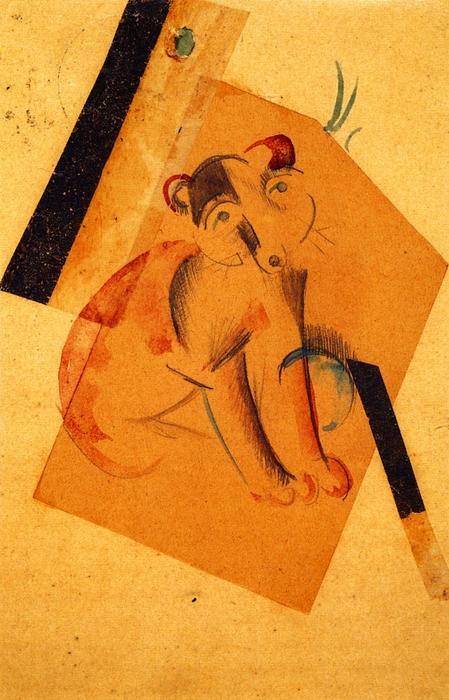
Franz Marc’s “Dog in Expectation”: A Window into the Soul
Franz Marc's "Dog in Expectation," painted in 1913, is far more than just a depiction of an animal; it’s a profound meditation on life, spirituality, and the yearning for connection. Created during the height of German Expressionism, this vibrant canvas embodies the movement’s core tenets – a rejection of purely representational art in favor of conveying raw emotion and subjective experience. Marc, deeply influenced by his own spiritual quest and his fascination with the animal world as symbols of innocence and primal instinct, sought to capture something beyond mere appearance. The painting isn't simply about a dog; it’s about anticipation, longing, and perhaps even a touch of melancholy – emotions that resonate powerfully across time.
A Symphony of Color and Form: Artistic Technique
Marc’s distinctive style is immediately recognizable. He employs a bold, almost childlike palette dominated by intense blues, yellows, and greens, colors he believed held spiritual significance. These hues aren't blended smoothly; instead, they are applied in broad, gestural strokes, creating a sense of movement and energy. The forms themselves are simplified and abstracted – the dog’s body is rendered with powerful, blocky shapes, while the background figures are suggested rather than meticulously detailed. This deliberate distortion serves to heighten the emotional impact of the work, pushing it beyond the realm of realistic depiction and into the territory of pure feeling. The use of tempera paint, favored by Marc for its luminous quality and ability to hold vibrant colors, further contributes to the painting’s ethereal atmosphere.
Symbolism in a Moment of Waiting
The composition is rich with symbolic meaning. The dog, positioned centrally and gazing intently off-camera, becomes an emblem of vulnerability and expectant hope. Its posture – head raised, body alert – speaks volumes about its inner state. The presence of the cat in the background adds another layer to this interpretation; cats are often associated with mystery, intuition, and a connection to the unseen world. The two figures in the distance, partially obscured, represent humanity’s role in the animal's experience—perhaps observers, perhaps participants in its silent anticipation. The baseball bat, a seemingly incongruous element, could symbolize human intrusion into the natural order, or even the fleeting nature of earthly pursuits.
Historical Context and Spiritual Seeking
“Dog in Expectation” must be understood within the context of its time. German Expressionism emerged as a reaction against the perceived superficiality of late 19th-century art, fueled by anxieties surrounding industrialization, war, and social upheaval. Marc’s work reflects this broader cultural climate, expressing a deep sense of unease and a yearning for spiritual renewal. His early theological explorations profoundly shaped his artistic vision; he believed that art could be a pathway to accessing the divine—a concept deeply rooted in his Christian faith. The painting's creation coincided with a period of intense personal reflection for Marc, marked by both creative breakthroughs and increasing emotional turmoil. This internal struggle is palpable in the work’s raw intensity and its exploration of fundamental human emotions.
A high-quality reproduction of “Dog in Expectation” offers a captivating glimpse into the artistic genius of Franz Marc. Its vibrant colors, evocative symbolism, and profound emotional depth make it a timeless masterpiece—a testament to the power of art to transcend the boundaries of representation and speak directly to the soul.