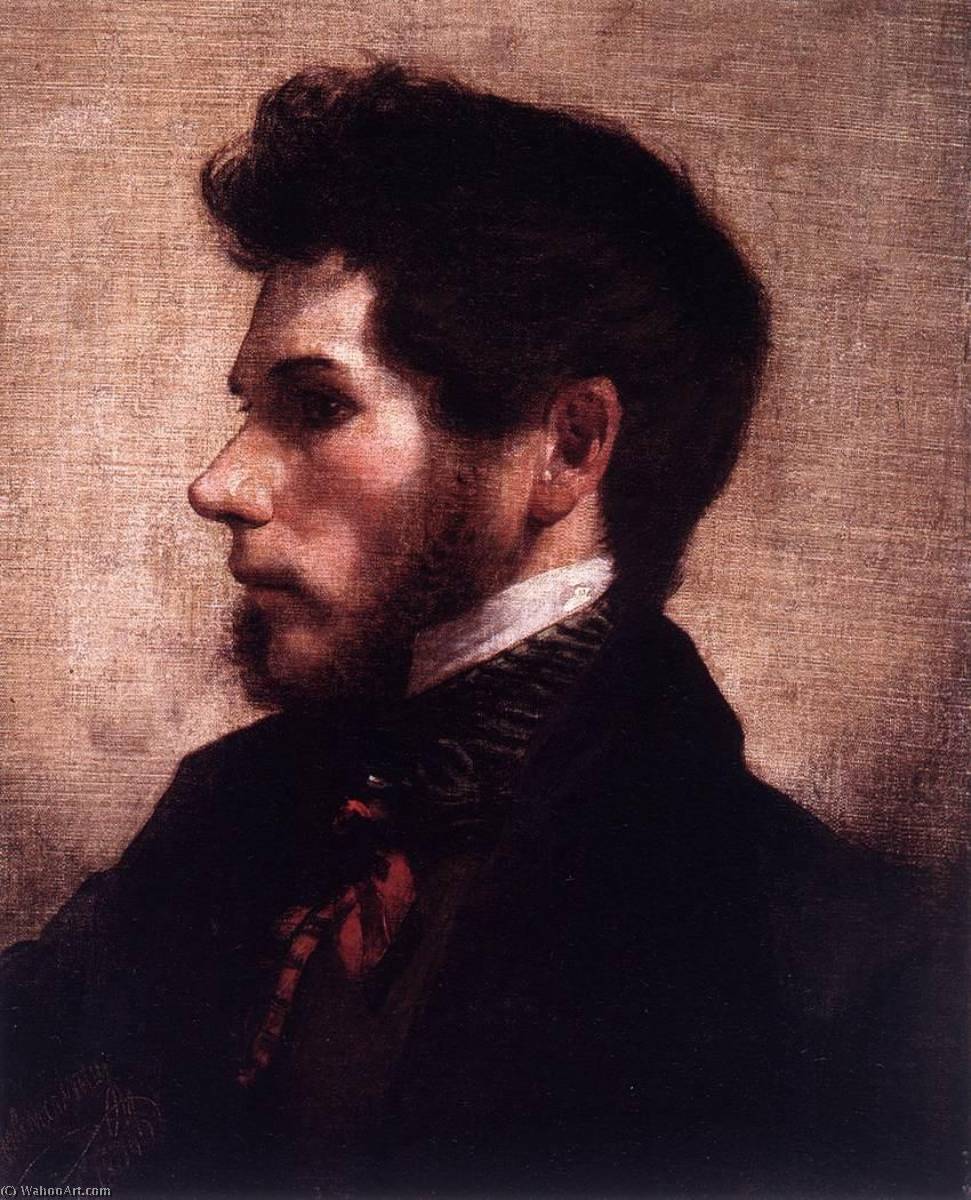
A Gaze Through Time: The Intimacy of Amerling’s Self-Portrait
In the quiet, monochromatic depths of Friedrich Ritter von Amerling’s 1834 Self-Portrait, we are invited into a profound moment of introspection. This work serves as more than a mere visual record; it is a psychological window into the soul of a master of Austrian academic portraiture. As the viewer encounters the man with the distinguished beard and mustache, there is an immediate sense of a shared secret. His downward gaze, paired with a piercing look directed toward the observer, creates a tension between vulnerability and strength. The painting captures a singular, frozen moment where the artist confronts his own identity, presenting a face that is both ruggedly textured and elegantly composed.
The technical mastery displayed in this piece speaks to Amerling’s rigorous training at the Akademie der bildenden Künste in Vienna. Though the palette is stripped of color, the tonal range is incredibly rich, utilizing a sophisticated interplay of light and shadow to sculpt the features of the face. The meticulous rendering of his facial hair—each strand contributing to the weight and presence of his expression—demonstrates the precision characteristic of the Biedermeier era's influence on academic realism. Even in this black and white medium, one can sense the tactile quality of the skin and the crispness of his attire, where the subtle detail of a necktie adds a touch of formal dignity to the composition.
Beyond the physical likeness, the composition utilizes depth to enhance its emotional resonance. The background, featuring a subtly patterned wall, provides a structured, architectural contrast to the organic, soft contours of the human form. This deliberate use of texture prevents the portrait from feeling flat, instead creating an atmospheric space that feels lived-in and authentic. For the collector or interior designer, this piece offers a timeless elegance that transcends modern trends. It is a work of quiet authority, perfect for a curated gallery wall or as a focal point in a study, where its somber tones and historical gravity can command attention without overwhelming the surrounding decor.
To possess a reproduction of this masterpiece is to bring a piece of nineteenth-century Viennese history into the contemporary home. It serves as an evocative reminder of the era of Romanticism, where the pursuit of truth through realism was paramount. Whether viewed as a study in light or a profound exploration of the human psyche, Amerling’s self-portrait remains a captivating testament to the enduring power of the academic tradition, offering an unparalleled sense of sophistication and intellectual depth to any fine art collection.