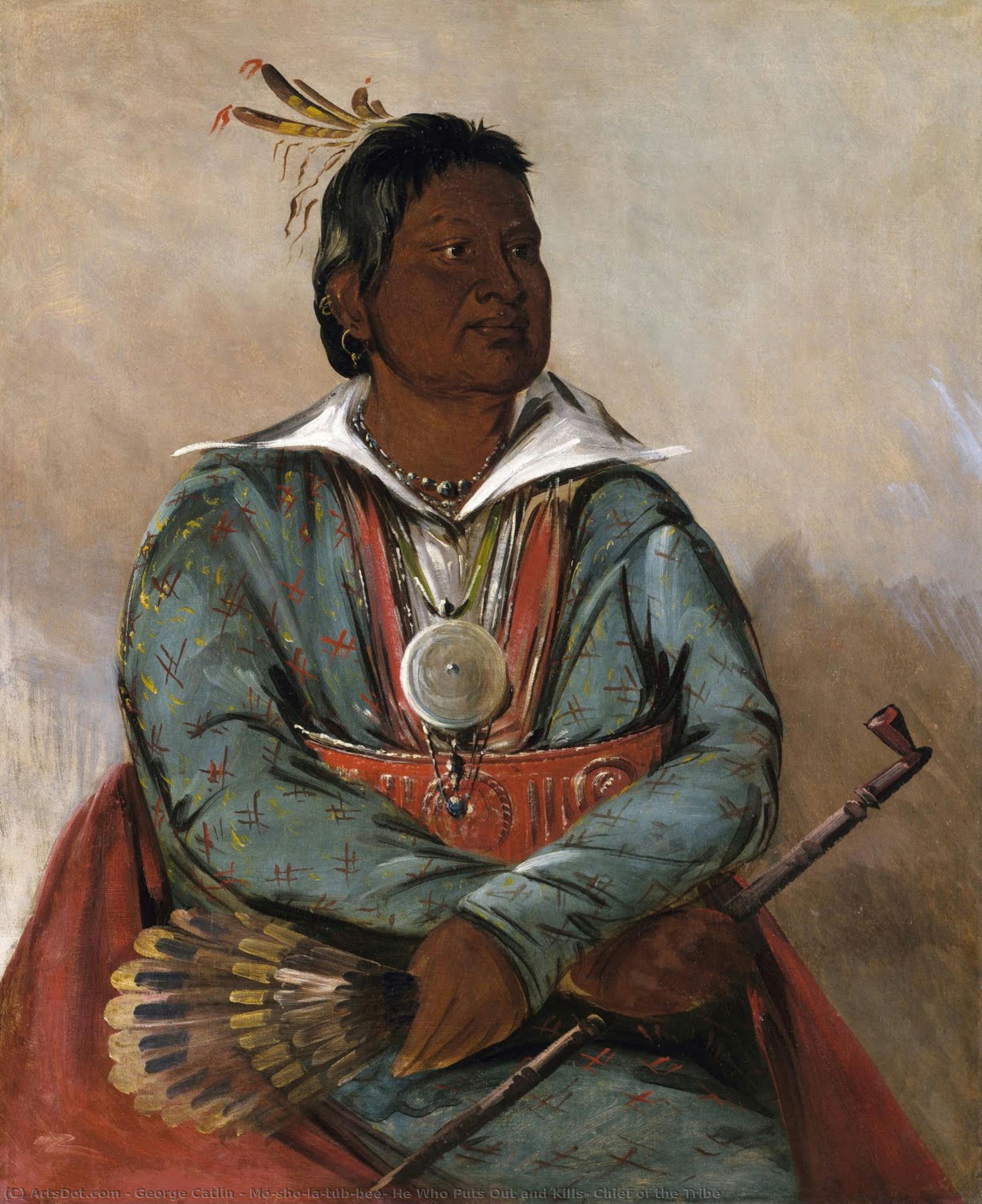
Explore George Catlin's iconic portrait of Choctaw Chief Mó-sho-la-túb-bee, meticulously documented by the artist at Fort Gibson Territory in 1834. Witness a masterful blend of realism and symbolism reflecting Native American culture.
Entdecken Sie George Catlin (1796-1872), den Pionier der amerikanischen Malerei, der das Leben & die Kultur der Ureinwohner durch beeindruckende Porträts festhielt.
Erleben Sie die Kunstgeschichte Amerikas im Smithsonian American Art Museum – beeindruckende Sammlung und außergewöhnliche Architektur für ein einzigartiges Erlebnis!
A Window into the American West Through George Catlin’s Vision
George Catlin (1796-1872) stands as a singular figure in 19th-century American art—a man driven by an unwavering conviction that documenting the lives of Native Americans was paramount to preserving their cultural heritage. Born in Wilkes-Barre, Pennsylvania, his formative years were steeped in tales of the frontier recounted by his mother, Polly Sutton, who herself bore witness to the terrifying reality of Indian raids. These narratives instilled within Catlin a profound fascination for the West, perceiving it not merely as a geographical expanse but as a realm brimming with both danger and breathtaking beauty—a sentiment that would permeate his artistic endeavors throughout his life. Initially trained in law, he swiftly abandoned legal practice, recognizing an irresistible impulse to translate his passion into visual representation. This decisive shift marked the genesis of Catlin’s extraordinary career as an artist, forever altering the trajectory of American art history.
The Artwork: Mó Sho La Túb Bee – He Who Puts Out and Kills
“Mó Sho La Túb Bee,” or “He Who Puts Out and Kills,” is a captivating oil painting executed by Catlin in 1834, capturing the essence of leadership within the Choctaw tribe. The artwork depicts a dignified Native American man seated calmly while holding a pipe in one hand and a staff or stick in the other—symbols deeply rooted in tribal traditions representing peace and authority respectively. Catlin’s meticulous attention to detail is evident in every brushstroke, particularly in the intricate design of the headdress adorning the subject's head. Constructed from feathers meticulously arranged in geometric patterns, it embodies spiritual significance and commemorates past achievements. The artist skillfully employs chiaroscuro—the dramatic interplay of light and shadow—to sculpt the man’s face, conveying a sense of solemn contemplation and conveying an aura of profound respect for his heritage.
Style and Technique: Romantic Idealization
Catlin's artistic style aligns squarely with the tenets of Romanticism, a movement that prioritized emotion and imagination over rational observation. Unlike academic painters who adhered to strict conventions of realism, Catlin sought to portray Native Americans not as mere anthropological specimens but as complex individuals imbued with dignity and spiritual depth. He achieved this ambitious goal through a technique characterized by bold color palettes—primarily blues and reds—that evoke the vibrancy of the American landscape and imbue the painting with an emotional resonance. Furthermore, Catlin employed a flattened perspective, reminiscent of ethnographic drawings prevalent at the time, to emphasize the subject’s presence and create a sense of immediacy for the viewer. This stylistic choice underscores Catlin's commitment to conveying not just visual accuracy but also the spirit of his subjects—a testament to his artistic vision.
Historical Context: Documenting Disappearing Cultures
“Mó Sho La Túb Bee” emerged during a pivotal period in American history—the era of westward expansion and increasing pressure on Native American populations. Catlin recognized that these cultures were rapidly fading away, threatened by encroaching civilization and governmental policies aimed at assimilation. Driven by a fervent desire to preserve their traditions for posterity, he embarked on an ambitious project to document the lives of various tribes across the Plains region—a mission that resulted in numerous paintings and sketches. This artwork serves as a poignant reminder of Catlin’s unwavering dedication to artistic integrity and his profound empathy for those whose voices were often silenced by dominant narratives. It stands as a powerful visual record of a bygone era, inviting viewers to contemplate the beauty and complexity of Native American culture—a legacy that continues to inspire artists and scholars alike.
Symbolism: Feathered Headdress – Honor and Remembrance
The headdress itself is laden with symbolic significance within Choctaw culture. Feathers represent honor, courage, and spiritual connection—attributes revered by tribal leaders and warriors alike. Their meticulous arrangement reflects a deep understanding of geometric patterns and their association with cosmological beliefs. Catlin’s depiction of the headdress underscores his respect for Native American traditions and highlights the importance of visual representation in conveying cultural values. The pipe symbolizes peace and contemplation, representing a solemn ritual practiced by Choctaw men—a gesture of reverence for ancestors and a plea for divine guidance. Through these carefully chosen symbols, Catlin elevates “Mó Sho La Túb Bee” beyond mere portraiture, transforming it into an evocative meditation on identity, spirituality, and the enduring spirit of Native American heritage.