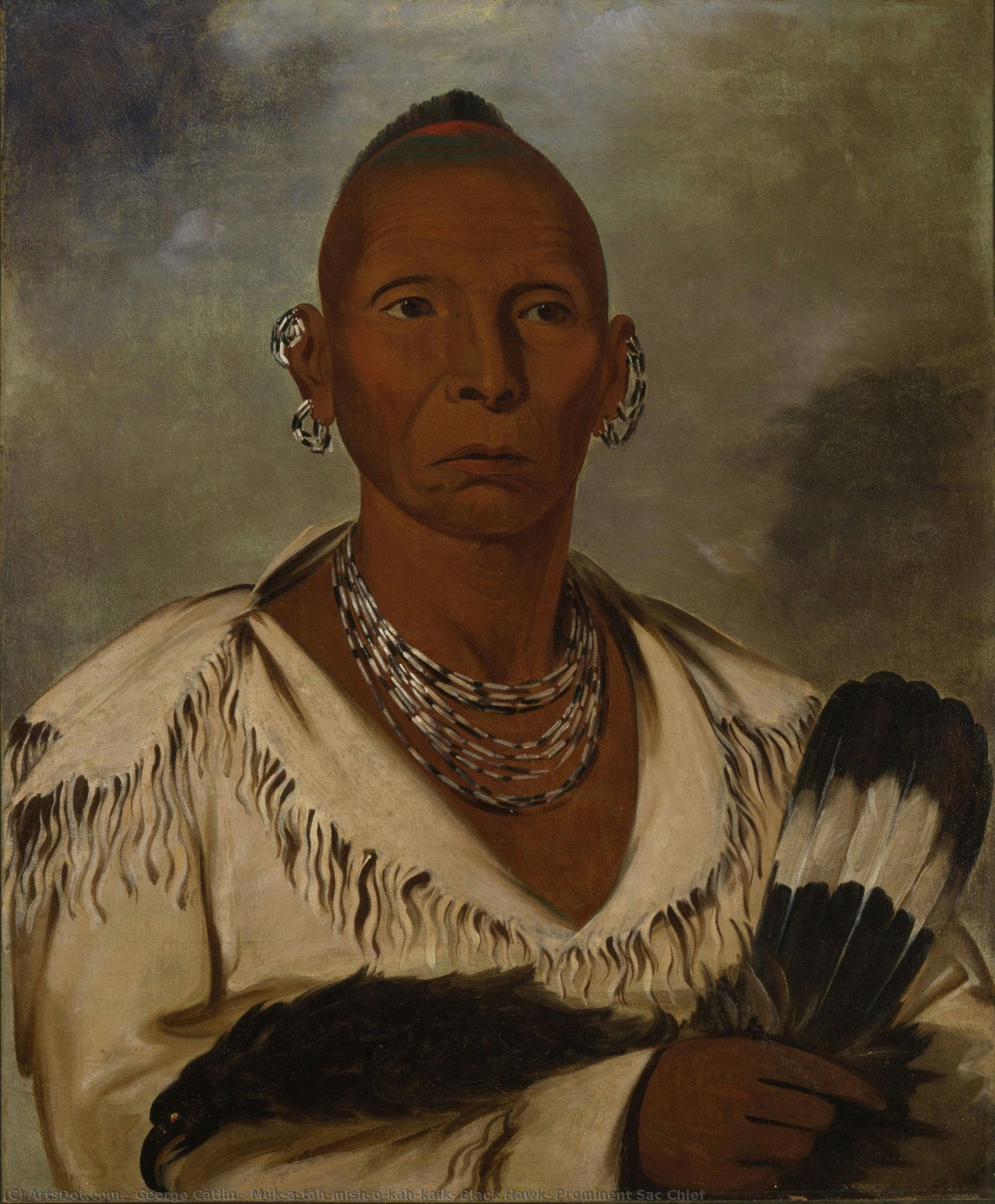
The Spirit of the Plains: Múk-a-tah-mish-o-káh-kaik, Black Hawk
George Catlin’s “Múk-a-tah-mish-o-káh-kaik, Black Hawk, Prominent Sac Chief” is more than a portrait; it's a window into a vanishing world. Painted in 1832, this oil on canvas captures the formidable presence of Black Hawk, a leader of the Sauk tribe, during a period of immense upheaval and transformation for Native American communities in North America. The painting immediately commands attention with its subject’s intense gaze – a direct challenge to the viewer, reflecting both the stoicism demanded by leadership and perhaps a hint of guarded sorrow at the encroaching tide of white settlement.
Catlin's approach was revolutionary for his time. He deliberately eschewed the traditional European portrait style, which often emphasized idealized beauty or social status. Instead, he sought to represent Native Americans as they truly were – powerful, dignified individuals deeply connected to their land and traditions. This commitment is evident in Black Hawk’s attire: the elaborate earrings, a symbol of tribal authority and spiritual connection, and the feather held aloft, representing his role as a warrior and protector. The simplicity of his clothing further emphasizes his inherent strength and connection to nature – he wears only what is necessary for survival and leadership.
A Pioneer of Native American Art
George Catlin’s work stands as a pivotal moment in the history of American art. Born in Wilkes-Barre, Pennsylvania, in 1796, Catlin's early life was shaped by stories of frontier encounters and his mother’s tales of hardship. This instilled within him a profound respect for Native American cultures and a determination to document their lives before they were irrevocably altered by westward expansion. Initially trained as a lawyer, he abandoned legal practice in favor of an artistic career, driven by a belief that these vibrant cultures deserved recognition and preservation.
His travels into the heartland of America – from the Mississippi River to the Great Lakes – resulted in over 500 paintings, each imbued with a deep understanding of Native American customs and beliefs. Catlin wasn’t simply recording appearances; he was striving to capture the *essence* of these people, their spirit, and their connection to the land. He famously organized his works into “Indian Galleries,” touring them across America and Europe, advocating for their acquisition by the U.S. government – a goal that remained largely unfulfilled during his lifetime.
Technique and Composition: A Study in Intensity
Catlin’s technique is characterized by bold brushstrokes and a vibrant palette. He employed a method he called “border painting,” applying paint directly to the canvas, often with minimal underpainting. This resulted in a textured surface that conveys a sense of immediacy and energy. The composition itself is carefully constructed to draw the viewer's eye to Black Hawk’s face – his expression is paramount. The dark background serves to heighten this effect, isolating the figure and intensifying the drama of his gaze.
Notice the use of light and shadow; Catlin masterfully employs chiaroscuro to sculpt Black Hawk’s features, emphasizing his muscular build and projecting an aura of strength and authority. The subtle details – the lines etched on his face, the intensity in his eyes – speak volumes about a life lived fully and with purpose. The painting isn't merely a likeness; it’s a psychological portrait, revealing the inner character of its subject.
Symbolism and Legacy
“Múk-a-tah-mish-o-káh-kaik, Black Hawk, Prominent Sac Chief” is a poignant reminder of a lost world. Black Hawk’s presence embodies the resilience and dignity of Native American communities facing relentless pressure from westward expansion. The feather he holds represents not only his status as a leader but also his connection to ancestral traditions and the spiritual realm.
Catlin's work, though initially met with mixed reactions, ultimately played a crucial role in shaping public perception of Native Americans. His paintings helped to humanize these often-misunderstood people, fostering empathy and prompting reflection on the consequences of cultural displacement. Today, this artwork stands as a powerful testament to Catlin’s artistic vision and his enduring legacy as one of America's first truly important Native American portraitists. A hand-painted reproduction offers a remarkable opportunity to bring this evocative image into your home or office – a celebration of a rich culture and a poignant reflection on the past.