A Glimpse into the Soul of the Frontier
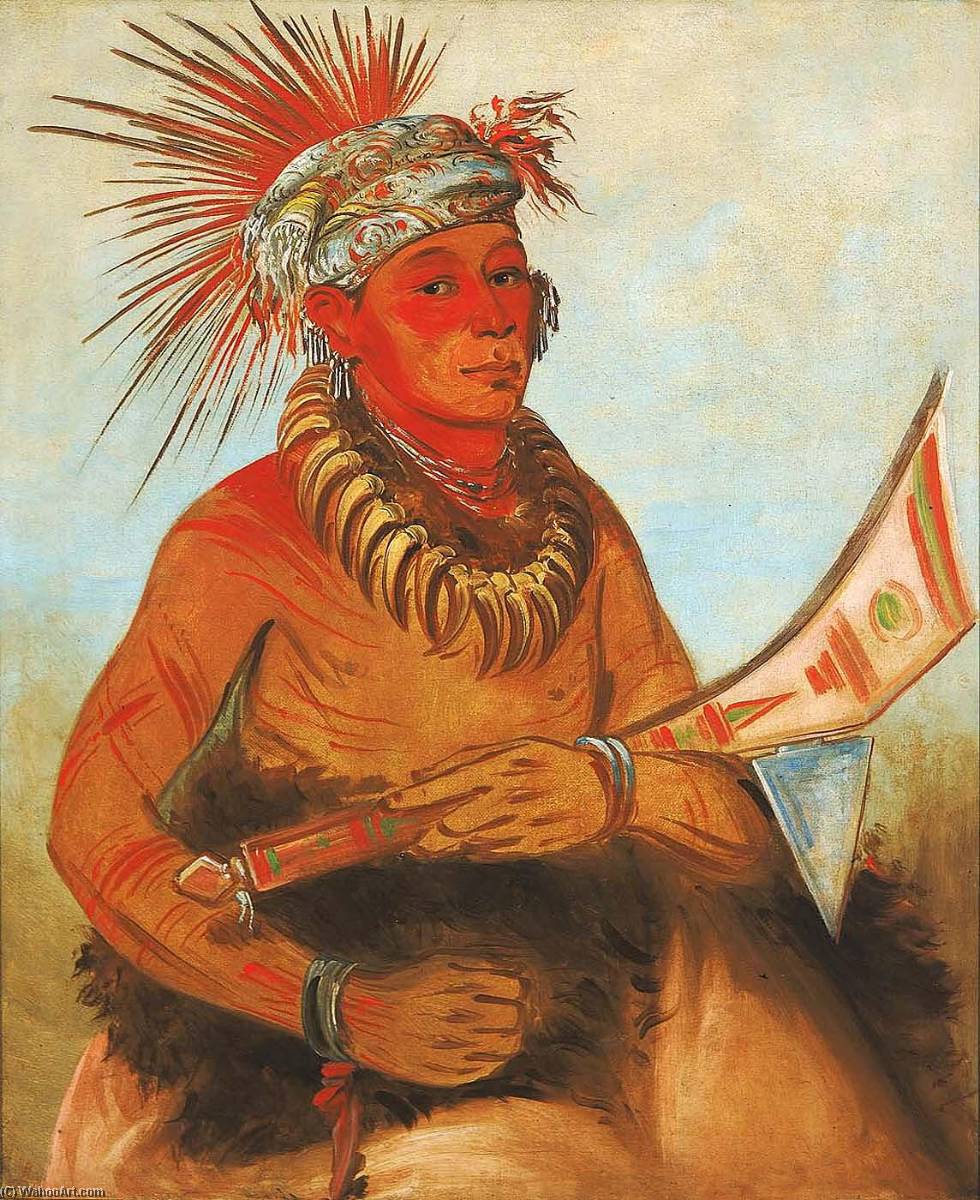
In the profound stillness of George Catlin’s 1832 masterpiece, Pah ta cóo chee, Shooting Cedar, a Brave, we are invited to witness a moment frozen in time, a singular encounter with a dignity that transcends the centuries. This evocative oil on canvas serves as more than just a portrait; it is a window into a vanishing world. The subject, a Native American man of striking presence, commands the viewer's attention through a gaze that is both piercing and contemplative. Adorned with a vibrant red headdress that crowns his visage, he carries the weight of his heritage with an effortless grace. Every brushstroke by Catlin works to capture not just the physical likeness of Shooting Cedar, but the very essence of a warrior’s spirit, making this piece an essential acquisition for those who seek art that speaks of profound human resilience and historical depth.
The technique employed by Catlin reflects his unique position as both an artist and a chronicler of the American West. Using oil on canvas, he achieves a rich, tactile quality that brings the textures of the headdress and the subtle details of the man's adornments to life. There is a masterful play of light and shadow across the subject's features, lending a sculptural dimension to the portrait. The composition is intimate, focusing our attention on the duality of the man’s hands—one gripping a knife, a symbol of his strength and readiness, while the other holds a book or newspaper, suggesting a complex intersection between traditional indigenous life and the encroaching influence of Western literacy and documentation. This juxtaposition creates a narrative tension that is both intellectually stimulating and visually arresting.
Historical Resonance and Aesthetic Elegance
To understand this painting is to understand the mission of George Catlin himself. Driven by an urgent impulse to document the traditions of Native American tribes before they were irrevocably altered by expansion, Catlin infused his work with a sense of ethnographic urgency. In Pah ta cóo chee, we see the culmination of this passion. The painting acts as a bridge between the established American society of the 19th century and the profound, complex cultures of the frontier. For the discerning collector or interior designer, this piece offers an unparalleled opportunity to introduce a sense of historical gravity and storytelling into a space. It is a work that does not merely decorate a wall but anchors a room with its narrative power.
Integrating such a powerful reproduction into a contemporary interior allows for a sophisticated dialogue between the past and the present. Whether placed in a curated gallery setting or as a focal point in a refined study, the warm tones and commanding presence of the subject provide an emotional anchor. The painting’s ability to evoke empathy and curiosity makes it a conversation starter, inviting guests to contemplate the themes of identity, change, and the enduring strength of the human spirit. It is a timeless investment for those who value art that possesses both historical significance and an everlasting aesthetic allure.