A Glimpse into the Soul of the Frontier
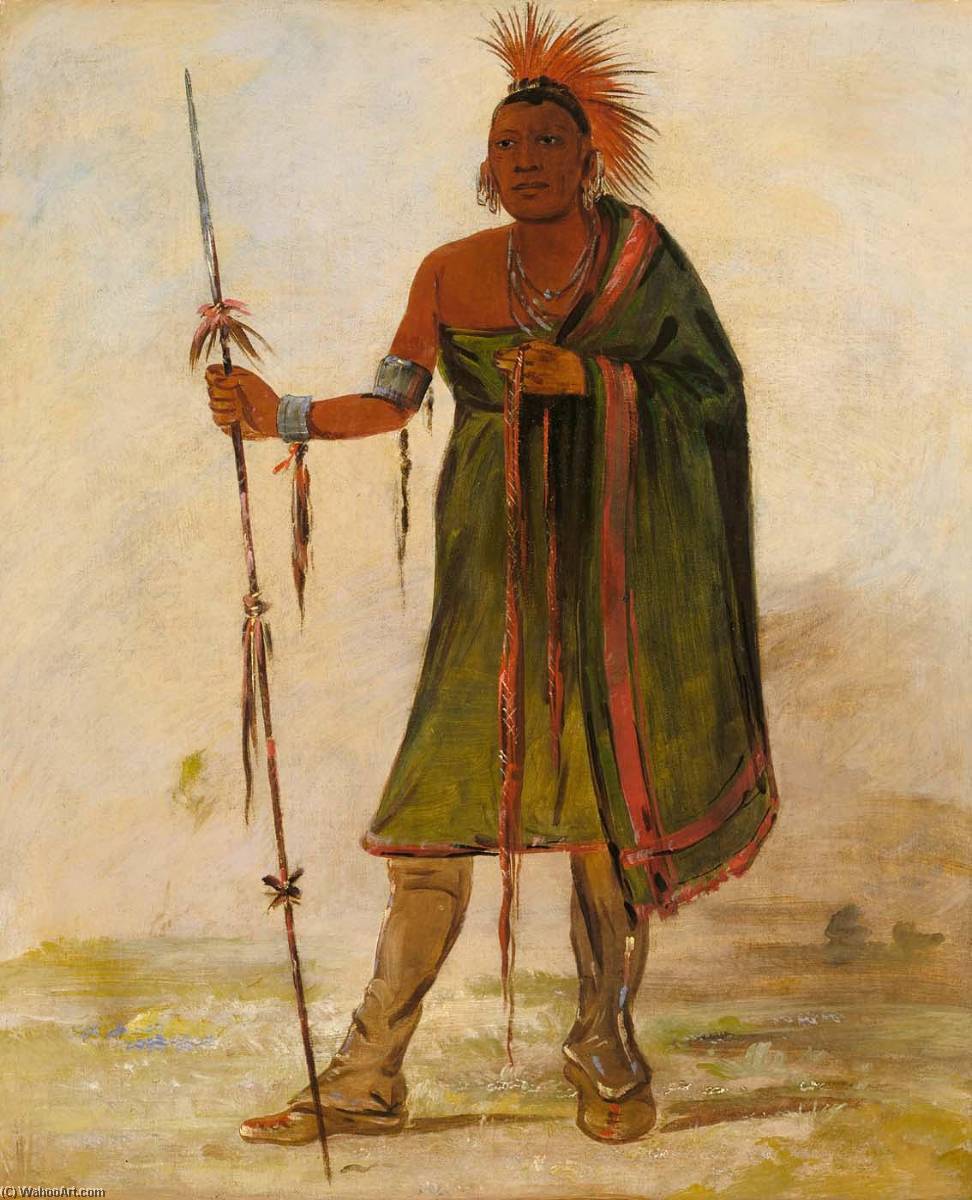
In the profound stillness of George Catlin’s 1834 masterpiece, Wash ím pe shee, Madman, a Distinguished Warrior, we are transported to an era of American history that felt both eternal and fleeting. The painting serves as more than just a portrait; it is a visceral encounter with a legendary figure of the plains. Standing with arms outstretched, the subject commands the space with a presence that is simultaneously commanding and vulnerable. Catlin captures the warrior in a moment of poised intensity, his hands gripping sticks that suggest both ritualistic significance and readiness for action. The rich, vibrant palette breathes life into the scene, pulling the viewer into a world where every texture—from the soft drape of the green blanket to the delicate plume of the feather in his hair—tells a story of heritage, strength, and survival.
The artistry of Catlin lies in his ability to blend meticulous ethnographic documentation with deep emotional resonance. As an artist who abandoned the law to document the vanishing traditions of Native American tribes, Catlin possessed a unique eye for detail that transcends mere observation. In this work, his technique shines through the intricate patterns woven into the man's attire and the nuanced rendering of facial features that hint at a lifetime of wisdom and battle. The interplay of light and shadow creates a sense of three-dimensional realism, making the figure appear as though he might step forward from the canvas, bridging the gap between the nineteenth century and our modern gaze.
Symbolism and the Legacy of Documentation
Every element within this composition is heavy with symbolic weight. The green blanket, draped with a certain regal gravity, serves as a striking contrast to the earthy tones of the landscape, perhaps signifying the vitality of the spirit amidst a changing world. The feather, a hallmark of status and spiritual connection, acts as a silent testament to the warrior's distinguished rank. For collectors and historians alike, this painting is a profound piece of visual anthropology. It captures the essence of a culture that Catlin felt an urgent, almost desperate need to preserve before it was irrevocably altered by westward expansion.
For those looking to integrate such a powerful piece into a curated interior, Wash ím pe shee offers an unparalleled focal point. Its commanding scale and evocative subject matter make it an ideal centerpiece for a study, a grand library, or a sophisticated living space. A high-quality reproduction of this work allows the timeless dignity of the American frontier to reside within a contemporary home, offering a constant source of historical reflection and aesthetic inspiration. To possess such a piece is to hold a fragment of a lost world, rendered with a passion that continues to captivate the heart of the art enthusiast.