A Glimpse into Vanishing Worlds: The Spirit of George Catlin's Vision
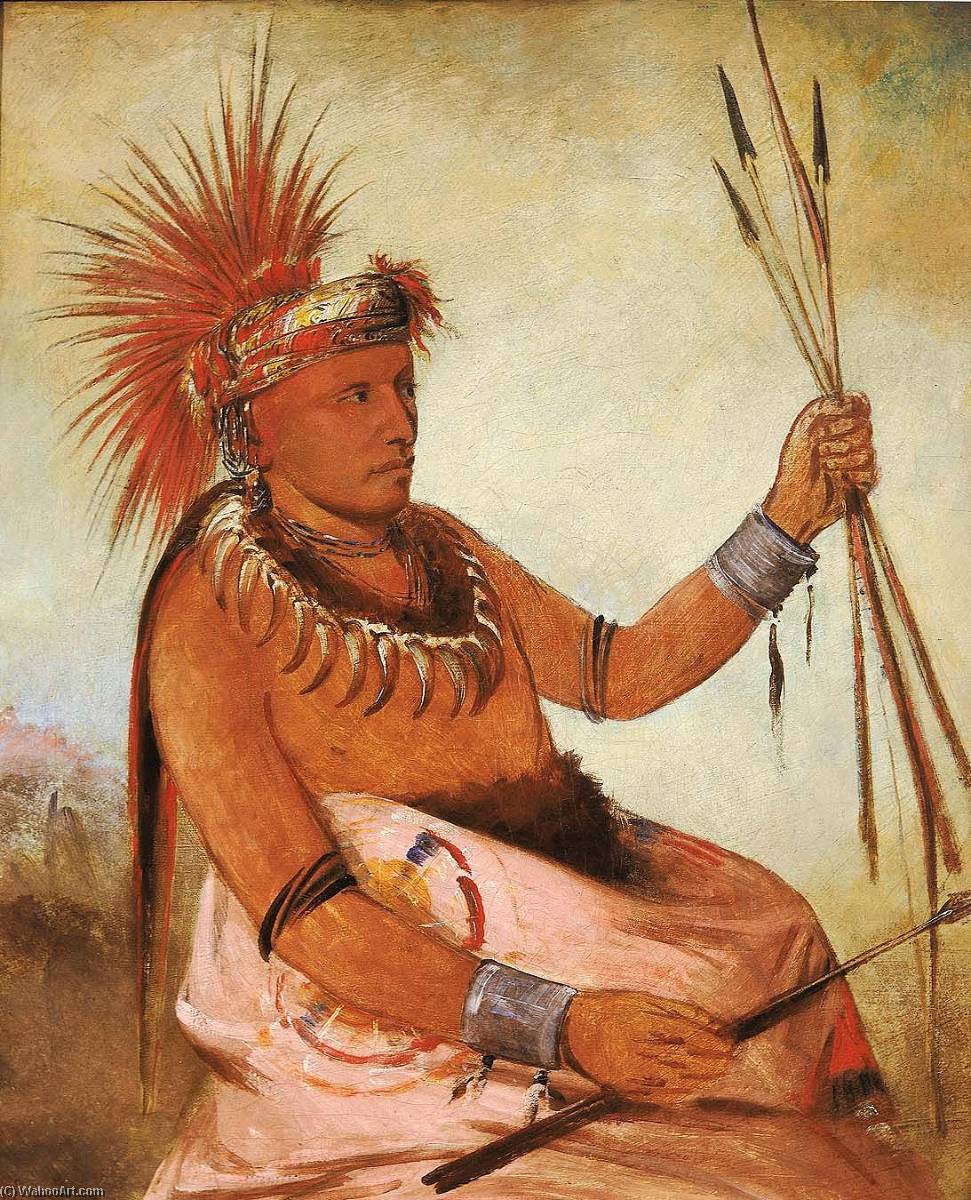
To stand before a depiction such as Wos cóm mun, Busy Man, a Brave is not merely to observe paint on canvas; it is to step across the threshold of time itself. Painted in 1832 by the masterful hand of George Catlin, this work serves as a poignant visual document from a moment of profound cultural transition. The scene captures more than just figures gathered in an open space; it encapsulates a complex relationship between tradition, survival, and the encroaching tide of change. Catlin, whose life bridged the established American world with the vibrant, yet fading, cultures of Native American tribes, imbued his art with both meticulous ethnographic detail and deep, empathetic reverence.
The Subject Matter: A Moment of Quiet Vigilance
At the heart of the composition sits a commanding figure—a Native American man portrayed in a posture of readiness. He is depicted seated, yet his bearing suggests an inherent strength, emphasized by the bow and arrow held close at hand. The feather adorning his hair and the visible headdress speak volumes about his cultural identity and status within his community. Yet, the narrative scope extends beyond this central figure. To the left and right, other individuals populate the scene, their presence suggesting a communal life unfolding around him. They are engaged in their own rhythms—observing, waiting, or simply existing together. This arrangement creates a tapestry of human interaction, inviting the viewer to piece together the unspoken dialogue passing between these figures.
Technique and Historical Resonance
Catlin’s technique allowed him to achieve a remarkable balance: the precision required for documentation married with the evocative power of romantic art. While the details—the texture of the clothing, the craftsmanship of the weaponry, the subtle gestures of the onlookers—are rendered with academic care, the overall feeling is one of dramatic immediacy. The year 1832 places this painting at a critical juncture in American history. Catlin was documenting cultures that were already under immense pressure from westward expansion and colonial influence. Therefore, every brushstroke carries the weight of historical significance; it is an act of preservation, a desperate attempt to fix a way of life onto canvas for posterity.
Symbolism and Emotional Echoes
The symbolism within Wos cóm mun, Busy Man, a Brave is rich and layered. The bow and arrow are potent symbols of skill, defense, and connection to the natural world. The central man embodies resilience—the "Brave" spirit mentioned in the title—a quiet fortitude against overwhelming odds. For the modern collector or designer, this piece offers more than mere decoration; it offers a meditation on endurance. It speaks to the enduring human spirit, the deep bond between humanity and the land, and the dignity found in cultural continuity.
Bringing the Frontier Home
Owning a reproduction of this work allows one to curate an atmosphere steeped in history and profound storytelling within your own space. The rich narrative quality ensures that it functions as a powerful focal point, drawing the eye into its complex tableau. It is art that demands contemplation, inviting quiet moments of reflection on heritage, strength, and the enduring beauty of human culture.