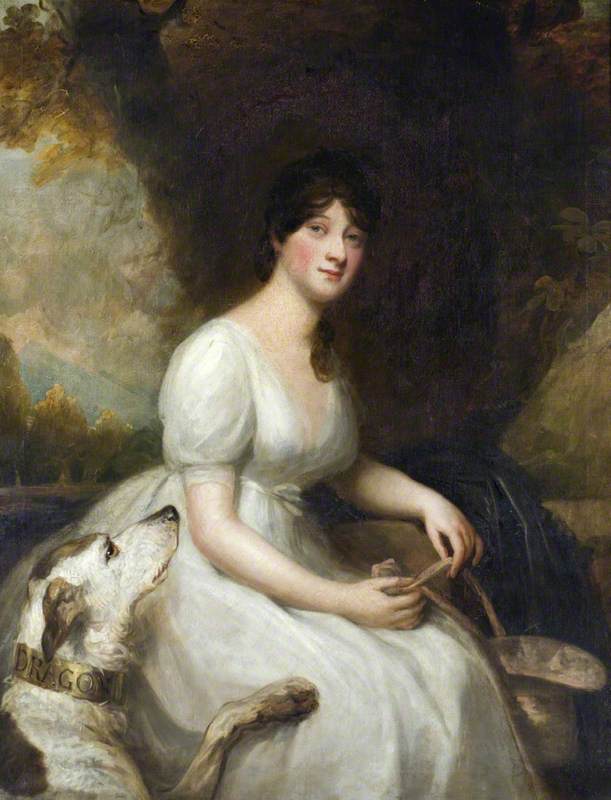
George Romney’s serene portrait captures Anna Maria Hunt in exquisite Rococo style alongside her loyal dog, embodying Victorian ideals of tranquility and companionship—a timeless masterpiece inviting you to explore its beauty.
Entdecken Sie George Romney (1734-1802), Meister des britischen Porträts! Erleben Sie elegante Gesellschaftsgemälde & seine faszinierende Muse, Emma Hamilton. Reproduktionen sichern!
National Trust
(Bodmin, Vereinigtes Königreich)
Erkunden Sie das Lanhydrock House & Garden (National Trust, Bodmin)! Entdecken Sie ein faszinierendes viktorianisches Landhaus des 19. Jahrhunderts, wunderschöne Gärten, Flussuferpfade und familienfreundliche Fahrradwege in Cornwall. Planen Sie Ihren Besuch noch heute!
George Romney’s Elegant Portrait of Anna Maria Hunt
Anna Maria Hunt (c.1771–1861), the Honourable Mrs Charles Agar Bagenal, painted by George Romney in 1793 stands as a testament to the Romantic era's fascination with idealized beauty and serene domesticity. This captivating portrait resides within the National Trust’s Lanhydrock Estate collection (accession number 884943), offering viewers an unparalleled glimpse into the artistic sensibilities of its time. Romney, born in Dalton-in-Furness, Lancashire, in 1734, ascended to prominence as one of Britain's foremost portrait painters, skillfully capturing the essence of aristocratic life and elevating his subjects to symbols of grace and refinement.
A Study in Rococo Style and Delicate Technique
Romney’s masterful approach aligns perfectly with the Rococo movement—characterized by its opulent ornamentation, pastel hues, and emphasis on graceful curves—a stylistic choice that underscores the painting's inherent elegance. Executed in oil on canvas, Romney employed a meticulous technique honed through years of apprenticeship under Christopher Steele, allowing him to achieve remarkable tonal subtlety and textural nuance. The artist’s careful layering of brushstrokes creates an illusionistic depth, drawing the eye into the tranquil scene depicted. Observe how Romney skillfully renders the soft glow of candlelight illuminating Anna Maria Hunt's face, enhancing her ethereal presence.
The Symbolism of Calmness and Companionship
Beyond its aesthetic beauty, “Anna Maria Hunt” embodies profound symbolic meaning. The woman herself—a prominent figure in British society—is portrayed with poise and dignity, seated comfortably on a bench alongside her loyal canine companion. This juxtaposition speaks to the values of Victorian England: domestic tranquility, familial devotion, and the importance of companionship. The inclusion of Dragon, Hunt’s dog, reinforces these themes, symbolizing fidelity and unwavering loyalty – qualities highly esteemed during the period. Furthermore, the subtle floral arrangement adorning the bench serves as a visual reminder of springtime renewal and fertility—a motif frequently employed in Rococo art to convey notions of purity and virtue.
Historical Context: The Age of Enlightenment and Artistic Patronage
Painted during the height of the Enlightenment, “Anna Maria Hunt” reflects the intellectual currents shaping British culture at the time. Romney’s work benefited from considerable patronage by influential figures like Francis Gerald Agar-Robartes, 7th Viscount Clifden, securing its place within a prestigious collection and ensuring its enduring legacy. The painting exemplifies the artistic ambition of the era—a desire to elevate portraiture beyond mere likeness, transforming it into a vehicle for conveying moral virtue and celebrating human beauty.
Emotional Resonance: Capturing Inner Grace
Ultimately, Romney’s “Anna Maria Hunt” transcends its formal conventions to evoke a powerful emotional response in the viewer. The painting's serene atmosphere invites contemplation—encouraging us to appreciate the quiet dignity of womanhood and the enduring bonds between humans and animals. It is a portrait not merely of appearance but of character—a celebration of inner grace and composure that continues to resonate with audiences today. This artwork remains an exquisite example of Romantic artistry, demonstrating Romney’s unparalleled ability to capture the spirit of his time and immortalize its ideals.