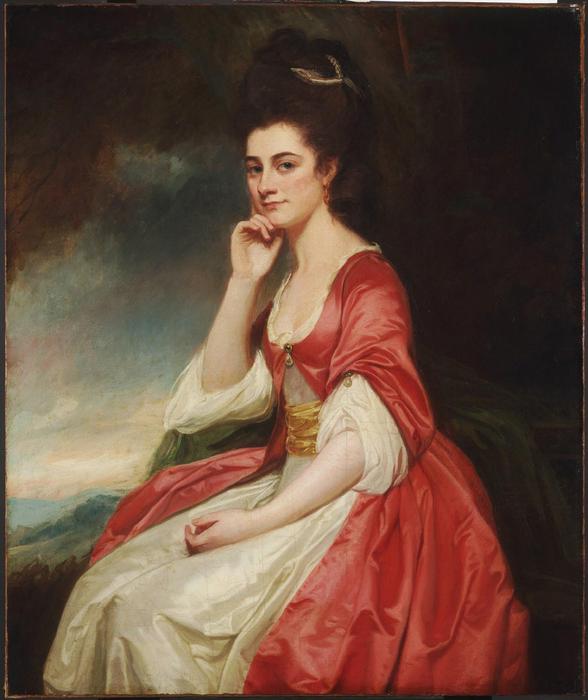
Experience George Romney’s "Lady Grantham," a neoclassical romantic portrait of elegant contemplation in 1780. This stunning oil on canvas captures the refined beauty of Georgian England, inviting you to own a piece of art history.
A Portrait of Graceful Reflection: George Romney’s Lady Grantham
George Romney's "Lady Grantham" transcends mere representation; it embodies the elegance and sophistication characteristic of Georgian England, capturing a moment of contemplative beauty within a meticulously crafted tableau. Painted circa 1780, this portrait exemplifies Romney’s signature style – characterized by soft brushstrokes, luminous tonal gradations, and an uncanny ability to convey psychological depth through subtle facial expressions. The subject herself, Lady Grantham, is depicted in a sumptuous crimson gown adorned with delicate white lace trim, reflecting the opulent tastes of the aristocracy during the reign of George III. Her hand resting gently on her chin speaks volumes about inner thought, inviting viewers into a realm of introspection and contemplation – a hallmark of Romney’s masterful approach to portraiture.
- Style: Neoclassical Romanticism - Romney skillfully blends elements of both styles, prioritizing naturalism while retaining an idealized aesthetic.
- Technique: Romney employed glazing techniques—thin layers of translucent paint applied over subsequent coats—to achieve remarkable luminosity and depth of color. This method allowed him to capture the subtle nuances of light and shadow, creating a palpable sense of atmosphere.
- Material: Oil on canvas – Romney favored oil paints for their versatility and ability to produce rich, velvety textures.
The backdrop of the painting—a hazy mountain vista—serves as more than just scenic embellishment; it symbolizes stability and grandeur, mirroring Lady Grantham’s position within Georgian society. Mountains have long been associated with strength and resilience in Western art tradition, reinforcing the image of a woman poised with confidence and grace. Furthermore, Romney's meticulous attention to detail extends beyond the figure itself—the folds of fabric are rendered with astonishing realism, demonstrating his dedication to capturing the textures and nuances of everyday life elevated to artistic excellence.
Historical Context: This portrait reflects the burgeoning interest in psychological portraiture during the Enlightenment, where artists sought to portray not just outward appearance but also inner character. Romney’s work aligns perfectly with this trend, offering a glimpse into the mind of a woman navigating the complexities of aristocratic life—a subject frequently explored by Romantic painters eager to convey emotion and nuance. Emma Hamilton, Lady Grantham's muse, was herself a celebrated beauty and symbol of feminine allure, adding another layer of significance to Romney’s artistic vision.
Emotional Impact: “Lady Grantham” evokes feelings of serenity, contemplation, and understated elegance. The soft lighting and muted color palette contribute to an atmosphere of tranquility, inviting viewers to linger on the portrait's surface and absorb its beauty. Romney’s ability to capture Lady Grantham’s gaze—direct yet gentle—creates a connection between subject and viewer, fostering a sense of intimacy and admiration. It remains a testament to Romney’s enduring legacy as one of Britain’s greatest portrait painters – an artwork that continues to inspire awe and fascination centuries after its creation.