Die Wiedergutmachung der Magdalenen
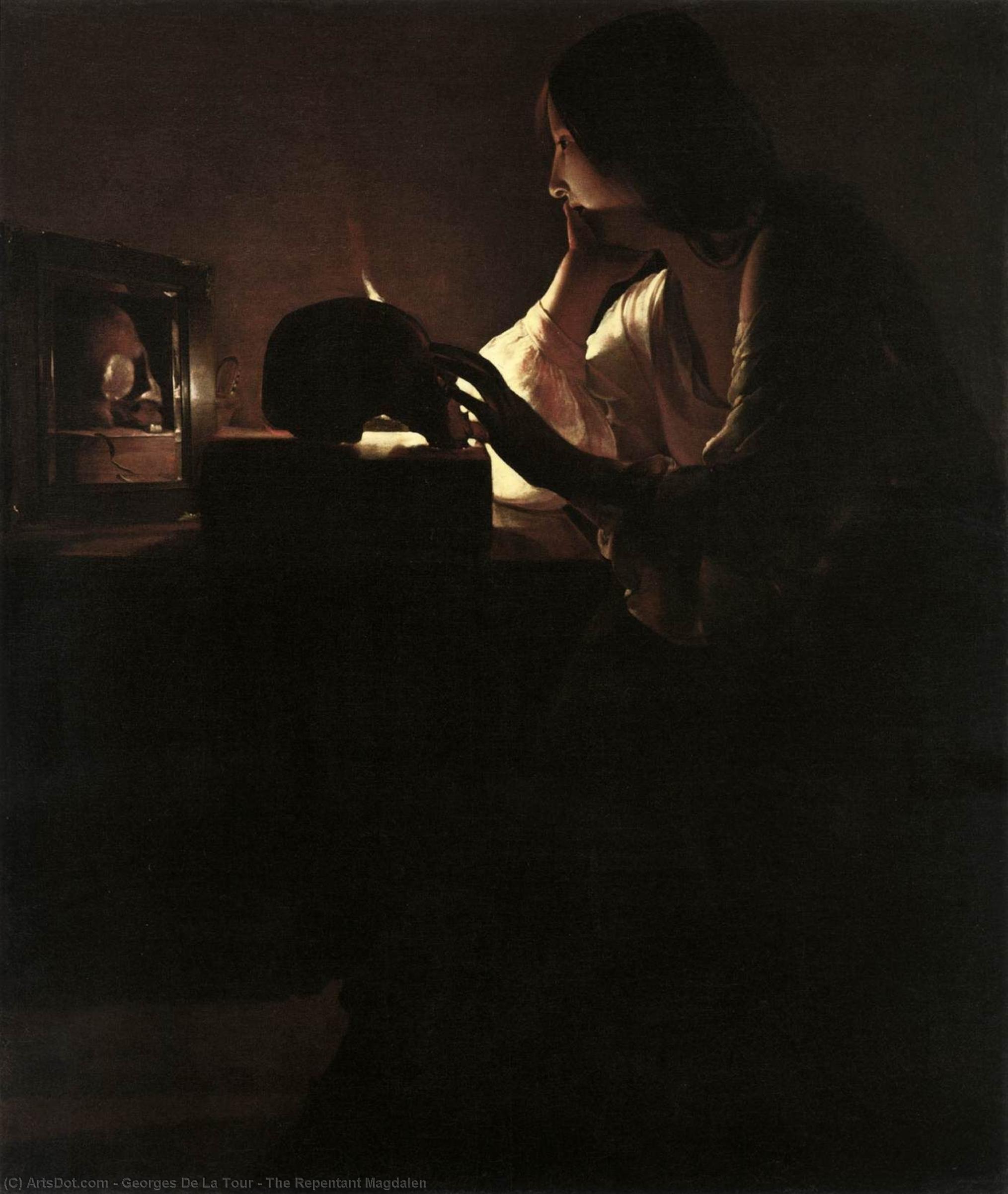
Georges de La Tour’s “The Repentant Magdalene” stands as an emblem of Baroque artistry—a masterful distillation of dramatic chiaroscuro and profound spiritual contemplation. Painted circa 1637, this iconic artwork transcends mere depiction; it invites viewers into a realm where light wrestles with darkness, revealing the complexities of faith and repentance. The painting resides in the Los Angeles County Museum of Art (LACMA), offering an unparalleled opportunity to experience firsthand the genius of this influential artist.
- Subject Matter: The scene portrays Mary Magdalene, a figure central to Christian tradition, reflecting upon her past transgressions—specifically her former life as a prostitute—before Jesus Christ. According to Gospel accounts, she was redeemed through repentance and became one of Jesus’s most devoted disciples.
- Style & Technique: De La Tour employed the technique of tenebrism – a dramatic chiaroscuro style popularized by Caravaggio – characterized by intense contrasts between illuminated areas and deep shadows. This method wasn't merely stylistic; it served to heighten emotional impact, conveying inner turmoil and spiritual illumination simultaneously.
- Composition & Symbolism: The painting’s composition is deliberately sparse yet powerfully suggestive. Mary Magdalene sits before a table adorned with a skull—a potent symbol of mortality—and a flickering candle representing divine grace and enlightenment. A mirror reflects the skull, prompting contemplation on death's inevitability and highlighting the importance of spiritual reckoning.
- Historical Context: Created during the turbulent Thirty Years’ War, “The Repentant Magdalene” embodies the Baroque preoccupation with religious fervor and moral introspection. The Catholic Church actively utilized art to inspire piety and reaffirm its doctrines amidst societal upheaval—a mission perfectly encapsulated in this solemn depiction of repentance.
- Emotional Impact: De La Tour's masterful use of light and shadow evokes a palpable sense of melancholy and inner struggle, yet simultaneously conveys hope for redemption. The painting compels viewers to confront questions of faith, guilt, and forgiveness, cementing its place as a timeless masterpiece of Baroque spirituality.
Georges de La Tour’s meticulous attention to detail—from the subtle folds of Mary Magdalene's dress to the delicate rendering of the skull—underscores his commitment to realism infused with symbolic depth. He skillfully captured not just what he saw but also what he felt, transforming a biblical narrative into an emotionally resonant meditation on human experience. The painting’s enduring appeal lies in its ability to communicate universal themes of repentance and spiritual transformation—a testament to De La Tour's artistic vision and his profound understanding of the human soul.
Further Research Resources
Reproductions Available
Experience the breathtaking beauty and spiritual depth of “The Repentant Magdalene” in a high-quality reproduction from ArtsDot.com. Explore our curated collection of prints and canvases—perfect for enriching your home décor or gifting to art enthusiasts.