The Weight of Sorrow: Germain Pilon’s ‘The Virgin of Sorrows’
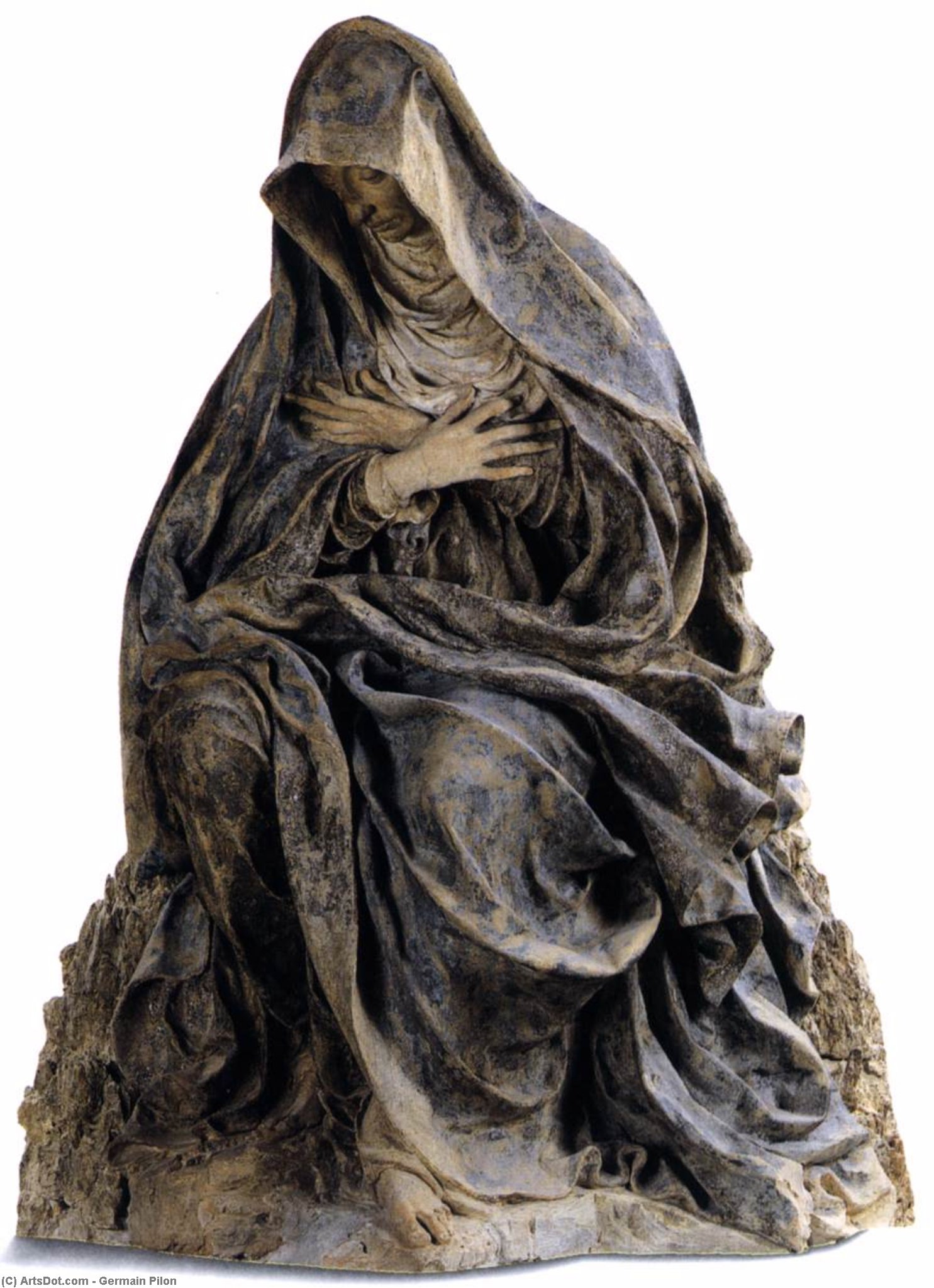
Germain Pilon's “The Virgin of Sorrows,” painted around 1580, isn’t merely a depiction of the biblical Mary; it’s an embodiment of profound grief and maternal anguish rendered with startling realism and emotional depth. This terracotta sculpture, now residing in the Louvre Museum, transcends its humble material to become a powerful meditation on suffering – a cornerstone of Renaissance art's exploration of human emotion and religious devotion. Pilon, a sculptor deeply rooted in the artistic currents of Fontainebleau, skillfully blended influences from the late Gothic tradition with the burgeoning dynamism of Mannerism, creating an image that is both familiar and unsettlingly intimate.
The sculpture immediately draws the viewer’s eye to Mary's posture – slumped, head bowed, hands clasped together in a gesture of supplication or quiet despair. Her drapery, voluminous and swirling, isn’t simply decorative; it actively conveys her sorrow, mimicking the turbulent emotions within. The folds cascade downwards, mirroring the weight of her grief and creating a sense of instability, as if she might collapse under the burden of her loss. Pilon's mastery lies in his ability to imbue this seemingly simple pose with an overwhelming sense of pathos – a testament to his understanding of human psychology and his skill in translating it into sculpted form.
A Renaissance Echo: Context and Influences
Pilon’s work emerged during a period of intense religious and political upheaval in France. The Valois dynasty, marked by succession crises and devastating wars, had left an indelible scar on the nation's psyche. Catherine de Medici, Queen Mother and patron of the arts, commissioned numerous works to commemorate her deceased sons and consolidate her family’s legacy – a poignant reflection of the constant threat of loss that permeated royal life. This context profoundly shaped Pilon’s artistic vision; his sculptures weren’t simply religious icons but also powerful symbols of mourning and remembrance.
The sculpture's style is deeply influenced by the Fontainebleau School, known for its elegant forms, rich colors, and dramatic use of light and shadow. However, Pilon departs from the idealized beauty often associated with this school, opting instead for a more raw and emotionally charged representation of Mary’s suffering. There’s an undeniable connection to Michelangelo's work, particularly his Pietà, evident in the pyramidal composition and the expressive rendering of human anatomy – though Pilon imbues these elements with a distinctly French sensibility.
Symbolism and the Seven Sorrows
“The Virgin of Sorrows” is inextricably linked to the concept of the “Seven Sorrows,” a popular devotion within Catholic tradition. These sorrows represent key moments in Mary’s life – from the prophecy of Simeon foretelling her son's suffering, through the flight into Egypt, the loss of Jesus in the Temple, and culminating in his crucifixion and burial. The sculpture subtly alludes to these events, inviting viewers to contemplate the depth of Mary’s pain.
The most striking element is undoubtedly the depiction of Mary holding a lance – a direct reference to the spear that pierced her heart at Christ's crucifixion. This visual symbol powerfully conveys the intensity of her grief and serves as a potent reminder of the sacrifice she endured for humanity. The sculpture’s muted color palette—earth tones dominating the robe—further emphasizes the somber mood, reinforcing the sense of profound sorrow.
A Timeless Expression of Maternal Grief
“The Virgin of Sorrows” remains a profoundly moving work of art centuries after its creation. Pilon's ability to capture such intense emotion in terracotta is remarkable, and the sculpture’s enduring appeal lies in its universal themes of loss, grief, and maternal love. It speaks to the shared human experience of sorrow—a reminder that even amidst suffering, there can be a profound sense of dignity and grace. Reproductions of this piece offer a powerful way to bring this timeless expression of maternal grief into any space, serving as both an artistic statement and a poignant meditation on the complexities of the human heart.