A Renaissance Echo of Power and Virtue
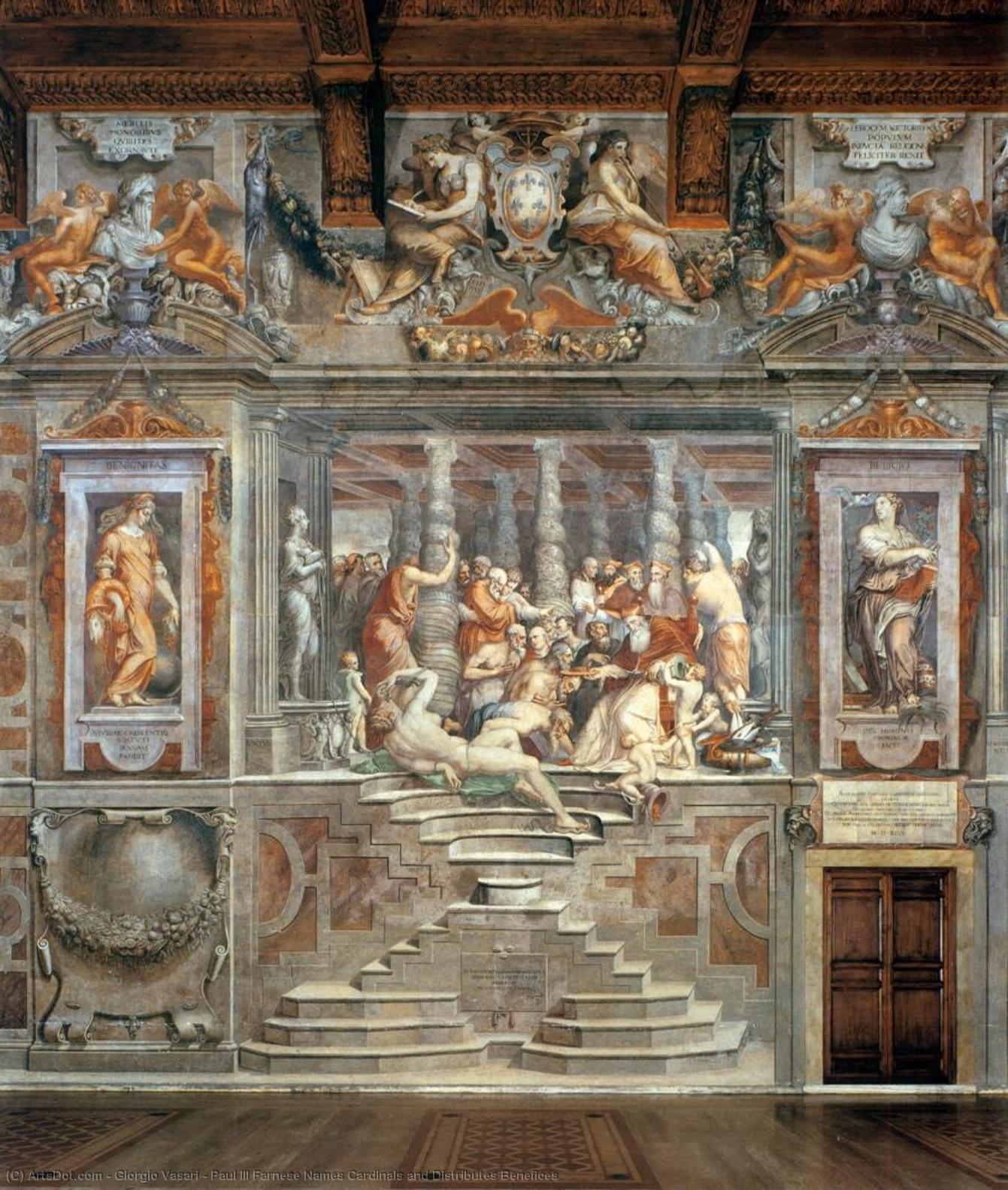
Within the hallowed, quiet halls of the Palazzo della Cancelleria in Rome, there exists a space where history breathes through pigment and plaster. Giorgio Vasari’s monumental fresco, Paul III Farnese Names Cardinals and Distributes Benefices, is far more than a mere ceiling decoration; it is a profound theatrical performance frozen in time. Created in 1546 under the ambitious patronage of Cardinal Alessandro Farnese, this masterpiece serves as a grand proclamation of papal authority and the enduring splendor of Roman civilization. To gaze upon this work is to step into the heart of the High Renaissance, where the boundaries between political reality and mythological legend blur into a single, breathtaking vision of governance and grace.
The composition unfolds with a sophisticated, layered complexity that draws the eye through an imagined architectural expanse. At its very core, Vasari places a central assembly of figures gathered around a table—a deliberate visual anchor representing the weight and solemnity of papal administration. This focal point is not solitary; it is surrounded by a swirling tapestry of smaller vignettes that whisper tales of the Trojan War. By weaving these classical myths into a contemporary scene of ecclesiastical power, Vasari achieves a brilliant synthesis of Christian allegory and Greco-Roman tradition. The result is a narrative landscape where the resilience of ancient heroes mirrors the perceived stability and triumph of the Farnese lineage.
The Mastery of Fresco and Light
The technical execution of this work reveals the disciplined hand of a master. Utilizing the venerable fresco technique, Vasari applied pigments mixed with water directly onto freshly laid, wet plaster. This demanding method requires an artist to work with incredible speed and foresight, as each stroke must be perfectly placed before the surface dries. The consequence of such labor is a luminous, enduring surface that has retained its brilliance for nearly five centuries. The palette is a warm, sophisticated symphony of earthy tones—rich ochres, deep terracottas, and muted reds—interspersed with subtle blues that provide a sense of atmospheric depth.
For the discerning collector or interior designer, this artwork offers an unparalleled sense of grandeur. The use of linear perspective guides the viewer’s gaze toward vanishing points that seem to extend the room itself, creating an illusion of infinite height and architectural majesty. The interplay of light and shadow—achieved through delicate shading on drapery and the idealized forms of human figures—imbue the scene with a palpable volume. It is a work that does not merely sit upon a wall but actively transforms the atmosphere of a space, infusing it with an aura of historical significance and intellectual depth.
A Legacy for the Modern Collector
Beyond its historical importance, Paul III Farnese Names Cardinals and Distributes Benefices resonates emotionally through its celebration of virtue and order. The figures within the fresco embody qualities such as justice, prudence, and fortitude, making the piece a timeless meditation on leadership and character. For those seeking to curate an environment of distinction, a high-quality reproduction of this Vasari masterpiece offers more than just aesthetic beauty; it provides a window into the very soul of the Renaissance.
Whether placed in a formal study, a grand library, or a sophisticated living space, this artwork serves as a conversation piece that bridges the gap between the sixteenth century and the present day. It invites contemplation of the enduring human desire to leave a legacy of beauty and strength, making it an essential acquisition for anyone dedicated to the art of fine decoration and the preservation of cultural heritage.