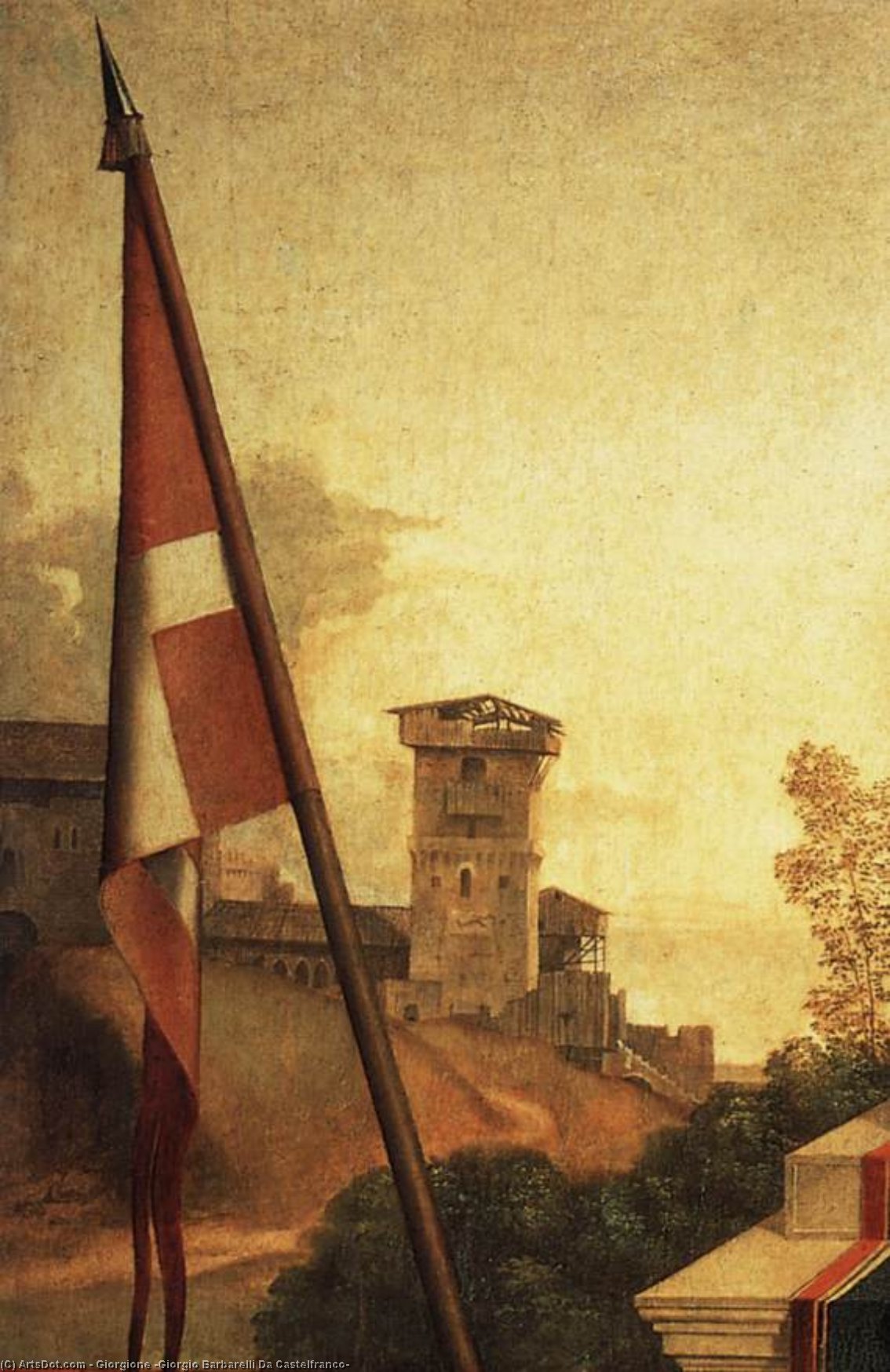
A Venetian Vision of Divine Grace
In the heart of the Venetian Renaissance, where the shimmering light of the lagoons met the profound intellectual shifts of humanism, emerged a work of unparalleled spiritual depth. Madonna And Child Enthroned Between St Francis And St Liberalis, a breathtaking detail from Giorgione’s monumental masterpiece, serves as a window into an era defined by piety and poetic mystery. The painting captures a moment of celestial stillness, presenting the Virgin Mary cradling the infant Jesus upon an ornate throne. Flanking this divine central figure are Saint Francis of Assisi and Saint Liberalis, figures whose presence anchors the composition in themes of humility and contemplative devotion. This tripartite arrangement is more than a mere religious convention; it is a carefully orchestrated symphony of sacred presence designed to draw the viewer into a state of quiet adoration.
To gaze upon this work is to experience the very essence of Venetian Mannerism. Unlike the sharp, linear precision found in the works of his Florentine contemporaries, Giorgione employs a revolutionary approach to light and atmosphere. Through the masterful use of glazing—the delicate layering of translucent pigments—he achieves a luminous depth that seems to glow from within the canvas itself. The color palette is a sophisticated tapestry of muted reds and rich golds, harmonizing to create an ethereal, diffused light that softens edges and blends forms into a seamless, dreamlike reality. This technique, known as sfumato in its more atmospheric sense, allows the figures to emerge from the shadows with a soft, tactile quality, inviting the eye to linger on the subtle transitions of skin and fabric.
Historical Resonance and Timeless Elegance
The historical backdrop of this piece is as captivating as the imagery itself. Created around 1506-1508, during a period of intense artistic experimentation in Venice, the painting reflects the burgeoning wealth and intellectual curiosity of the era. While the exact origins of its commission remain a subject of scholarly intrigue—often linked to the prestigious Gonzaga family of Mantua—its soul is undeniably Venetian. It embodies the spirit of a city that was simultaneously a mercantile powerhouse and a sanctuary for humanist thought, where artists like Giorgione sought to marry the physical beauty of the natural world with the profound truths of the divine.
For the discerning collector or interior designer, this artwork offers much more than historical significance; it provides an emotional anchor for any sophisticated space. The painting’s ability to evoke a sense of peace, stability, and timelessness makes it an extraordinary choice for creating an atmosphere of refined contemplation. Whether displayed as a centerpiece in a grand gallery or as a subtle touch of classical elegance in a modern study, this reproduction brings the soft, golden light of the sixteenth century into the contemporary home. It is an invitation to slow down, to breathe, and to reconnect with the enduring beauty of the Renaissance spirit.