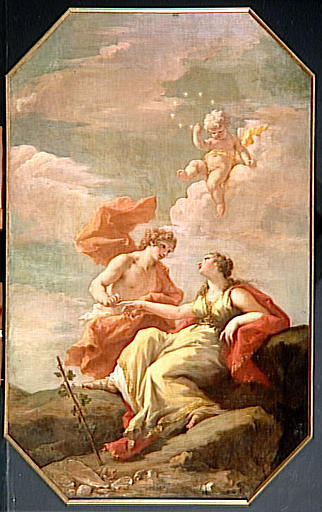
'Bacchus and Ariadne' is part of Art UK’s collection, offering valuable information about its history, artistic style, and provenance. Access detailed descriptions and explore related artworks.
Giovanni Antonio Pellegrini (1675-1741) war ein venezianischer Maler, der Renaissance- und Barockstile verband. Bekannt für opulente Wandgemälde in England, war er ein Vorläufer Tiepolos und beeinflusste die europäische Kunst.
Louvre
(Paris, Frankreich)
Paris
Frankreich
Entdecken Sie den Louvre in Paris! Meisterwerke wie die Mona Lisa & Venus von Milo erwarten Sie. Eine Reise durch Kunstgeschichte vom alten Ägypten bis zur Renaissance.
Louvre
Musée du Louvre
Frankreich
Paris
Louvre Museum
Mona Lisa
8.7 Millionen (2024)
380.000+ Objekte
Kunstmuseum
1793
Eine königliche Residenz
3
Wofür wurde der Louvre ursprünglich gebaut?
A Divine Embrace: The Myth of Bacchus and Ariadne
To gaze upon this depiction of Bacchus and Ariadne is to step directly into the luminous heart of classical mythology. It is a scene steeped in the intoxicating blend of divine passion, abandonment, and rediscovery. At its core lies the narrative weight of Ariadne, left adrift after her crucial aid to Theseus, meeting the revelry embodied by Bacchus, the god of wine and ecstatic joy. The composition itself guides the eye upward through a celestial drama; Bacchus extends his hand in an gesture of divine connection toward Ariadne, who reclines with breathtaking grace upon the rugged earth. Above them all, a cherubic figure floats amidst swirling clouds, scattering what appears to be stardust or blossoms—a visual manifestation of burgeoning love and fate’s gentle intervention.
Baroque Drama and Venetian Elegance
Stylistically, this work resonates deeply with the grandeur of the Baroque period, yet it carries the refined luminosity characteristic of a master like Giovanni Antonio Pellegrini. The drama is palpable, yet the execution remains exquisitely elegant. Notice how the artist has utilized rich color—the vibrant sweep of Bacchus’s red robe contrasting against Ariadne’s flowing yellow gown—to heighten the emotional temperature of the moment. The entire scene feels orchestrated, possessing that characteristic Baroque sense of movement and heightened emotion, but tempered by a Venetian sensibility for grace and polished finish.
Mastery in Light and Atmosphere
Technically, the painting speaks volumes about the artist’s skill with oil paint on canvas. The handling of light is perhaps its most captivating element; it is diffused, bathing the figures in a soft glow that highlights their idealized forms while allowing the background sky to breathe. This sky, transitioning seamlessly from pale blues into warm sunset oranges and pinks, acts as both setting and emotional barometer. The artist achieves depth not merely through perspective lines, but through the careful layering of textures—the solidity of the rocks beneath them contrasted with the ethereal softness of the clouds.
Symbolism of Love and Divine Intervention
The symbolism woven into this canvas is rich for contemplation. Bacchus represents unbridled passion and the ecstasy found in revelry, while Ariadne embodies beauty caught between vulnerability and divine rescue. The entire tableau speaks to themes of fate’s turning point—the moment when abandonment gives way to profound connection. For the collector or decorator, this piece offers more than mere decoration; it is a visual meditation on the transformative power of love, rendered with an almost palpable sense of yearning and sublime beauty.