A Celestial Ascent: The Divine Radiance of Piazzetta
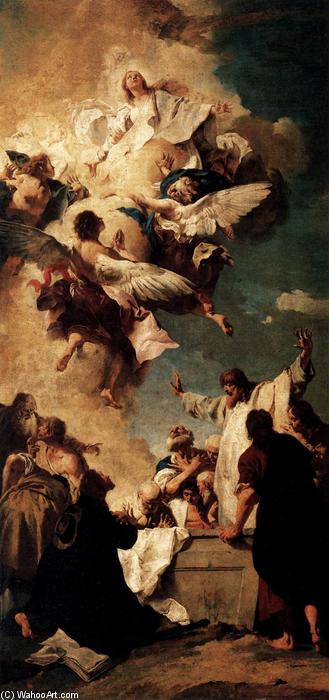
In the hallowed corridors of the Louvre Museum, where the echoes of artistic greatness reside, hangs a monumental testament to the spiritual fervor of the eighteenth century: Giovanni Battista Piazzetta’s Assumption of the Virgin. Executed in 1735, this breathtaking canvas is far more than a mere religious depiction; it is a profound visual symphony that captures the very moment of transcendence. As the viewer's gaze meets the sweeping expanse of the work, one is immediately swept into a dynamic upward trajectory, following the Virgin Mary as she ascends toward the heavens. Piazzetta, a master of the Venetian school, orchestrates a celestial ballet where the boundaries between the earthly and the divine become beautifully blurred, inviting all who behold it to share in this moment of holy triumph.
The composition is a masterclass in Baroque drama blended with the emerging grace of the Rococo style. Piazzetta utilizes a powerful verticality to guide the soul upward, creating a sense of weightlessness and aspiration. Mary sits at the heart of this cosmic movement, her figure radiating a serene, luminous purity that contrasts with the swirling energy of the angelic host surrounding her. These celestial beings, some clutching musical instruments as if providing a divine soundtrack to the ascent, are rendered with such vitality that they seem to pulse with life. The sheer scale of the work—stretching over five meters in width—ensures that the viewer is not merely an observer but a participant in this grand, liturgical event.
The Alchemy of Light and Earthly Tones
What truly distinguishes this masterpiece is Piazzetta’s sophisticated manipulation of chiaroscuro. He does not rely on garish colors to command attention; instead, he employs a deeply resonant palette of earthy hues—rich ochres, deep umbers, and warm siennas—to ground the scene in a palpable reality. This terrestrial foundation serves as the perfect foil for the brilliant, ethereal whites of Mary’s robes and the shimmering light that catches the delicate feathers of the angels' wings. The interplay between profound shadow and sudden, piercing illumination creates a sculptural depth, giving the figures a three-dimensional presence that feels almost tactile.
For the discerning collector or interior designer, this painting offers an unparalleled opportunity to introduce a sense of historical gravitas and emotional depth into a space. The way the light seems to emanate from within the canvas itself makes it a transformative piece for any curated collection. Whether placed in a grand hall or a contemplative study, a high-quality reproduction of this work brings with it the prestige of the Louvre and the enduring spiritual resonance of the Baroque era. It is an investment in atmosphere, providing a focal point that inspires awe, invites meditation, and celebrates the pinnacle of Italian painterly skill.