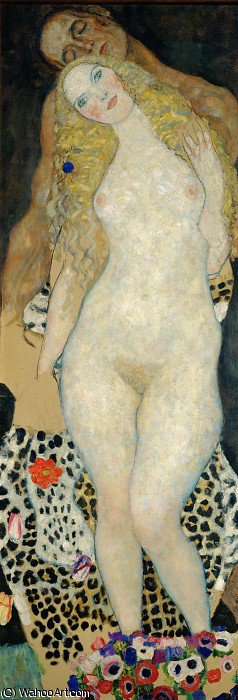
Unveiling the Erotic Mystery: Klimt's *Adam and Eve* (Unfinished)
Gustav Klimt’s *Adam and Eve*, existing in an incomplete state, represents a pivotal moment in the artist’s evolution and a potent distillation of his signature style. This unfinished canvas, depicting two nude figures entwined in a gesture both tender and charged with unspoken desire, immediately draws the viewer into a world where myth and sensuality collide. The painting's raw energy and evocative composition prefigure Klimt’s later, more fully realized masterpieces, offering a rare glimpse into his creative process – a process marked by an intense exploration of form, color, and symbolism.
- Subject Matter: The iconic pairing of Adam and Eve transcends simple biblical narrative. Klimt transforms the story of innocence lost into a profound meditation on human connection, desire, and perhaps even the anxieties surrounding creation itself.
- Art Nouveau Influence: The flowing lines, decorative motifs, and flattened perspective are hallmarks of the Art Nouveau movement, which Klimt embraced wholeheartedly. This style sought to evoke organic forms and natural beauty, rejecting the rigid formalism of academic art.
- Technique – Gold Leaf & Texture: Like many of Klimt’s works, this piece likely incorporates gold leaf, a technique he mastered to create shimmering surfaces that add an almost otherworldly quality. The application of paint is deliberately textured, contributing to the painting's tactile and emotionally resonant impact.
A Symphony of Color and Symbolism
Klimt’s masterful use of color is central to the work’s power. Deep reds, golds, and browns dominate the palette, evoking a sense of primal passion and earthly abundance. The woman's necklace, a recurring motif in Klimt’s art, may represent fertility, protection, or perhaps even a subtle allusion to the serpent from the biblical story – a symbol of temptation and knowledge. The scattered figures surrounding the central pair are not merely decorative; they likely represent the consequences of humanity’s transgression, adding layers of complexity to the scene.
- Red as Symbolism: The prominent use of red is significant. In Klimt's work, red often represents passion, desire, and even danger – a potent combination within this depiction of creation.
- Geometric vs. Organic Forms: Notice the interplay between geometric shapes (particularly in the background) and organic forms (the bodies of Adam and Eve). This juxtaposition reflects Klimt’s broader exploration of opposing forces within human experience.
Historical Context & Klimt's Artistic Journey
Created around 1907-1908, *Adam and Eve* emerged during a period of immense artistic innovation in Vienna. Klimt was at the forefront of this movement, alongside artists like Egon Schiele, challenging traditional notions of beauty and exploring themes of sexuality, mortality, and spirituality. Born in Baumgarten, Austria, in 1862, Klimt’s early training at the Kunstgewerbeschule provided him with a technical foundation that he later subverted through his intensely personal and expressive style. The painting's unfinished state is particularly revealing; it offers a glimpse into Klimt’s working method – a process of layering ideas, experimenting with techniques, and ultimately striving to capture an elusive emotional truth.
This incomplete version provides a unique opportunity to appreciate the genesis of one of Klimt’s most celebrated works, showcasing his innovative approach and profound understanding of human emotion.
Perfect for Collection & Interior Design
A hand-painted reproduction of *Adam and Eve* will bring a touch of timeless elegance and artistic power to any space. Its evocative imagery and rich color palette make it an ideal addition to art collections, galleries, or sophisticated interiors. ArtsDot offers meticulously crafted reproductions that faithfully capture the essence of Klimt’s masterpiece, ensuring that you can enjoy this iconic artwork in your own home.