A Glimpse into the Golden Soul of Gustav Klimt
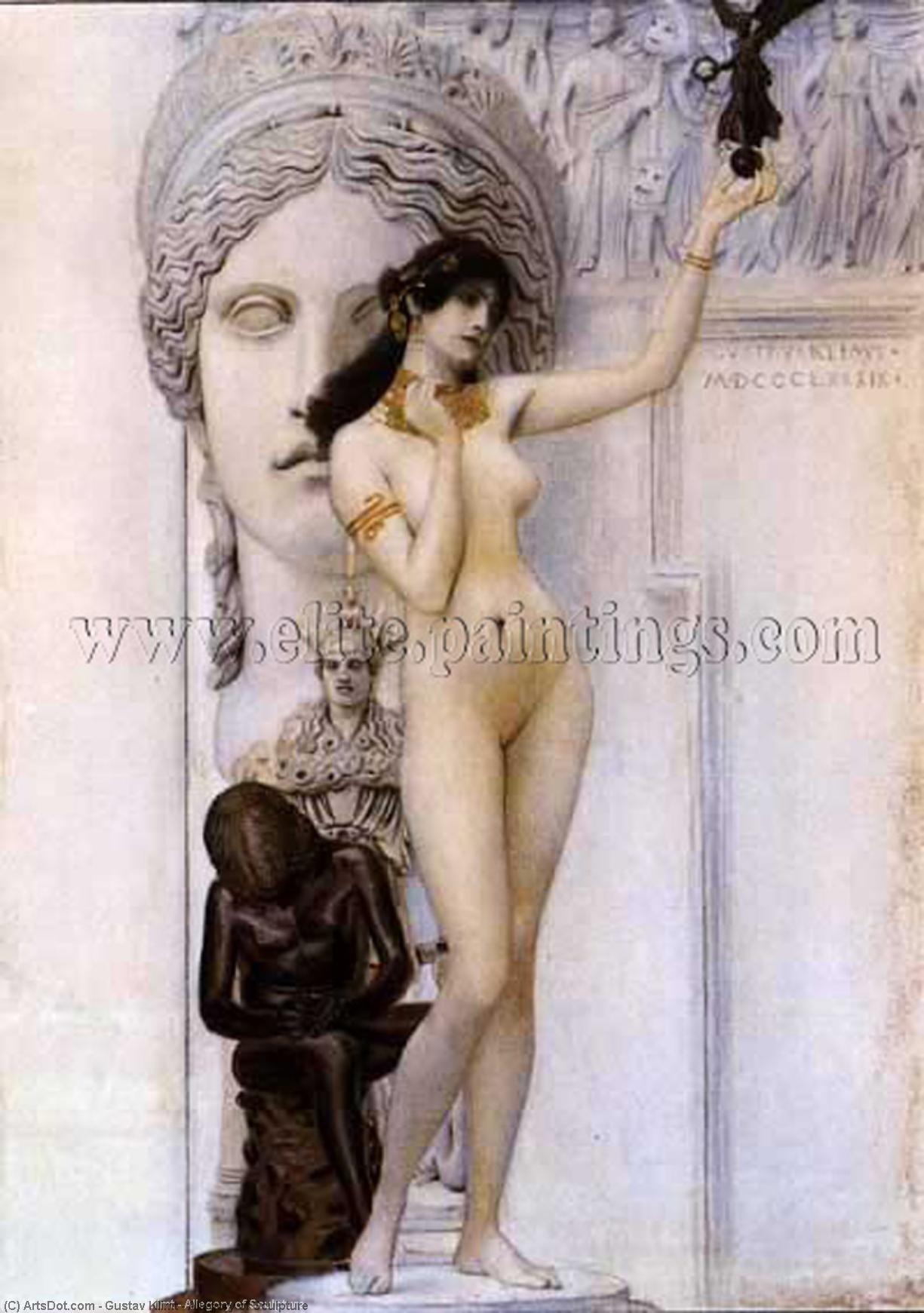
In the quiet intimacy of a small canvas, measuring a mere 43 x 30 cm, lies a profound window into the burgeoning genius of Gustav Klimt. Completed in 1889, Allegory of Sculpture serves as a mesmerizing precursor to the opulent "Golden Period" that would later define his legacy. This work is not merely a depiction of figures; it is an evocative dance between the tangible and the ethereal. At its heart, the painting presents a woman of striking presence, her form partially unveiled in a gesture that challenges the rigid societal decorum of late 19th-century Vienna. As she stands before a stoic statue, the viewer is invited into a space where the boundaries between flesh and stone, movement and stillness, begin to dissolve.
The composition is a masterclass in early Symbolist thought, where every element serves as a vessel for deeper meaning. The woman’s long, cascading hair flows with an organic grace, embodying natural beauty, while the two birds perched upon her shoulders act as silent sentinasons of creativity and divine inspiration. These avian companions suggest the artist's role as a conduit for ideas, bridging the gap between the earthly realm and the imaginative heights of the psyche. Even the presence of secondary figures in the periphery adds a layer of narrative mystery, creating a tableau that feels like a captured moment from a dream or a classical myth brought to life.
The Alchemy of Technique and Light
To behold this piece is to witness the intersection of meticulous craftsmanship and experimental brilliance. While Klimt’s later works are famed for their heavy use of gold, Allegory of Sculpture showcases his foundational mastery of texture and light through a delicate application of pencil, shading, and hatching. This technique creates a tactile surface that breathes life into the skin of the subject, contrasting beautifully with the cold, unyielding permanence of the sculpture behind her. However, it is Klimt’s signature use of gold leaf that truly elevates the work, imbuing the scene with a radiant, celestial luminosity.
This infusion of gold does more than provide decorative splendor; it acts as a spiritual medium, representing divine illumination and the transcendence of the soul. For the discerning collector or interior designer, this interplay of light and shadow offers an unparalleled sensory experience. The way the metallic accents catch the ambient light in a room can transform a space, turning a wall into a focal point of shimmering elegance. It is a technique born from his father’s heritage as a gold engraver, a lineage of brilliance that Klimt transformed into a revolutionary artistic language.
An Eternal Inspiration for Modern Spaces
For those seeking to curate an environment of sophistication and intellectual depth, Allegory of Sculpture offers endless inspiration. Its Art Nouveau sensibilities—characterized by flowing lines and organic forms—make it a versatile masterpiece capable of anchoring both classical and contemporary interiors. Whether placed in a sunlit study or a moody, curated gallery space, the painting radiates an aura of quiet strength and romantic mystery.
Owning a high-quality reproduction of this Klimt masterpiece allows one to possess a fragment of art history’s most enchanting era. It is more than a decoration; it is an invitation to contemplate the eternal themes of beauty, creation, and the human spirit. As a piece that bridges the gap between classical realism and the avant-garde, it remains a timeless choice for those who appreciate art that speaks to both the eye and the soul.