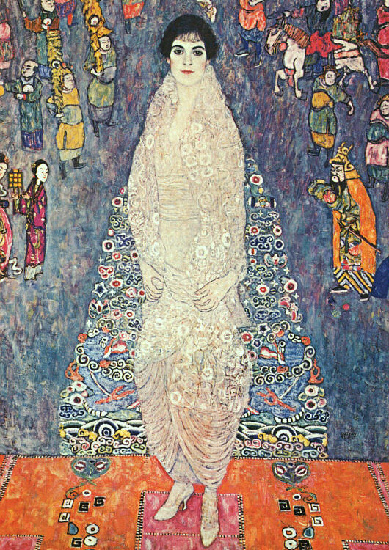
Portrait of Elisabeth Bachofen-Echt by Gustav Klimt
Gustav Klimt’s “Portrait of Elisabeth Bachofen-Echt” stands as an emblem of the Vienna Secession movement and Art Nouveau aesthetics—a testament to Klimt's unparalleled ability to fuse artistic innovation with profound psychological insight. Painted in 1914, this oil painting transcends mere representation; it delves into the complexities of femininity and explores themes of intimacy, vulnerability, and hidden desires.
- Subject Matter: The portrait depicts Elisabeth Lederer, later Baroness Elisabeth Bachofen-Echt, a woman renowned for her marriage to Baron Friedrich von Bachofen-Echt—a union celebrated for its intellectual vibrancy and artistic patronage.
- Style & Technique: Klimt’s signature style is immediately recognizable through the masterful application of gold leaf—a technique borrowed from Byzantine iconography—which imbues the robe with an ethereal glow and symbolizes wealth, divinity, and timeless beauty. The intricate patterns adorning the fabric are executed with meticulous detail, reflecting Klimt's fascination for ornamentation and his desire to create visually arresting compositions.
- Historical Context: Created during a period of artistic ferment in Vienna—characterized by debates over morality and aesthetic standards—the portrait embodies the Secession’s rejection of academic conventions and its embrace of Symbolism as a means of conveying emotion and psychological truth. Klimt's work challenged societal norms regarding female sexuality and explored themes of subconscious desire.
Background on Gustav Klimt
Born in Baumgarten near Vienna, Austria, in 1862, Gustav Klimt embarked on an artistic journey marked by hardship and perseverance. Initially struggling with poverty while pursuing architectural painting at the Vienna School of Arts and Crafts—a path fraught with limitations—Klimt honed his skills through commissions for decorative murals and ceilings, establishing a reputation for innovative visual storytelling. Despite facing criticism and controversy throughout his life—fueled by debates over artistic freedom and moral propriety—Klimt’s unwavering dedication to his craft cemented his legacy as one of Austria's most influential artists.
- Early Influences: Klimt’s formative years were shaped by the teachings of Hans Makart, Vienna’s foremost history painter—whose opulent style served as a model for Klimt’s early artistic endeavors.
- Japanese Art & Methodologies: Klimt's artistic vision was profoundly impacted by Japanese art and its distinctive methods—particularly woodblock printing—which championed flatness, asymmetry, and bold color palettes—principles that would become integral to his groundbreaking style.
Interpreting the Portrait’s Symbolism
The “Portrait of Elisabeth Bachofen-Echt” invites contemplation on multiple levels—a reflection of Klimt's profound engagement with psychological symbolism and his exploration of the human condition. The robe’s shimmering gold leaf—a deliberate departure from academic tradition—represents not merely material wealth but also spiritual illumination—suggesting that Elisabeth embodies an inner radiance that transcends outward appearances. Furthermore, Klimt’s meticulous attention to detail—particularly in depicting the folds of fabric and the subtle nuances of expression—underscores his conviction that art possesses the capacity to convey unspoken emotions and psychological complexities. The portrait stands as a poignant reminder of Klimt's enduring fascination with the female form—and his unwavering belief in art’s ability to illuminate the hidden depths of human experience.
Acquiring a Hand-Painted Reproduction
If captivated by the timeless beauty and artistic brilliance of Gustav Klimt’s “Portrait of Elisabeth Bachofen-Echt”—as countless admirers have been—consider indulging in the pleasure of owning a hand-painted reproduction from ArtsDot.com. Our skilled artisans meticulously recreate Klimt's iconic style, ensuring that your artwork captures the essence of his masterpiece with unparalleled fidelity. By selecting a reproduction—rather than a print—you gain access to an authentic artistic experience—preserving the vibrancy and textural richness of Klimt’s original vision for generations to come. Explore ArtsDot.com today and bring Klimt's legacy into your home!