A Testament to Craftsmanship: Gustav Mahler’s “Easter Egg-Box”
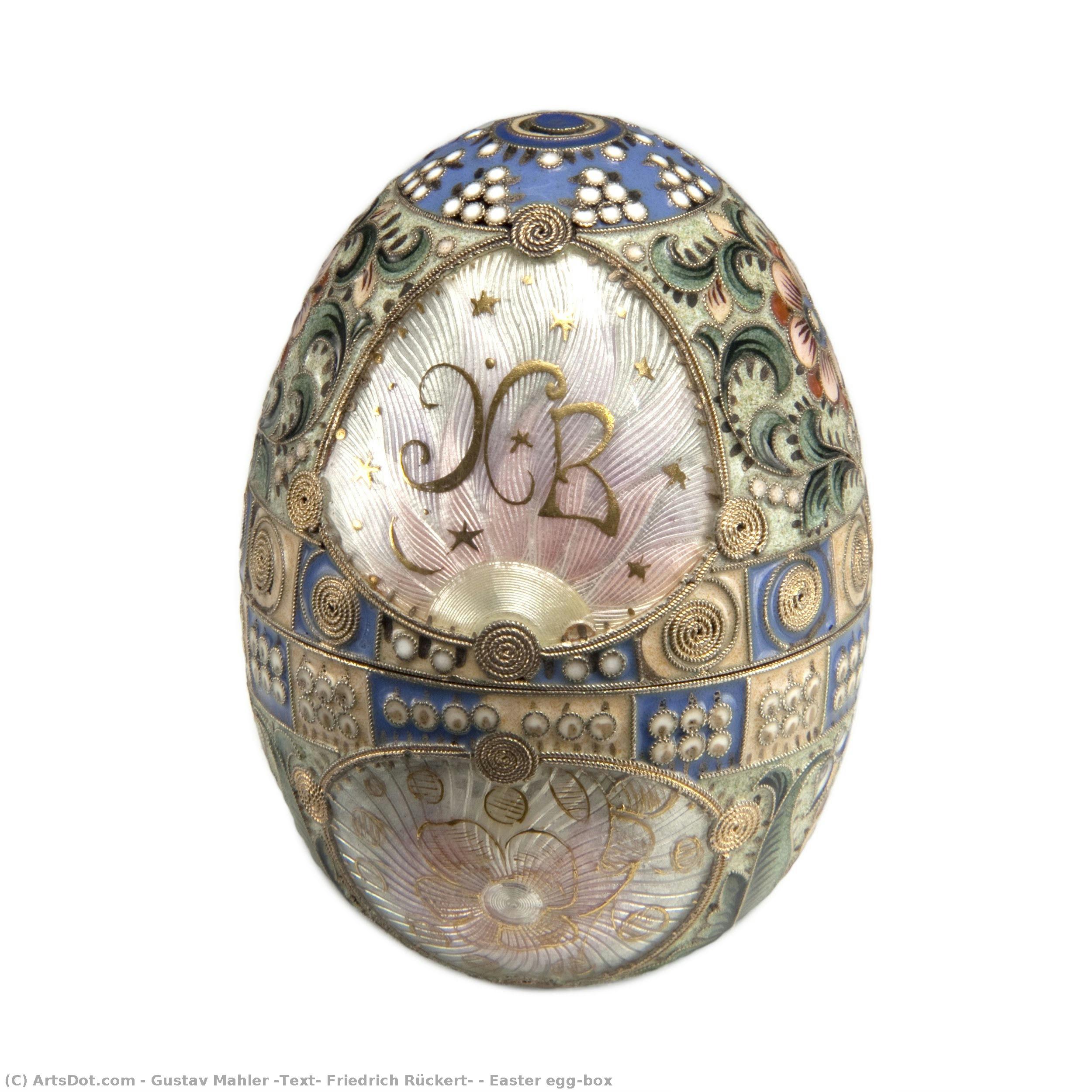
This exquisite hand-painted reproduction captures the essence of Gustav Mahler's "Easter Egg-box," an object imbued with both artistic beauty and a poignant sense of history. The artwork presents a meticulously rendered close-up, focusing on a single, opulent egg – a miniature masterpiece that speaks volumes about the late Romantic era’s fascination with intricate detail and symbolic representation. The image immediately draws the eye to its striking color palette: a harmonious blend of deep blues and pristine whites, evoking the serenity and spiritual significance often associated with Easter celebrations. The subtle gold trim, strategically applied, elevates the piece beyond mere decoration, suggesting a connection to imperial grandeur and the luxurious tastes of the period.
The Artist and His Context
Created by Gustav Mahler (1860-1911), a towering figure in late Romantic music, this egg reflects his broader artistic concerns. Born in Kalisz, Austria – now part of Poland – Mahler’s life was marked by a sense of displacement, a theme frequently explored through the emotional intensity of his compositions. His musical journey, shaped by influences ranging from Wagnerian opera to Bohemian folk melodies, culminated in works that are both deeply personal and universally resonant. Mahler's connection with Arnold Schoenberg, forged during their studies at Vienna Conservatory, foreshadowed the radical shifts occurring within music theory and composition – a crucial element of understanding Mahler’s legacy.
Symbolism and Decorative Intent
The egg itself is a potent symbol, representing rebirth, renewal, and new beginnings – themes central to the Easter holiday. Its elaborate decoration—a testament to the meticulous craftsmanship of the time—was likely intended as a luxurious object for display or gifting, reflecting the elevated status of the recipient. The blue and white coloration, frequently associated with royalty and spirituality, further reinforces this symbolic weight. The gold trim, reminiscent of Baroque ornamentation, adds an element of opulence and grandeur, suggesting a connection to religious iconography and aristocratic taste. The attribution to Friedrich Rückert, a renowned poet, subtly elevates the piece's intellectual and artistic significance, hinting at a deliberate engagement with themes of beauty, mortality, and spiritual contemplation.
Technique and Reproduction
This hand-painted reproduction meticulously recreates Mahler’s “Easter Egg-box” using traditional techniques. Skilled artisans have painstakingly rendered the intricate details – from the delicate curves of the egg to the shimmering effect of the gold trim – ensuring an accurate and faithful representation of the original. The use of high-quality pigments and a smooth, even application guarantees exceptional color fidelity and longevity. This reproduction is more than just a copy; it’s a tangible connection to a significant work of art, allowing you to appreciate Mahler's vision and the artistry of his time within your own space.