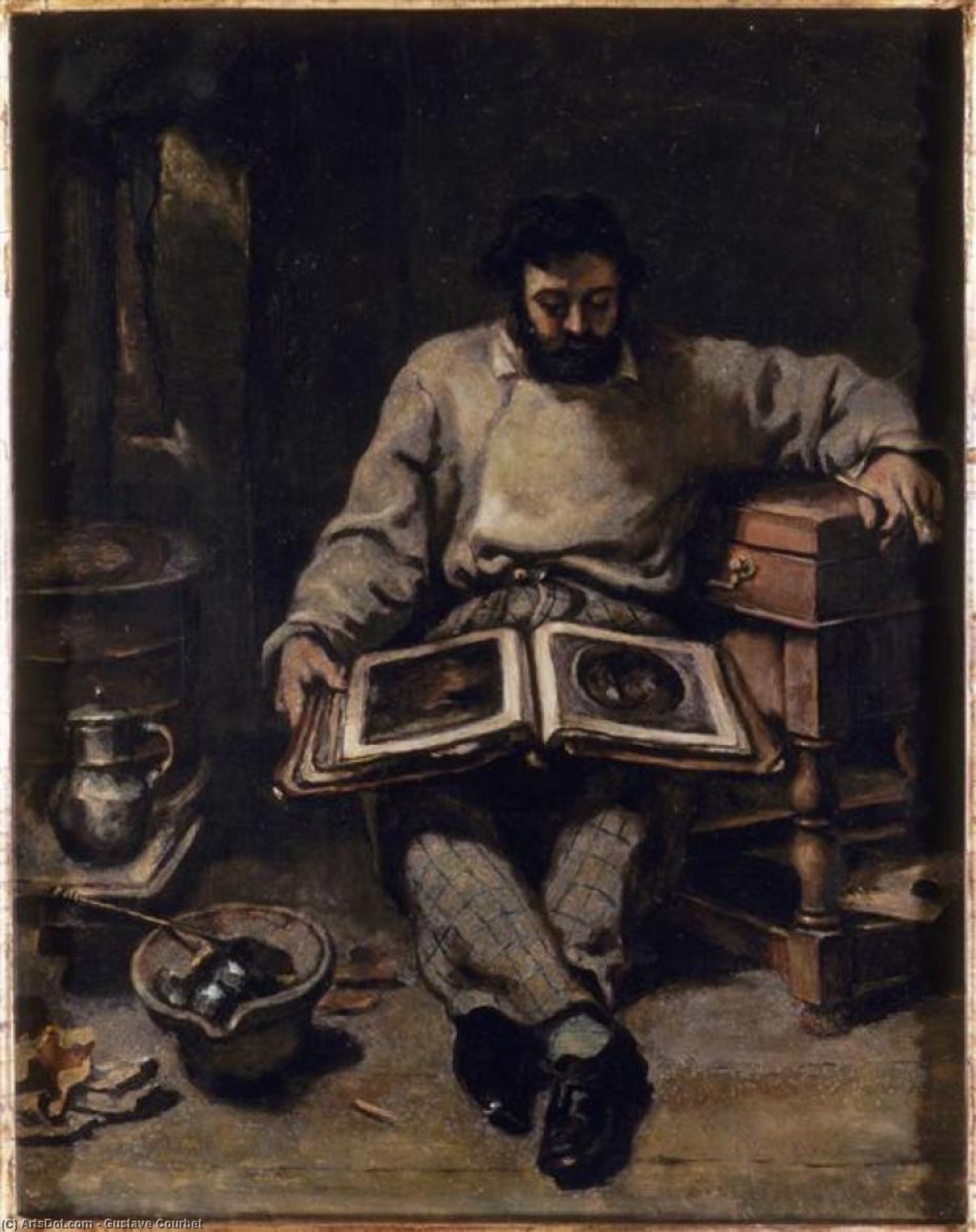
A Portrait of Quiet Contemplation: Gustave Courbet’s “Marc Trapadoux is Examining the Book of Prints”
- Subject Matter: This striking monochrome print depicts Marc Trapadoux, a young man absorbed in reading a book amidst an unassuming domestic interior. The scene captures a moment of solitary intellectual pursuit—a deliberate rejection of grand narratives and heroic gestures characteristic of Romantic art.
- Style: Courbet’s approach aligns firmly with Realism, prioritizing truthful representation over artistic embellishment. Unlike the idealized figures favored by his contemporaries, Trapadoux is presented as an ordinary man, embodying the everyday realities of bourgeois life in mid-19th century France.
Technique and Composition
Courbet’s masterful use of etching and drypoint demonstrates a meticulous attention to detail. The artist skillfully captures subtle tonal variations—shadows dancing across Trapadoux's face and the surfaces of the bowls—creating an illusionistic depth that transcends the limitations of printmaking. The composition is deliberately understated, focusing on Trapadoux’s posture and gaze as he engages with his reading material. The placement of the bowls serves not merely as decorative elements but subtly reinforces the sense of a quiet, contemplative space.
Historical Context: Challenging Artistic Conventions
Painted in 1848, “Marc Trapadoux is Examining the Book of Prints” emerged during a period of significant artistic upheaval. Courbet’s refusal to conform to academic standards directly challenged the prevailing aesthetic sensibilities of the time—a reaction against the Romantic preoccupation with emotion and imagination. The painting reflects the broader societal anxieties surrounding the Franco-Prussian War, signaling a shift towards portraying social realities rather than mythological or historical dramas.
Symbolism and Emotional Resonance
The book itself represents knowledge, contemplation, and intellectual curiosity—values that Courbet championed throughout his career. The bowls scattered around the room symbolize domestic tranquility and perhaps hint at the artist’s desire to depict scenes of ordinary life with dignity and sincerity. More profoundly, the image speaks to a universal yearning for quiet reflection amidst the turbulence of the era. It invites viewers to consider the beauty found in simplicity and the importance of engaging with ideas.
Interior Design Inspiration
“Marc Trapadoux is Examining the Book of Prints” offers valuable insights into interior design trends of the mid-Victorian period. The muted palette—primarily shades of grey—creates a calming atmosphere, mirroring the contemplative mood conveyed by the artwork. Incorporating similar textural elements and understated decorative accents could elevate contemporary spaces, fostering a sense of serenity and intellectual stimulation.