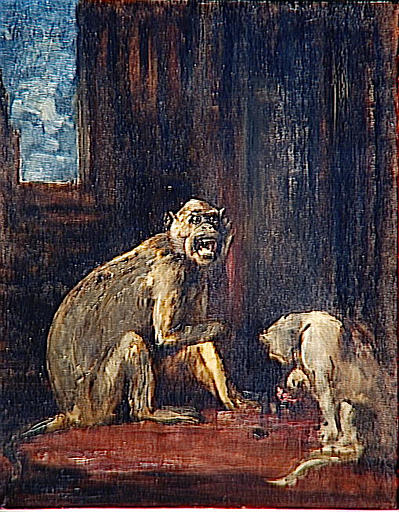
A Glimpse into the Dreamscape: Gustave Moreau’s *Bertrand et Raton*
Gustave Moreau's Bertrand et Raton (1883) is not merely a depiction of two monkeys; it’s an immersion into the richly layered, symbolic world that defined the Symbolist movement. Painted during a pivotal moment in artistic history – a reaction against the perceived superficiality of Realism and Impressionism – Moreau sought to evoke profound emotional and spiritual responses through carefully constructed imagery rooted in mythology, folklore, and the subconscious. This work exemplifies his fascination with creating dreamlike scenes populated by enigmatic figures, inviting viewers into a realm where logic yields to intuition.
- Subject Matter: The painting centers on two monkeys – named Bertrand and Raton – engaged in an intimate interaction within a domestic setting. Their posture, the open mouth of one suggesting either sleep or contemplation, and their direct gaze at each other immediately establish a narrative tension, hinting at unspoken desires or shared secrets.
- Setting: The room itself is crucial to the painting’s impact. A window offers a glimpse of an indeterminate exterior, blurring the boundaries between reality and imagination. The doorway suggests a hidden passage, further contributing to the sense of mystery and inviting the viewer to become part of Moreau's dreamscape.
- The Dog: The presence of a watchful dog adds another layer of complexity. Often interpreted as representing vigilance or perhaps even a darker, more primal instinct, its placement near the right side subtly disrupts the apparent harmony of the scene.
Symbolism and the Language of Symbolist Art
Moreau’s work is saturated with symbolism, drawing heavily from sources such as classical mythology, medieval legends, and esoteric traditions. The monkeys themselves are frequently associated with trickery, mischief, and hidden knowledge – qualities that resonated deeply within the Symbolist aesthetic. The act of observation, both by the monkeys and the dog, speaks to a broader theme of awareness and the potential for deception. Moreau’s meticulous attention to detail—the textures of the fabrics, the play of light and shadow—further enhances the painting's evocative power, creating an atmosphere that is simultaneously alluring and unsettling.
- Color Palette: The predominantly dark palette – dominated by browns, blacks, and muted greens – contributes to the painting’s somber mood and reinforces its symbolic weight.
- Composition: Moreau employs a deliberately unbalanced composition, creating a sense of unease and drawing the viewer's eye across the canvas in a deliberate manner. This technique is characteristic of Symbolist art, which often prioritized emotional impact over strict representational accuracy.
Technique and Artistic Influences
Moreau’s artistic training at the École des Beaux-Arts provided him with a solid foundation in traditional academic techniques, but he quickly rejected their emphasis on naturalism. He developed his own distinctive style characterized by rich textures, intricate detail, and a penchant for creating highly stylized figures. His work was profoundly influenced by artists such as William Blake and Odilon Redon, both of whom explored similar themes of the subconscious and the mystical. Moreau’s meticulous brushwork and masterful use of chiaroscuro – the dramatic contrast between light and dark – create a sense of depth and atmosphere that is both captivating and unsettling.
Emotional Resonance and Legacy
*Bertrand et Raton* remains a powerful example of Gustave Moreau's artistic vision. It’s a painting that demands contemplation, inviting viewers to confront their own subconscious desires and anxieties. Its enduring appeal lies in its ability to evoke a sense of mystery, unease, and profound beauty – qualities that continue to resonate with audiences today. A hand-painted reproduction offers the opportunity to bring this captivating artwork into your home or office, allowing you to experience the full force of Moreau’s artistic genius.