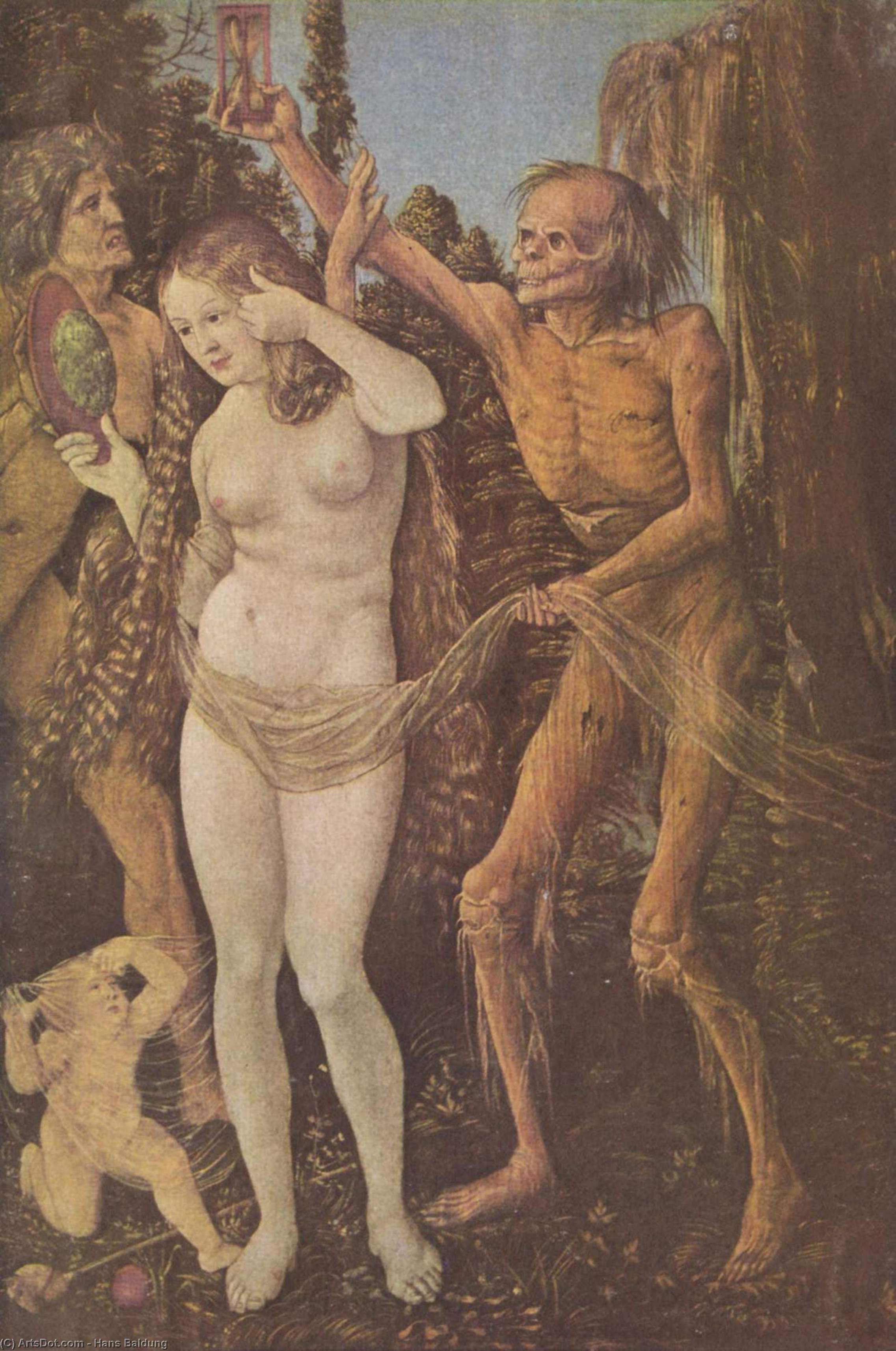
Hans Baldung was a prominent German artist of the Northern Renaissance, known for his distinctive style and imaginative works. One of his most fascinating paintings is
An Allegory of Death and Beauty, created in 1509. This oil on panel painting measures 30 x 43 cm and is a prime example of
Northern Renaissance art.
Symbolism and Interpretation
The painting depicts a naked woman surrounded by three skeletons, symbolizing the inevitability of death and the transience of beauty. The woman's hands are raised in a gesture of surrender, while the skeletons seem to be dancing around her. This allegory is a powerful commentary on the human condition, reminding us that death is an integral part of life.
The Städelsche Kunstinstitut Und Städtische Galerie in Frankfurt, Germany, has an extensive collection of
Northern Renaissance art, including works by
Hans Baldung. Visitors can explore the museum's collection and gain a deeper understanding of the artistic and cultural context in which
An Allegory of Death and Beauty was created.
Artistic Style and Influences
Hans Baldung's style was influenced by his mentor,
Albrecht Dürer, a renowned German artist and printmaker. Baldung's use of color, composition, and symbolism reflects the artistic traditions of the Northern Renaissance. His works often featured mythological and allegorical themes, showcasing his imagination and creativity. Some notable works by
Hans Baldung include:
These paintings demonstrate Baldung's mastery of
Northern Renaissance art and his ability to create complex, thought-provoking works.
Handmade oil painting reproductions of
An Allegory of Death and Beauty are available at https://ArtsDot.com, allowing art lovers to own a piece of history. For more information on
Hans Baldung and his works, visit /art/list/?Filter=hans+baldung,hans,baldung&.
https://ArtsDot.com offers a wide range of
handmade oil painting reproductions, including works by
Hans Baldung and other prominent artists of the Northern Renaissance.