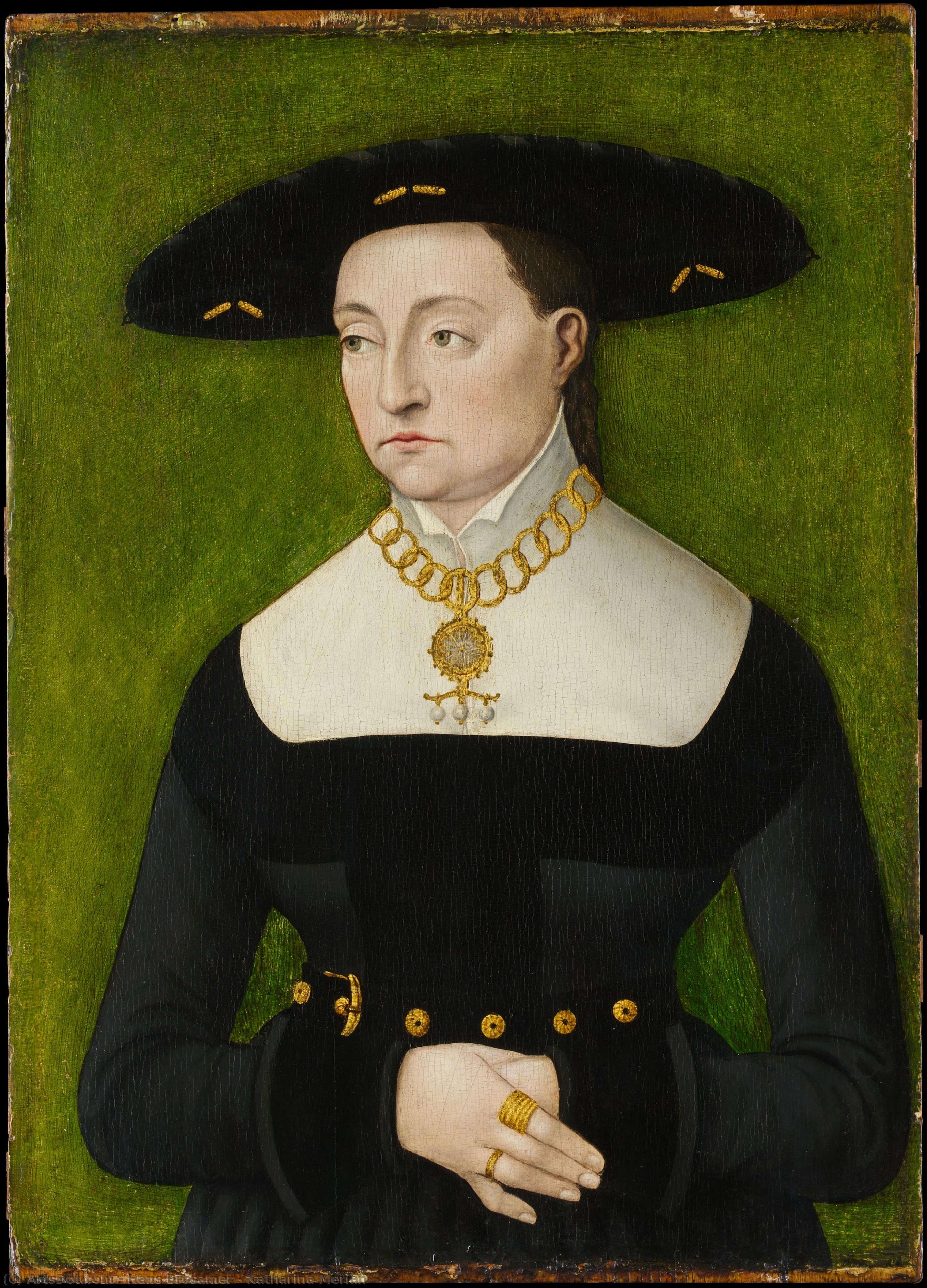
The Enigmatic Gaze: Unveiling Katharina Merian
Hans Brosamer’s “Katharina Merian” is more than a simple portrait; it's a carefully constructed tableau of intellect, observation, and the burgeoning spirit of scientific inquiry that defined the early 16th century. Painted sometime before 1871, likely in Fulda or later refined in Erfurt, this work offers a rare glimpse into the life of a woman at a pivotal moment in European history – a time when art and science were increasingly intertwined.
The subject herself, Katharina Merian, was a pioneering naturalist and artist. Her father, Adam Martellus Merian, had established a successful trade route to Suriname, bringing back exotic plants and animals that captivated the European imagination. Katharina inherited this passion for the natural world, meticulously documenting her observations in detailed illustrations – a practice that would profoundly influence later generations of scientists and artists alike. The portrait captures her not merely as a woman, but as a scholar, a collector of knowledge, and a conduit between the known and the unexplored.
Style and Technique
- Renaissance Portraiture: The composition adheres to the conventions of Renaissance portraiture – a half-length pose, a carefully arranged background, and an emphasis on capturing the subject’s character.
- Woodcut Precision: Brosamer was renowned for his woodcuts, utilizing a meticulous technique that demanded incredible precision and patience. The crisp lines and subtle tonal variations create a remarkable sense of depth and realism despite the limitations of the medium.
- Color Palette: The restrained palette – primarily blacks, whites, and golds – reflects the formality of the era while simultaneously highlighting Katharina’s features and drawing attention to her attire.
A Symbol of Knowledge and Observation
The details within the painting are laden with symbolic meaning. Katharina's elaborate black hat, adorned with a feather on the left side – a detail reminiscent of Renaissance courtly fashion – speaks to her status and perhaps even hints at a connection to nobility or intellectual circles. The high-collared shirt and dark coat signify formality and respectability, while the gold chain and pendant suggest wealth and possibly a connection to religious patronage.
Crucially, her left hand rests gently on her chest, holding an open book or sheet of paper. This gesture is not merely decorative; it’s a potent symbol of learning, scholarship, and the pursuit of knowledge. The act of reading suggests a mind actively engaged in contemplation and research – mirroring Katharina's own scientific endeavors.
Historical Context: A Renaissance of Discovery
“Katharina Merian” was created during a period of profound intellectual and artistic transformation—the High Renaissance. Humanism, with its emphasis on classical learning and human potential, was sweeping across Europe, fueling a renewed interest in art, science, and philosophy. The rise of printing technology facilitated the dissemination of knowledge, while explorers like Columbus and Magellan were expanding the known world, inspiring artists to depict exotic landscapes and creatures.
The painting reflects this spirit of discovery. Katharina’s portrait embodies the Renaissance ideal of the ‘universal man,’ a figure capable of excelling in multiple fields – art, science, and scholarship. It's a testament to the interconnectedness of these disciplines during this era, when observation, documentation, and artistic representation converged to shape our understanding of the world.
The Enduring Legacy: A Masterpiece of Scientific Portraiture
“Katharina Merian” is more than just a beautiful painting; it’s a window into the mind of a remarkable woman and a symbol of the Renaissance's embrace of knowledge. Its meticulous detail, symbolic richness, and historical significance make it a truly exceptional work of art – a timeless reminder of the power of observation, curiosity, and the enduring legacy of scientific inquiry.