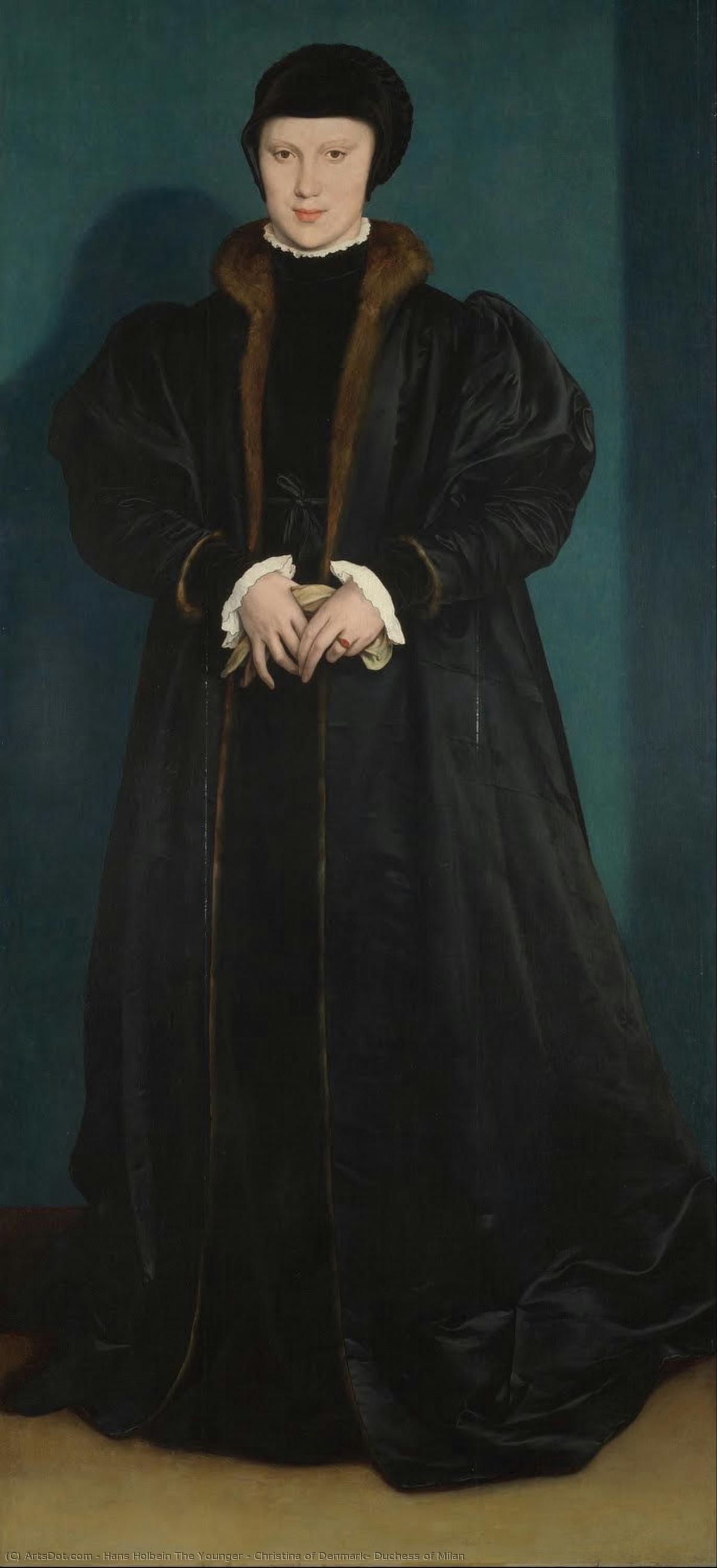
A Portrait of Majesty: Christina of Denmark – A Masterpiece by Hans Holbein the Younger
Hans Holbein the Younger (1497-1543) stands as a titan amongst Renaissance portraitists, his unwavering dedication to realism elevating him beyond mere representation into an exploration of human psychology. Born in Augsburg, Germany, he inherited artistic talent from his father, Hans Holbein the Elder—a craftsman who instilled in young Holbein not just technical prowess but a profound understanding of observation and meticulous detail.
- Subject Matter: The portrait depicts Christina of Denmark, Duchess of Milan, a figure steeped in royal lineage and burdened by grief. Her solemn demeanor reflects the weighty responsibilities of her position as heir to the Danish throne and widow of the Duke of Milan—a union tragically cut short by his untimely death.
- Style: Holbein’s style embodies the Northern Renaissance ideal, prioritizing clarity and precision over flamboyant embellishment. He eschewed excessive ornamentation, focusing instead on capturing the subtle nuances of expression and posture to convey a powerful sense of inner life.
- Technique: Employing oil paint on oak—a favored medium for portraiture at the time—Holbein utilized layering techniques and sfumato (Italian for “smoked”), blurring lines between light and shadow to achieve unparalleled depth and luminosity. This masterful manipulation of pigment created an illusionistic effect that drew viewers into Christina’s world, mirroring her contemplative gaze.
The painting's historical context is inextricably linked to the Tudor court in England. Commissioned during Henry VIII’s reign, it served as a deliberate gesture of diplomacy—a visual testament to the alliance between Denmark and England. Holbein skillfully captured Christina’s regal bearing, emphasizing her dignity and conveying a palpable sense of sorrow. The inclusion of two attendants underscores the importance of royal protocol and reinforces Christina's status as a symbol of noble lineage.
Beyond its formal grandeur, “Christina of Denmark” resonates with profound emotional depth. Holbein’s masterful portrayal captures not just physical likeness but also the psychological state of his subject—a woman grappling with loss and embodying resilience amidst adversity. The muted color palette contributes to the painting's solemn atmosphere, inviting contemplation on themes of mourning, duty, and inner strength. It remains a testament to Holbein’s unparalleled ability to transform pigment and canvas into windows onto the human soul.