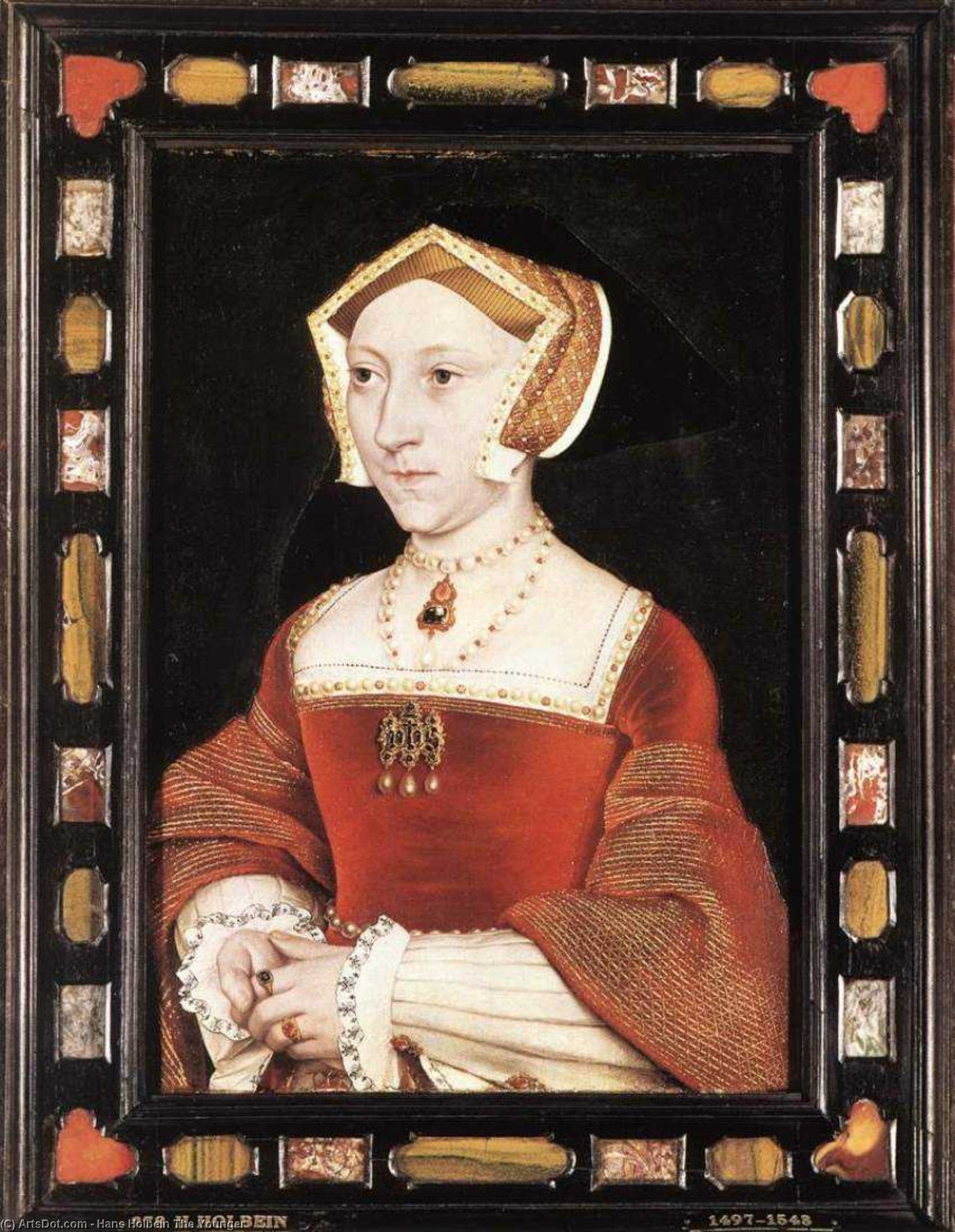
Portrait of Jane Seymour: A Window Into Tudor Majesty
The
Portrait of Jane Seymour by Hans Holbein the Younger stands as a cornerstone of Northern Renaissance art—a testament to meticulous observation and masterful execution that continues to fascinate viewers centuries later. Painted in 1537 during Henry VIII’s reign, this oil on oak masterpiece transcends mere likeness; it captures the essence of Tudor femininity and embodies the anxieties surrounding succession within the royal court. Currently housed at the Mauritshuis in The Hague, Netherlands, it offers a glimpse into a pivotal moment in English history—the aftermath of Anne Boleyn's downfall and the desperate hope for a male heir.
- Subject Matter: Jane Seymour, Henry VIII’s third wife, embodies grace and piety. Holbein skillfully portrays her serene gaze downward, suggesting contemplation or humility – qualities highly valued in Tudor women destined to produce royal offspring.
- Style & Technique: The painting exemplifies the Northern Renaissance style's commitment to realism. Holbein employed sfumato—a technique of subtle shading—to create soft transitions between colors and forms, lending an ethereal quality to Jane’s complexion and drapery. The use of gold leaf adds prestige and reinforces the symbolic importance of royal lineage.
- Color Palette: Dominated by rich reds and golds, the palette reflects the opulent tastes of Henry VIII's court and symbolizes power and divine favor. The careful layering of pigments contributes to the painting’s enduring visual impact.
A Reflection of Tudor Anxiety
The portrait’s context is inextricably linked to the tumultuous political landscape of Henry VIII’s reign. Following Anne Boleyn's execution, the king desperately sought a male heir to secure the Tudor dynasty—a preoccupation that permeated every aspect of royal life. Jane Seymour represented stability and virtue – attributes deemed crucial for fulfilling this imperative. Holbein subtly conveys this anxiety through Jane’s posture and gaze, mirroring the broader societal concerns surrounding the continuation of the monarchy.
- Historical Significance: This painting is remarkable not only for its artistic merit but also for its connection to Tudor history. It served as a visual representation of Henry VIII's desire for legitimacy—a symbol of hope amidst uncertainty.
- Comparison with Other Works: Holbein’s depiction aligns closely with his earlier Whitehall wall-painting and preparatory drawing, demonstrating his unwavering dedication to capturing the subject’s character accurately. Furthermore, it mirrors Remigius van Leemput's copy, highlighting the importance of preserving artistic heritage.
The Artist: Hans Holbein the Younger – A Master of Psychological Portraiture
Hans Holbein the Younger (1497–1543) stands as one of the most celebrated artists of his era—renowned for his portraits that achieved unparalleled psychological depth. His meticulous attention to detail and masterful use of technique established him as a pioneer of Northern Renaissance art, influencing subsequent generations of painters. Beyond capturing physical likeness, Holbein sought to convey inner character—a feat accomplished with remarkable precision in works like “Portrait of Robert Cheseman” and “Portrait of Jane Seymour.”
The Mauritshuis Collection – Witnessing Artistic Excellence
The Mauritshuis in The Hague houses a breathtaking collection of Dutch and Flemish masterpieces—including Johannes Vermeer’s “Girl with a Pearl Earring” and Rembrandt van Rijn’s “The Night Watch.” Its commitment to preserving artistic heritage ensures that works like “Portrait of Jane Seymour” continue to captivate audiences worldwide. Explore the Mauritshuis's extraordinary holdings at
Discover the Masterpieces of Mauritshuis, The Hague on ArtsDot.
For a more comprehensive understanding of Holbein’s oeuvre and artistic impact, consult List of paintings by Hans Holbein the Younger on Wikipedia.
Explore a stunning reproduction of “Portrait of Jane Seymour” at ArtsDot and elevate your interior design with this timeless masterpiece.