A Vision of Renaissance Grandeur
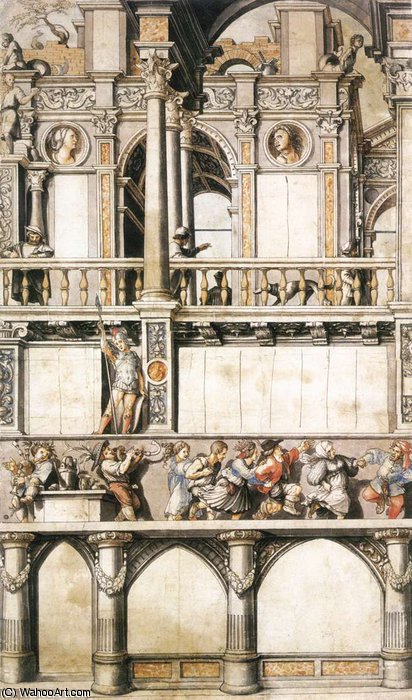
In the delicate lines of Drawing for the Façade Paintings in the Eisengasse, we encounter more than a mere architectural blueprint; we step into a meticulously crafted snapshot of humanist ideals and artistic innovation. Created around 1530 by the incomparable Hans Holbein the Younger, this work serves as a window into the vibrant intellectual atmosphere of the Northern Renaissance. The composition presents a magnificent building facade, dominated by a large, commanding archway adorned with intricate statues that seem to watch over the bustling scene below. As the eye wanders through the lively courtyard, it encounters figures engaged in the quiet rhythms of daily life, their presence lending a palpable sense of movement and vitality to the stone and mortar.
Holbein’s mastery is on full display through his seamless blend of anatomical precision and decorative ornamentation. While the drawing functions as a design for a facade, it transcends its utilitarian origins through a sophisticated use of chiaroscuro. The dramatic interplay of light and shadow breathes life into the architectural elements, creating a profound sense of depth and volume that makes the stone appear almost tactile. Every fold of drapery and every sculpted feature of the statues reflects Holbein's legendary ability to capture not just outward appearance, but an underlying psychological complexity that invites the viewer to linger.
Symbolism and the Spirit of the Age
Beyond its structural beauty, the artwork is steeped in the profound religious and philosophical currents of the 16th century. During a period of intense religious upheaval known as the Reformation, Holbein subtly wove themes of faith and resilience into his compositions. Most notably, the inclusion of two birds—one positioned toward the upper left and another near the bottom right—serves as a poignant symbolic layer. In the iconographic language of the time, these birds often represented hope and resurrection, acting as emblems of divine grace amidst the turbulent political and spiritual landscape of Henry VIII’s England.
This integration of subtle symbolism with grand architectural design reflects the humanist spirit championed by great thinkers like Erasmus. The drawing does not merely depict a building; it captures an era's aspiration toward order, beauty, and eternal truth. For the discerning collector or interior designer, this piece offers a sophisticated narrative for any space, providing a focal point that is both intellectually stimulating and visually arresting.
An Enduring Legacy for Modern Interiors
To possess a reproduction of such a masterpiece is to bring a piece of history into the contemporary home. The intricate patterns and detailed designs found within the Eisengasse drawing offer a rich texture that complements both classical and modern decor. Whether placed in a formal study or as a conversation piece in a grand living hall, the artwork radiates an aura of timeless elegance and scholarly depth.
The emotional impact of Holbein’s work lies in its ability to capture the very essence of human observation. It is a testament to the power of art to freeze a moment of historical grandeur, offering a sense of permanence and peace. For those seeking to inspire awe and contemplation within their surroundings, this drawing stands as an unparalleled choice, embodying the meticulous skill and soulful vision of one of history's greatest masters.