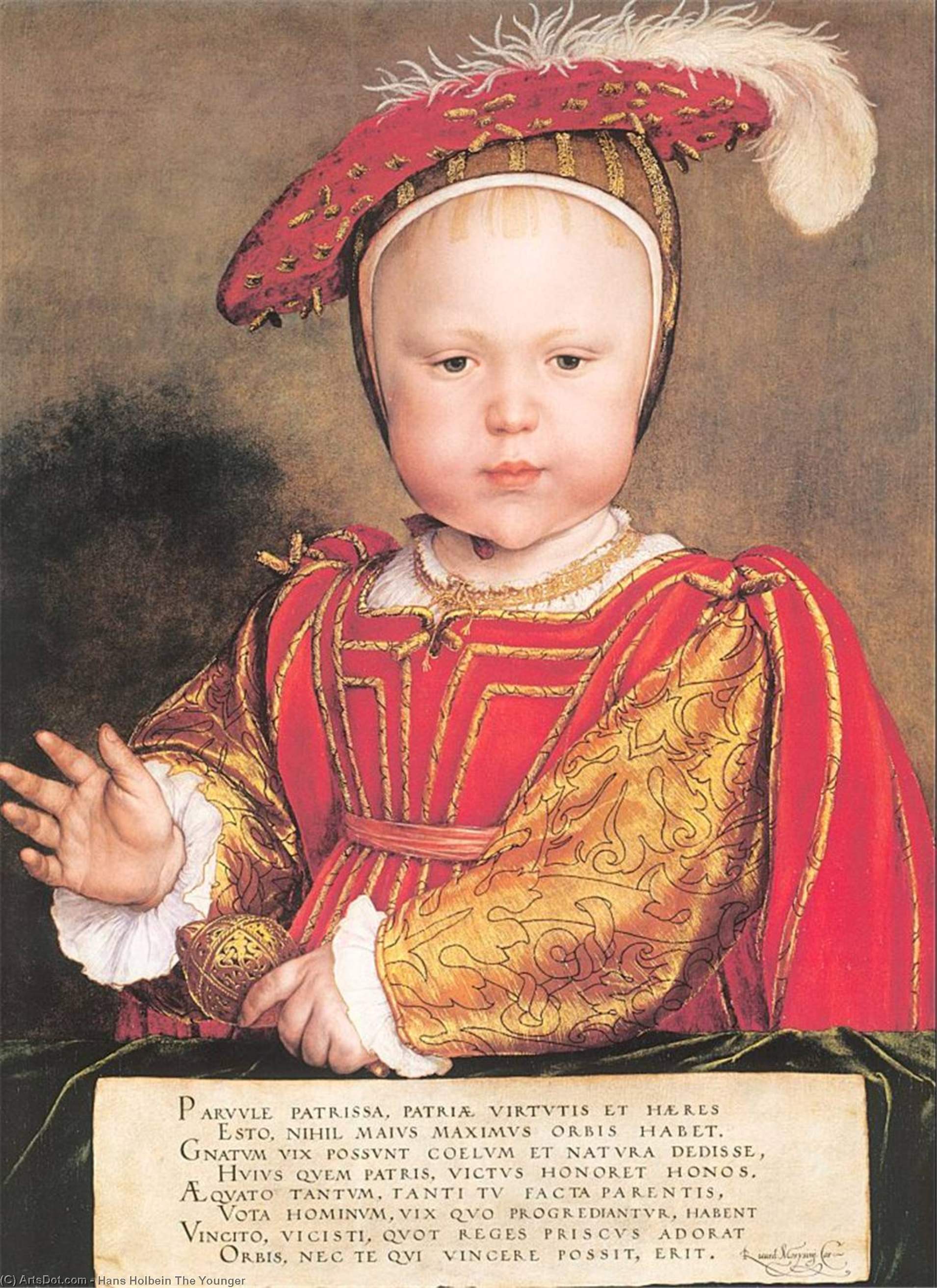
Captured in exquisite detail by Hans Holbein the Younger during the Northern Renaissance, this portrait depicts a regal child—likely a prince—dressed in opulent red and gold attire, embodying timeless elegance and psychological realism.
A Portrait of Regal Promise: The Enigmatic World of Hans Holbein
In the quiet, commanding presence of “Untitled (136),” attributed to the incomparable Hans Holbein the Younger, we encounter more than just a portrait; we step into the opulent and high-stakes atmosphere of the Tudor court. This masterpiece captures a young child, perhaps a prince or a noble heir, seated with a grace that belies his tender years. Dressed in sumptuous red and gold attire, complete with a delicate ruffled collar, the subject radiates an aura of inherited authority. Every thread of his clothing seems to whisper of wealth and status, while his raised hand—a gesture of solemn contemplation—invites the viewer into a moment of profound stillness. It is a painting that does not merely depict a face, but rather captures the very weight of a lineage destined for greatness.
The brilliance of this work lies in Holbein’s unparalleled mastery of the Northern Renaissance style. His technique, characterized by an almost surgical precision, allows the viewer to experience the tactile reality of the subject. Through the meticulous application of oil on panel, Holbein achieves a breathtaking level of detail, from the subtle textures of heavy silks to the soft, luminous skin of the child. He was a master of light and shadow, using delicate tonal gradations to breathe life into the composition. This dedication to realism serves a higher purpose than mere imitation; it is an attempt to map the soul through the physical form, creating a psychological depth that remains hauntingly intimate even centuries after its creation.
Symbolism and the Echoes of History
Beyond the visual splendor, “Untitled (136)” is layered with the complexities of the 16th century. The background, adorned with cryptic text, suggests a deeper narrative layer—a hallmark of Holbein’s ability to weave intellectual puzzles into his portraiture. During the reign of Henry VIII, art was a powerful tool for political and social messaging. Every element within the frame, from the child's posture to the surrounding inscriptions, likely served to reinforce the stability and prestige of the subject's family amidst an era of immense religious and political upheaval. The painting acts as a visual testament to the desire for permanence in a rapidly changing world.
For the discerning collector or interior designer, this piece offers a profound emotional resonance. It is a work that commands attention through its quiet dignity rather than through overt spectacle. Integrating a high-quality reproduction of such a masterpiece into a space brings with it a sense of historical gravity and timeless elegance. Whether placed in a formal study or as a focal point in a grand living area, the painting provides an anchor of sophistication, inviting conversation about the intersection of human character, royal legacy, and the enduring power of Renaissance artistry.