A Glimpse into Renaissance Innocence
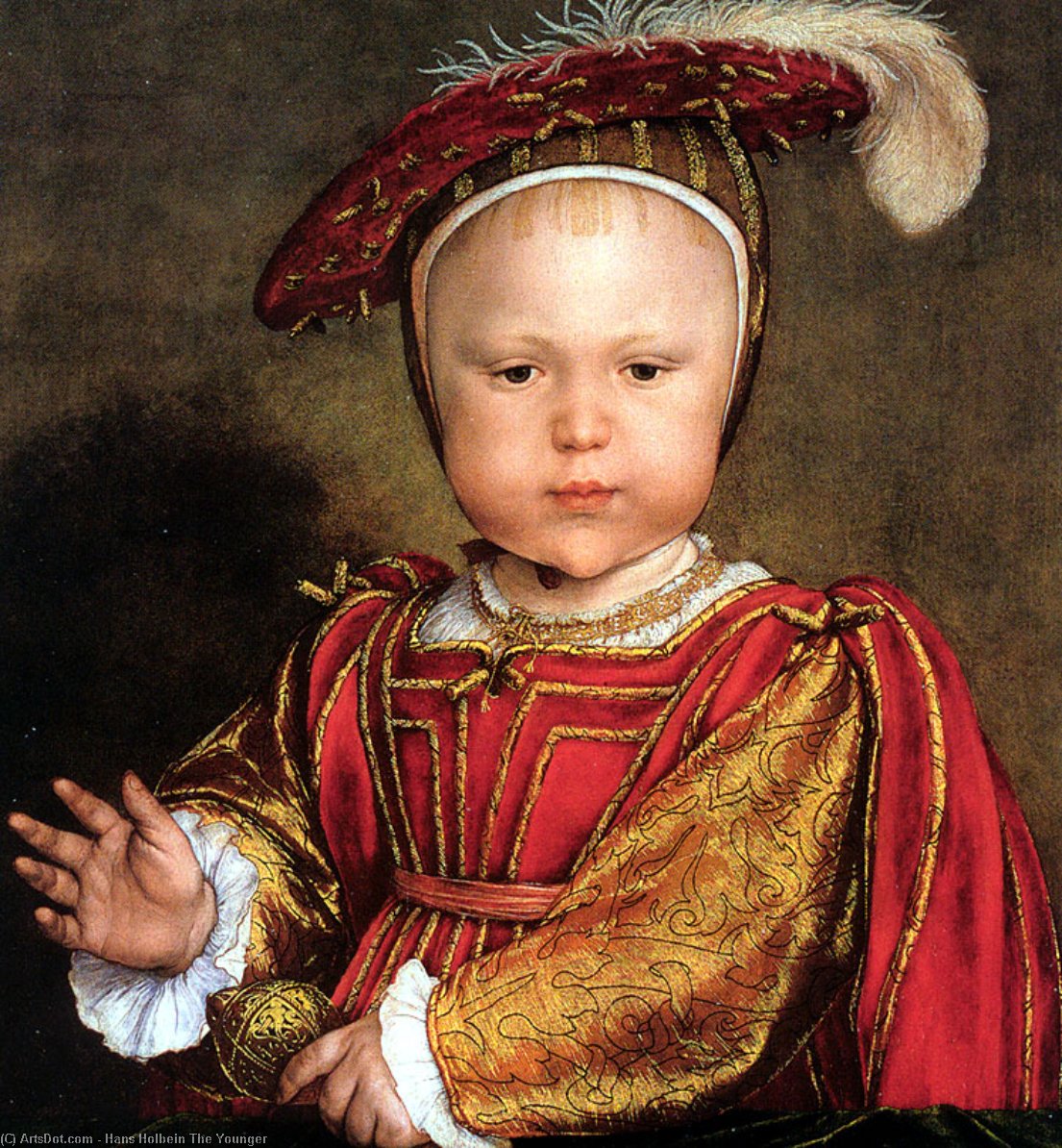
In the quiet, profound stillness of Hans Holbein the Younger’s Untitled (9128), we encounter more than just a portrait; we enter a moment suspended in time. Created around 1530, during the height of the Northern Renaissance, this work offers a rare and tender window into the early years of childhood. While much of the era's portraiture focused on the stern,-weighted dignity of monarchs and statesmen, Holbein directs his unparalleled precision toward the soft, burgeoning life of a young child. The subject, a small boy or infant, is captured in a state of serene engagement, his gaze directed outward as if caught in the middle of an unfolding discovery. There is a palpable sense of nascent awareness here, a delicate balance between the vulnerability of youth and the formal gravity of his station.
The visual impact of the piece is immediately striking, driven by a masterful interplay of color and texture. The child is swathed in an opulent scarlet jacket, a hue so vibrant it seems to pulse with life against the more muted background. This rich crimson is further elevated by intricate gold embroidery that catches the light, paired with a crisp, ruffled collar that lends an air of aristocratic elegance. For the collector or interior designer, this painting serves as a magnificent focal point; its bold primary tones and luxurious textures provide a sophisticated warmth that can anchor a room, bringing a sense of historical grandeur and classical beauty to any contemporary space.
Mastery of Light and Northern Precision
To look closely at Holbein’s technique is to witness the pinnacle of Renaissance craftsmanship. The artist was renowned for his unwavering commitment to anatomical accuracy and a level of detail that borders on the miraculous. In this portrait, he employs a subtle application of sfumato—a technique of soft, smoky transitions—to blur the edges of the child's features, lending a dreamlike, ethereal quality to the skin. This softness prevents the painting from feeling like a mere anatomical study, instead imbuing the subject with a soulful, breathing presence.
Every thread of the gold embroidery and every fold in the ruffled collar is rendered with such meticulous care that one can almost feel the weight of the fabric. Holbein’s ability to manipulate light and shadow creates a profound sense of three-dimensionality, making the child appear to emerge from the canvas. This technical brilliance ensures that a high-quality reproduction of this work retains its depth and luminosity, allowing the play of light to enchant viewers from every angle. It is this marriage of technical rigor and emotional tenderness that makes the piece an enduring masterpiece of the Tudor era.
A Legacy of Elegance for the Modern Collector
Beyond its aesthetic splendor, Untitled (9128) carries the weight of history. Painted during the reign of Henry VIII, the work reflects the burgeoning wealth and stylistic complexity of the English court. The juxtaposition of the child's natural innocence with his extravagant, formal attire serves as a poignant symbol of the transition from nature to society—a theme that resonates deeply with anyone moved by the human condition. It is a study in contrasts: the fleeting moment of childhood versus the permanent legacy of art; the simplicity of a seated pose versus the complexity of royal finery.
For those seeking to curate a collection of fine art, this piece offers an unparalleled opportunity to possess a fragment of the Northern Renaissance. Whether displayed in a private study, a grand salon, or a curated gallery space, the painting radiates a sense of timelessness. It does not merely decorate a wall; it invites conversation, evokes nostalgia, and provides a window into a world of exquisite beauty and historical significance. Owning a reproduction of this Holbein masterpiece is an investment in cultural heritage and an embrace of the profound elegance that only the masters can provide.