A Pioneer of German Realism: The Life and Art of Hans Multscher
Hans Multscher stands as an extraordinary testament to artistic evolution—a conduit between the solemn grandeur of late Gothic tradition and the burgeoning optimism of the Renaissance in Germany. While biographical details concerning his formative years remain elusive, scholarly consensus suggests a restless intellect driven by an unwavering fascination with artistic advancement. Unlike artists merely mirroring prevailing styles, Multscher actively pursued novel influences, undertaking expeditions that irrevocably molded his distinctive aesthetic sensibility.
These journeys undoubtedly encompassed visits to the artistic capitals of northern France and the Netherlands—locations where he encountered the groundbreaking realism and painstaking precision emblematic of Early Netherlandish painting. This stylistic encounter would become indelibly imprinted upon Multscher’s oeuvre, establishing it as a cornerstone of his artistic identity.
In 1427, Multscher secured his freedom as a citizen of Ulm—a vibrant commercial center nestled along the Danube River—marking a pivotal moment in his professional trajectory. This decision afforded him considerable autonomy and propelled him toward fostering an environment conducive to artistic experimentation.
Subject Matter and Composition
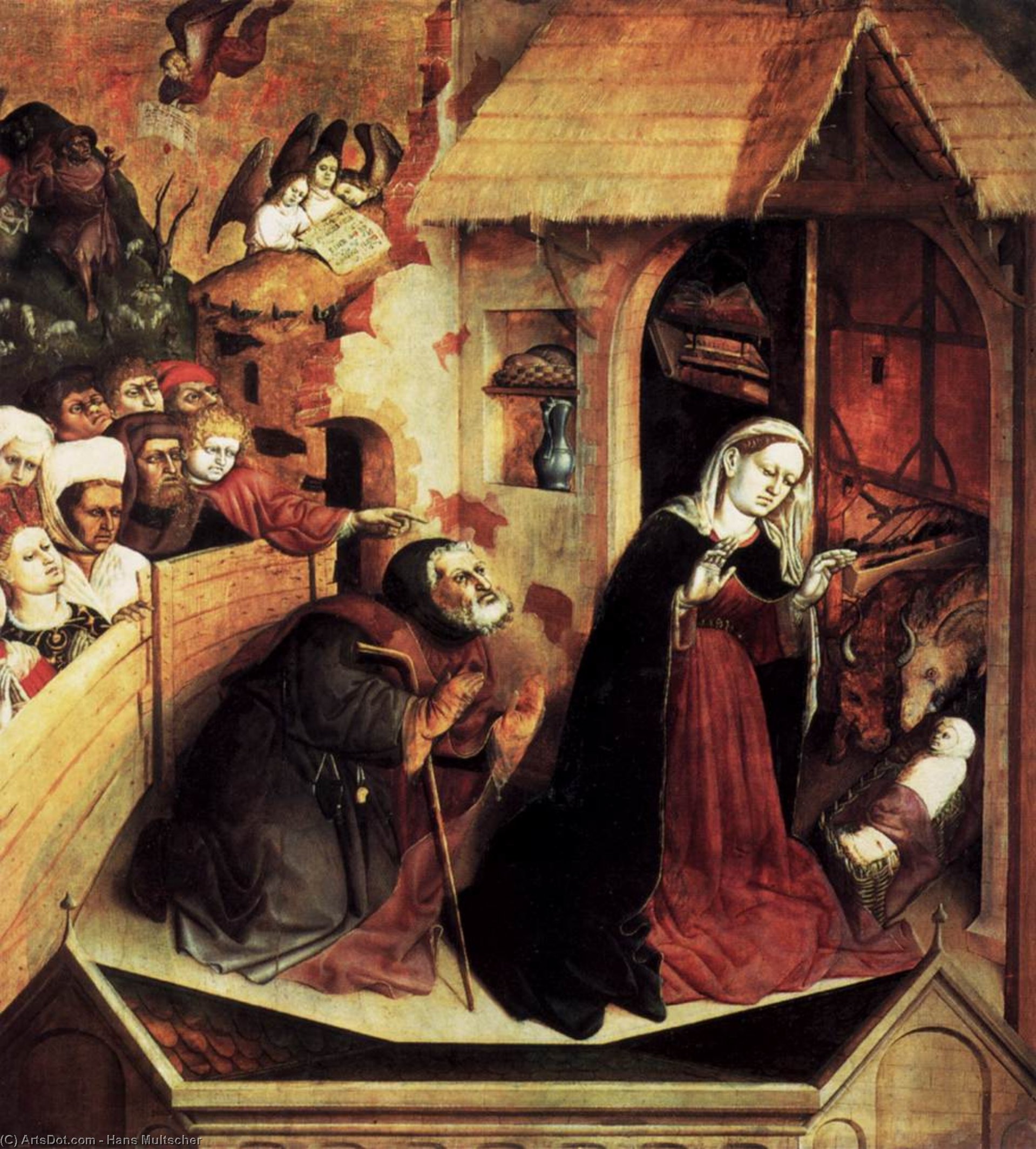
“The Birth of Christ,” executed in 1437, transcends mere depiction; it embodies a profound meditation on faith and divine grace. The painting’s central focus rests upon Mary—a figure rendered with unwavering reverence as she kneels before the infant Jesus—who cradles him tenderly within her arms.
Surrounding Mary are several individuals—standing and seated—representing a microcosm of humanity united in adoration. Angels populate the scene, their ethereal forms conveying celestial majesty, while ordinary people express humility and devotion. The composition is carefully orchestrated to guide the viewer’s gaze toward the luminous infant Jesus at its core.
Style and Technique: Embracing Early Netherlandish Realism
Multscher's artistic approach decisively aligns with the precepts of Early Netherlandish realism—a style characterized by unparalleled attention to detail, meticulous observation of natural phenomena, and a masterful manipulation of light and shadow. Unlike the stylized conventions of Gothic art, Multscher prioritized accuracy and verisimilitude, striving to capture the essence of human experience with breathtaking fidelity.
He employed oil paint—a relatively new medium at the time—allowing for nuanced tonal gradations and a luminous quality unattainable through tempera. The artist’s brushstrokes are subtly textured, conveying a palpable sense of physicality and immediacy. Furthermore, Multscher skillfully utilized atmospheric perspective—creating depth and realism by simulating the effects of distant haze—enhancing the painting's immersive visual impact.
Historical Context and Symbolism
"The Birth of Christ" emerged during a period of significant intellectual ferment—the Renaissance—fueled by rediscovered classical texts and burgeoning humanist ideals. This era witnessed a renewed appreciation for human reason and artistic excellence, prompting artists to challenge established conventions and explore new expressive possibilities.
Symbolically laden, the painting speaks volumes about Christian theology. The doves represent purity and divine peace, while the manger symbolizes humility and incarnation—the embodiment of God in human form. Mary’s posture conveys unwavering faith and maternal compassion, embodying the virtues revered throughout Christendom.
Emotional Impact: A Vision of Spiritual Transcendence
Ultimately, “The Birth of Christ” transcends its formal elements to evoke a powerful emotional response within the viewer—a glimpse into the sublime realm of spiritual transcendence. The painting’s serene atmosphere and luminous palette instill feelings of tranquility and reverence, inviting contemplation on themes of divine love and redemption.
It serves as an enduring reminder of humanity's capacity for compassion and faith—a testament to the transformative power of art to illuminate the deepest recesses of human consciousness. Reproductions of Multscher’s masterpiece continue to inspire collectors and interior designers alike, capturing the essence of a timeless artistic vision.