A Vision of Renaissance Dignity
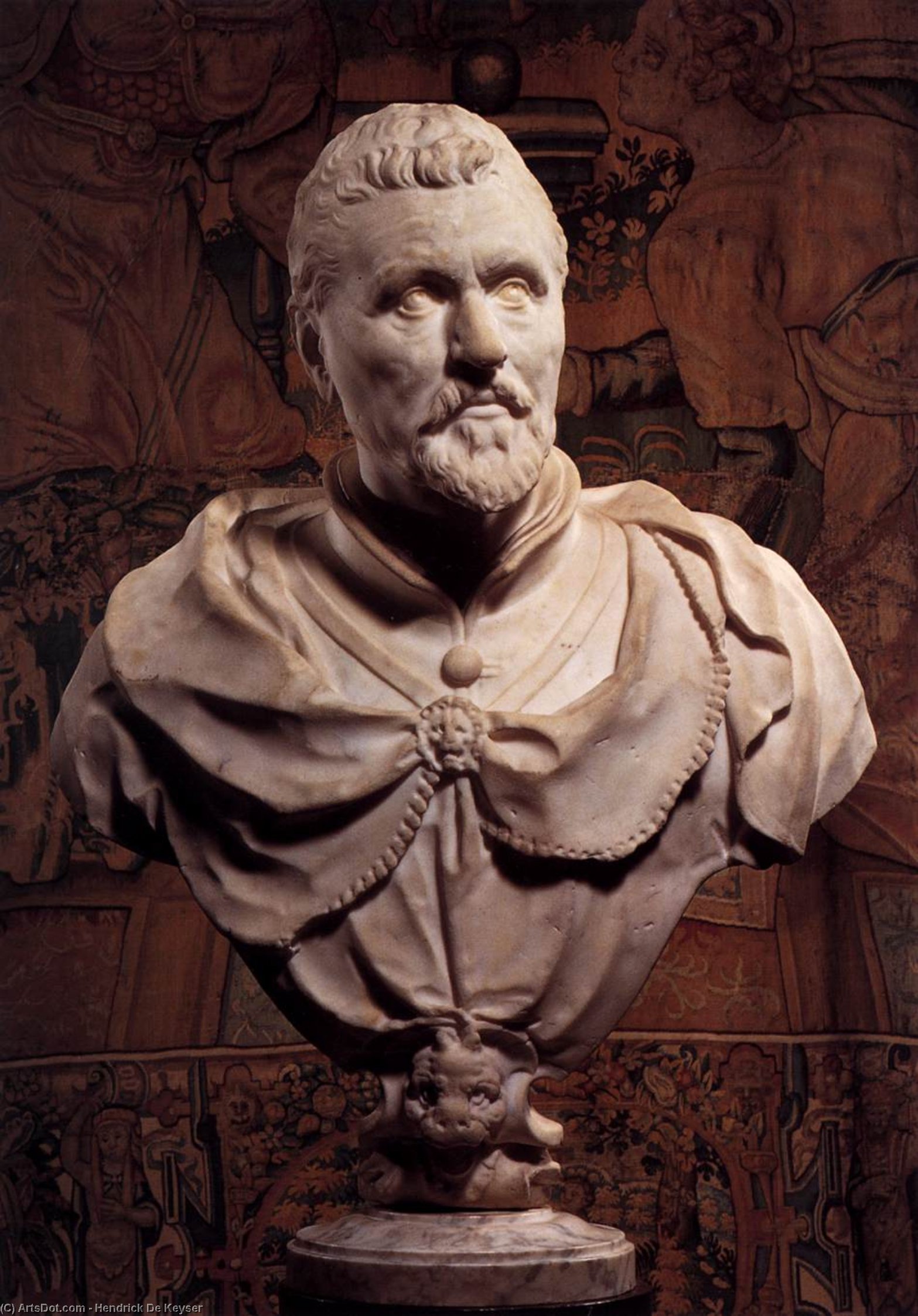
In the heart of the early seventeenth century, as Amsterdam began its ascent toward global commercial dominance, a profound artistic shift was taking place. The Portrait of Vincent Coster, sculpted in 1608 by the master Hendrick de Keyser, serves as a breathtaking window into this era of transition. This marble bust is far more than a mere likeness of a wealthy vintner and wine-gauger; it is a monumental testament to the Amsterdam Renaissance. Through the meticulous carving of stone, De Keyser captured not just the physical features of Coster, but the very essence of the humanist spirit that defined the age—a period where intellect, civic pride, and classical ideals converged to create a new cultural identity.
The sculpture presents Coster in a pose of quiet authority. Seated with a composed grace, his hand resting naturally upon his thigh, he radiates a sense of stability and command. This dignified posture was a deliberate choice, reflecting the values of the burgeoning merchant class who sought to mirror the virtues of antiquity. To gaze upon this piece is to encounter a man who embodies the prosperity and the profound social responsibility of his time, making it an evocative centerpiece for any collection that seeks to celebrate historical depth and character.
Mastery in Marble and Mannerist Grace
Technically, the work is a triumph of sculptural execution. De Keyser’s approach sits at a fascinating stylistic crossroads, blending the stylized elegance of Mannerism with the emerging balance of the Baroque era. While Mannerism often favored exaggerated forms, De Keyser utilized these principles to enhance the subject's presence, applying classical proportions that lend the bust an air of timelessness. His choice of marble—a medium rarely employed by Dutch sculptors of this period—was a bold and luxurious decision. The material allows for a luminous surface finish, where light dances across the smooth contours of the skin and the intricate textures of the subject's attire.
The artist’s ability to manipulate stone is most evident in the fine details: the subtle texture of the beard, the precise folds of the clothing, and the lifelike expression captured in the eyes. For the discerning collector or interior designer, these nuances offer a tactile richness that elevates a space. The interplay between the heavy, solid presence of the marble and the delicate, light-catching surfaces creates a dynamic visual experience that commands attention from every angle.
Symbolism and the Spirit of an Age
Every element of the Portrait of Vincent Coster is imbued with symbolic meaning, designed to communicate status and virtue. One of the most striking features is the draped toga-like cloak flowing over the subject's doublet. This sartorial choice is a direct nod to Roman dignity, intentionally linking the prosperous Dutch citizen to the legendary virtues of the ancient world. By adorning Coster in the guise of a classical figure, De Keyser elevates a local businessman to the status of a timeless hero of civilization.
Beyond the individual, the sculpture reflects the cultural dynamism of the Dutch Golden Age. It stands as a symbol of an era where trade, scholarship, and art flourished in tandem. For those looking to integrate a piece of this magnitude into their decor, the bust offers more than just aesthetic beauty; it provides a narrative of resilience, intellect, and the enduring pursuit of excellence. Whether placed in a sunlit library or a sophisticated study, a high-quality reproduction of this masterpiece brings with it the weight of history and the luminous elegance of the Renaissance.