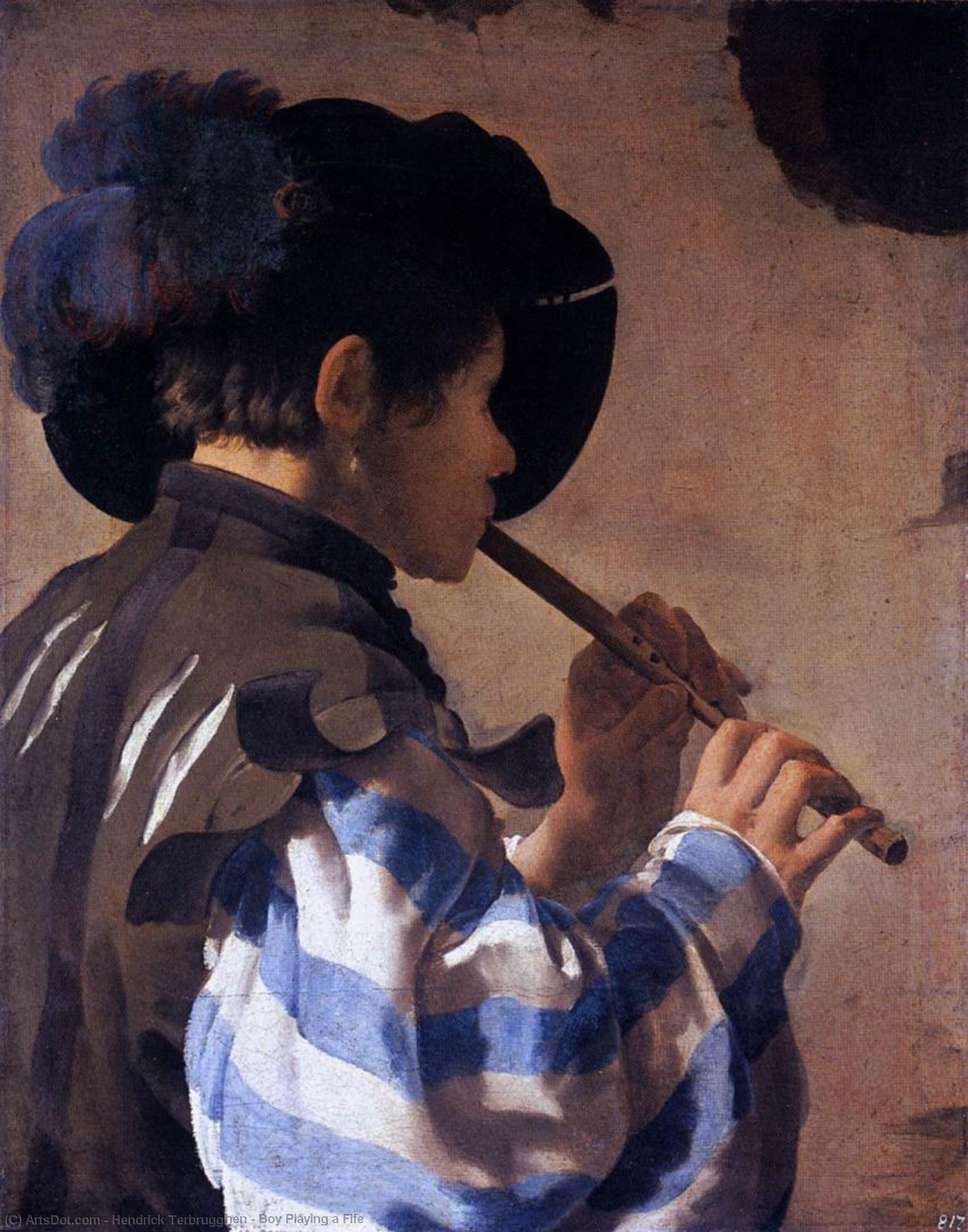
A captivating portrait of a young boy lost in music playing the fife, rendered with dramatic light and shadow by Dutch Golden Age master Hendrick Terbrugghen, inviting you to bring this timeless Caravaggisti piece home.
A Moment Captured in Melody
In the quiet intimacy of Boy Playing a Fife, we are invited into a private world of concentration and pure, unadulterated sound. Painted in 1621 by the Dutch master Hendrick Terbrugghen, this portrait transcends a mere depiction of a child; it is a profound study of focus and the ephemeral nature of music. The young subject, dressed in a charming blue and white striped shirt and a simple hat, is entirely absorbed in his task. His fingers are poised delicately upon the instrument, and his breath is held in that precise moment of musical execution. There is a palpable stillness in the scene, an atmospheric hush that allows the viewer to almost hear the high, clear notes of the fife piercing through the shadows of the background.
The painting serves as a masterful example of the Utrecht Caravaggisti style, a movement that brought the dramatic intensity of Caravaggio to the Netherlands. Terbrugghen utilizes a sophisticated interplay of light and shadow, known as chiaroscuro, to sculpt the boy's features and give his form a three-dimensional presence. The light does not merely illuminate; it directs our gaze, catching the texture of the fabric and the subtle contours of the boy's face, while the dark, minimalist background pushes the subject forward, creating an intimate connection between the sitter and the observer. This technique lends the work a sense of theatricality that is grounded by a deep, quiet realism.
Timeless Elegance for the Modern Collector
For the discerning collector or interior designer, Boy Playing a Fife offers more than just historical significance; it provides a focal point of profound emotional resonance. The composition's simplicity—devoid of distracting clutter—makes it an incredibly versatile piece for sophisticated decor. Whether placed in a sunlit gallery or a moody, library-style study, the painting brings a sense of classical dignity and contemplative calm to any space. Its palette of cool blues and warm skin tones harmonizes beautifully with both contemporary minimalist aesthetics and traditional, opulent interiors.
Owning a high-quality reproduction of this masterpiece allows one to preserve the legacy of the Dutch Golden Age within a modern home. The artwork acts as a window into the seventeenth century, reminding us of the enduring power of art to capture the fleeting beauty of life. It is an investment in atmosphere, offering a piece that does not merely decorate a wall but enriches the very soul of a room with its narrative depth and technical brilliance.