A Portrait of Divine Authority: Hendrik Goltzius’s Juno
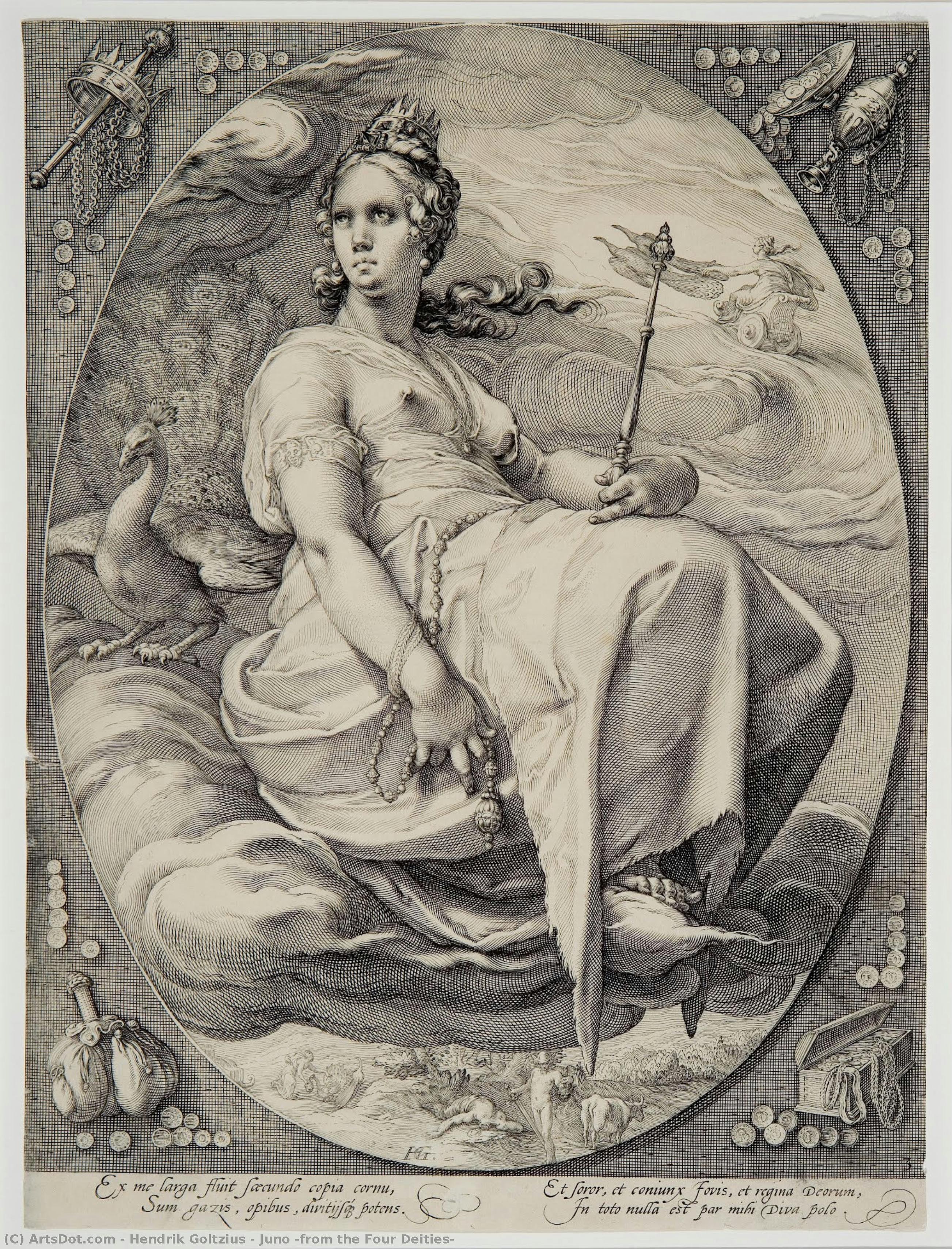
The engraving “Juno (from the Four Deities)” by Hendrik Goltzius, created in 1596, stands as a testament to the Northern Renaissance's mastery of printmaking and its profound engagement with classical mythology. More than just a depiction of Roman goddess Juno—symbolic protector of marriage and childbirth—this artwork embodies an aesthetic ambition that sought to elevate visual representation beyond mere imitation, reflecting the intellectual currents shaping Europe at the cusp of the Baroque era.
- Historical Context: Goltzius’s work emerged during a period of fervent artistic experimentation in Haarlem, where he collaborated closely with Philip Galle and established himself as a leading figure in the burgeoning printmaking industry. The Four Deities series aimed to honor the Roman gods—Jupiter, Venus, Mars, and Juno—representing not only religious piety but also humanist ideals celebrating reason and beauty.
- Composition & Technique: Goltzius’s meticulous approach is immediately evident in the engraving's composition. Juno dominates the oval frame, positioned centrally amidst swirling clouds that create an ethereal backdrop. The artist skillfully employs hatching—a technique where closely spaced lines are used to build up tonal values—to sculpt Juno’s form and imbue the clouds with a palpable sense of movement. Bold outlines delineate key elements like Juno's scepter and decorative flourishes, ensuring clarity and precision despite the overall softness of the image.
- Symbolism & Emotional Impact: Juno’s regal posture – seated confidently on her cloud throne – speaks volumes about power and divine grace. The scepter symbolizes authority and dominion, reinforcing Juno’s role as protector of marital fidelity and fertility. Surrounding her are birds and ducks, creatures often associated with auspiciousness and prosperity, subtly enhancing the artwork's symbolic resonance. Viewing “Juno” evokes a feeling of serene contemplation—a quiet acknowledgement of beauty and order amidst the turbulent forces of nature.
- Style & Materials: The engraving exemplifies Northern Mannerism, characterized by elongated figures, stylized drapery, and an emphasis on expressive emotion rather than naturalistic representation. Goltzius’s masterful use of line demonstrates a dedication to capturing not just visual form but also psychological nuance. Copper plates were inked with pigment and pressed onto paper using a printing press—a process that demanded considerable skill and precision.
Concluding Remarks: “Juno” transcends its mythological subject matter, becoming an emblem of Renaissance ideals – intellectual curiosity, artistic virtuosity, and the pursuit of sublime beauty. Its enduring appeal lies in Goltzius’s ability to transform a classical figure into a powerfully evocative image that continues to inspire admiration for centuries later. It serves as a captivating example of how printmaking could convey complex ideas and emotions with remarkable subtlety and grace.