A Divine Encounter in Light and Shadow
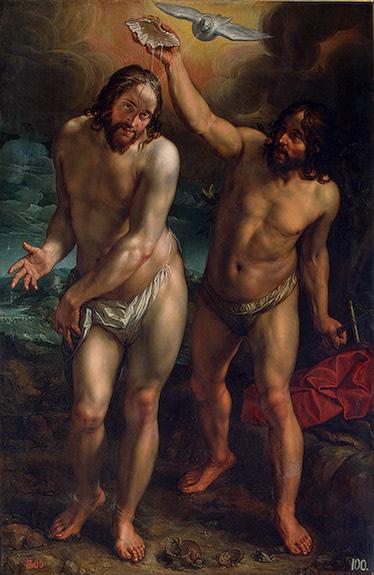
In the quiet, hallowed halls of the Hermitage Museum, there exists a window into the profound spiritual intensity of the early seventeenth century. Hendrik Goltzius’s “The Baptism of Christ,” completed in 1608, is not merely a depiction of a biblical rite; it is a masterful orchestration of Northern Mannerism that seeks to bridge the gap between the earthly and the divine. As the viewer approaches this monumental canvas, they are immediately struck by the dramatic tension held within its composition. The scene captures the pivotal moment of Christ’s baptism by John the Baptist, yet Goltzius transcends simple historical illustration through a sophisticated use of chiaroscuro. Intense, celestial light pierces through the gloom, focusing our gaze upon the central figures and imbuing the water of the Jordan with a sense of sacred vitality.
The painting serves as a breathtaking testament to the transition from the structured elegance of the Renaissance to the emotive power of the Baroque. Through his mastery of oil on panel, Goltzius employs the hallmarks of Mannerism—elongated, graceful forms and a deliberate departure from strict naturalism—to elevate the narrative. The figures are not merely bodies in a landscape; they are vessels of spiritual meaning. In the foreground, two angelic beings command our attention with their symmetrical presence. Their sculpted, nude forms exhibit an exquisite anatomical precision that speaks to Goltzius’s profound skill as both a painter and an engraver, yet there is an ethereal abstraction to their skin tones that suggests they belong more to the heavens than to the earth.
Symbolism and the Language of Grace
Every element within this masterpiece has been meticulously placed to weave a tapestry of Christian iconography. The angel on the left holds a rich, crimson cloth, a color that evokes both royal dignity and the future sacrifice of Christ, while his counterpart cradles a white dove. This dove, representing the Holy Spirit, descends as a beacon of divine presence, illuminating the baptismal waters. This interplay of symbols creates a rhythmic movement across the canvas, guiding the eye from the celestial messengers in the foreground to the solemn figures of Christ and John in the background. The contrast between the pale, luminous flesh of the angels and the more grounded, darker complexions of the central protagonists serves to highlight the intersection of the miraculous with the human.
For the discerning collector or interior designer, "The Baptism of Christ" offers much more than historical significance; it provides a profound emotional resonance. The painting’s ability to command a room through its scale and dramatic lighting makes it an unparalleled centerpiece for any curated space. Whether placed in a gallery-style study or as a focal point in a grand living area, the work invites contemplation and conversation. It is a piece that embodies the "exuberance" for which Goltzius was renowned, offering a timeless elegance that complements both classical and contemporary sophisticated interiors. To possess a high-quality reproduction of this work is to bring a fragment of the Northern Mannerist soul into one's own environment, surrounding oneself with the enduring beauty of a spiritual revolution captured in paint.