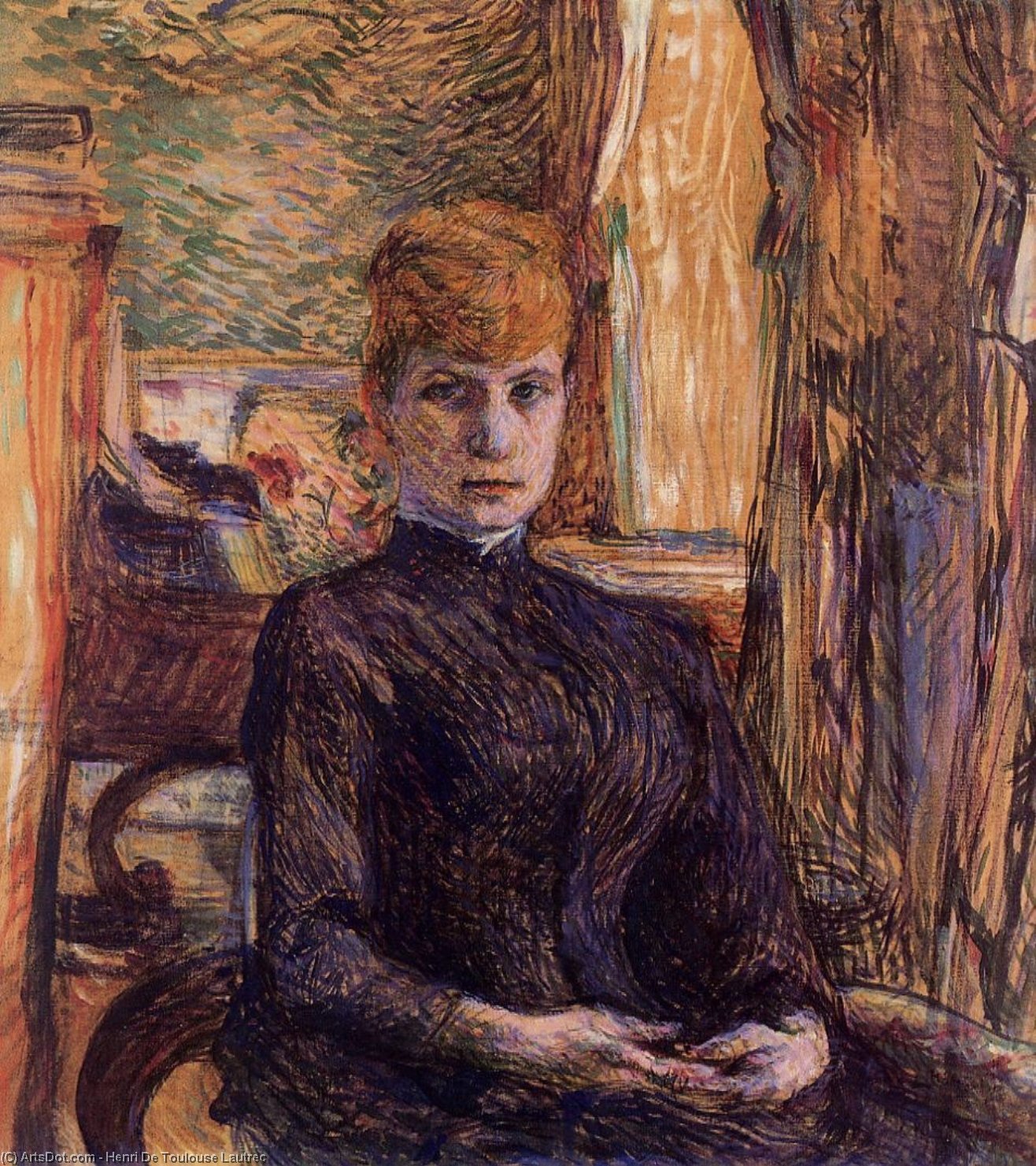
Madame Juliette Pascal: A Portrait of Parisian Decadence
Henri Marie Raymond de Toulouse-Lautrec’s “Madame Juliette Pascal,” painted in 1887, stands as an emblem of the Belle Époque—a period characterized by opulent social life, artistic experimentation, and a fascination with beauty and excess. More than just a likeness of a woman, it's a masterful distillation of Lautrec’s signature style and his profound understanding of capturing the essence of human emotion within a meticulously crafted visual experience.
Post-Impressionist Style: Lautrec’s approach decisively rejected the fleeting impressions favored by Impressionists like Monet and Renoir. Instead, he embraced a bolder aesthetic rooted in Expressionism, prioritizing emotional intensity over objective representation. This is evident in his use of thick impasto brushstrokes—heavy layers of pigment applied directly to the canvas—which create palpable texture and imbue the painting with dynamism.
Artistic Elements: The composition centers around Madame Juliette Pascal seated gracefully in a chair, bathed in soft light emanating from a window. Her hands are clasped together in a gesture of quiet contemplation, conveying an aura of serenity amidst the bustling backdrop of Montmartre’s artistic milieu. Lautrec skillfully employs color—primarily muted reds and browns—to establish mood and depth. The subtle shading contributes to creating a sense of realism while simultaneously enhancing the painting's dramatic effect.
Historical Context: Toulouse-Lautrec’s work emerged during a time of significant social change in Paris, as artists like Picasso and Cézanne pushed boundaries and challenged traditional artistic conventions. The Salon des Refusés of 1889—where Lautrec’s paintings were initially rejected by the Académie Royale—marked a pivotal moment in art history, signaling a rejection of academic standards and paving the way for avant-garde movements.
Symbolism: Beyond its formal qualities, “Madame Juliette Pascal” carries symbolic weight. The woman herself represents idealized beauty and femininity—a theme recurrent throughout Lautrec’s oeuvre. Her posture embodies composure and inner peace, reflecting a desire to escape the pressures of societal expectations. Furthermore, the inclusion of objects like books and a vase serves as visual shorthand for intellectual pursuits and refined taste—elements integral to the Belle Époque spirit.
Emotional Impact: Viewing “Madame Juliette Pascal” evokes a feeling of melancholic beauty. Lautrec’s masterful technique captures not only Madame Pascal's physical appearance but also her inner state, inviting viewers to contemplate themes of solitude and contemplation. The painting remains a testament to Toulouse-Lautrec’s artistic genius—a captivating glimpse into the vibrant heart of Parisian culture during its golden age.
Additional Research: Explore Toulouse-Lautrec's influence on modern art at Musée Toulouse-Lautrec, Albi – featuring the world’s largest collection of his art & a UNESCO World Heritage Site. Discover Harrington Mann (1864-1937) and his contribution to Glasgow Boys movement.