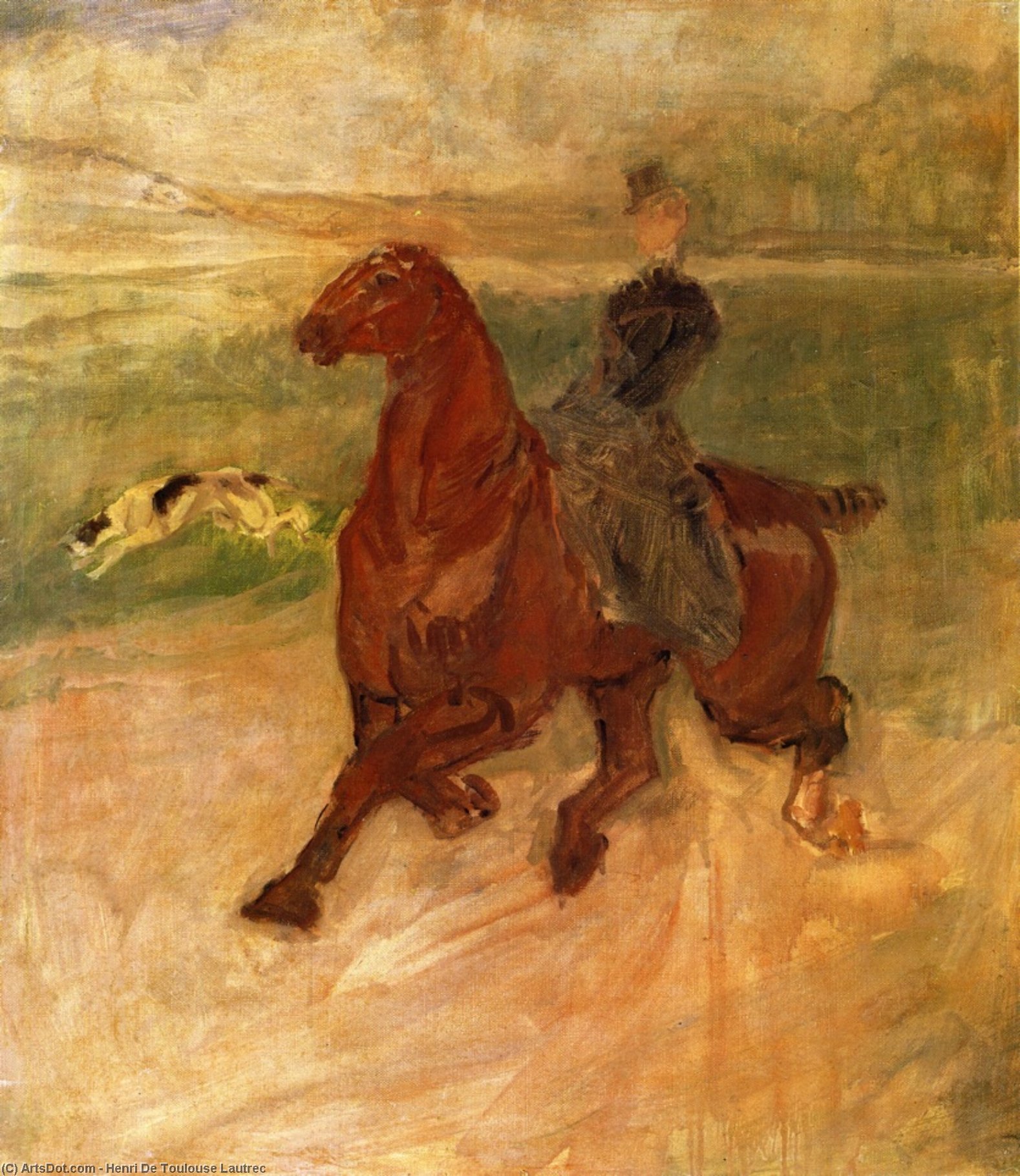
Woman Rider and Dog – Henri de Toulouse-Lautrec
Henri Marie Raymond de Toulouse-Lautrec-Montfa’s “Woman Rider and Dog” is a seminal work of Post-Impressionism, capturing the vibrant energy and decadent spirit of Parisian nightlife in 1899.
Subject Matter & Composition
The painting depicts a woman astride a horse, accompanied by her dog. The woman’s posture exudes confidence and grace as she leans slightly forward, conveying a sense of movement and dynamism. The horse is rendered with meticulous detail, showcasing Lautrec's mastery of animal anatomy.
Style & Technique
Lautrec employed a distinctive style characterized by bold outlines, flattened perspectives, and expressive brushstrokes— hallmarks of Post-Impressionism’s rejection of Impressionistic realism. He utilized thick impasto technique to build up texture on the canvas, creating palpable surfaces that capture the mood and atmosphere of the scene. The color palette is muted yet rich, dominated by earthy tones accented with splashes of crimson and ochre.
Historical Context
“Woman Rider and Dog” emerged during a period of significant social change in Paris, marked by urbanization, industrialization, and shifting artistic sensibilities. Lautrec’s fascination with the bohemian milieu—artists, performers, prostitutes, and marginalized figures—reflected broader cultural trends of his time. The painting embodies the aesthetic ideals of the Belle Époque, capturing its glamour, hedonism, and fascination with the exotic.
Symbolism & Emotional Impact
The horse symbolizes strength and nobility, while the dog represents loyalty and companionship. Together, they convey a sense of unity and resilience amidst the complexities of urban life. Lautrec’s masterful depiction captures not only the visual beauty of the scene but also its emotional resonance—a celebration of freedom, passion, and human connection. The painting invites contemplation on themes of vulnerability and fortitude.
Conclusion
"Woman Rider and Dog" remains a testament to Toulouse-Lautrec's artistic vision and his ability to distill the essence of Parisian culture onto canvas. Its enduring appeal lies in its evocative imagery, masterful technique, and profound exploration of human emotion— qualities that continue to inspire artists and collectors alike.