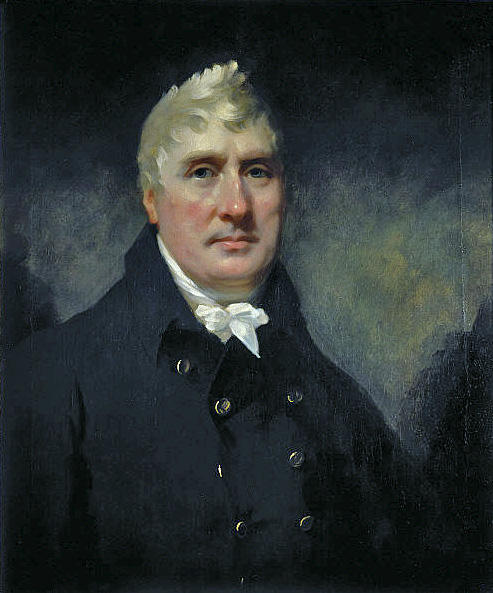
A Dignified Vision of Engineering Genius: Henry Raeburn’s Portrait of John Rennie
Henry Raeburn's 1810 portrait of John Rennie stands as a testament to Neoclassical realism—a style characterized by meticulous detail and an unwavering commitment to capturing the essence of its subject. Executed in oil on canvas, this bust-length depiction transcends mere likeness; it embodies Rennie’s intellectual prowess and quiet dignity, reflecting the burgeoning spirit of scientific inquiry during Britain's Regency era. The painting resides within the East Lothian Council collection, offering a glimpse into a pivotal moment in Scottish artistic history.
- Subject Matter: The portrait focuses squarely on John Rennie (1761–1821), a celebrated civil engineer responsible for groundbreaking projects like Telford’s Forth Bridge and the Caledonian Canal—structures that fundamentally reshaped Scotland's landscape and economy. Raeburn skillfully portrays Rennie as a man of considerable stature, conveying both physical presence and inner contemplation.
- Style & Technique: Raeburn adhered rigorously to Neoclassical principles, prioritizing clarity of form and idealized representation. His technique involved painstaking layering of glazes—thin coats of translucent paint—to achieve remarkable tonal subtlety and luminosity. This meticulous approach ensured that every nuance of Rennie’s facial expression and musculature was faithfully rendered.
The historical context surrounding the painting is crucial to understanding its significance. The early 19th century witnessed a surge in scientific advancement, fueled by figures like Rennie who championed rational thought and practical innovation. Raeburn's decision to depict Rennie not as an active engineer but as a contemplative figure speaks volumes about the artistic sensibilities of the time—a desire to elevate intellect and virtue above mere accomplishment.
Symbolism: The pose itself is deliberate, mirroring classical sculptures that celebrated heroic figures. Rennie’s gaze directs upward, suggesting ambition and aspiration—a reflection of his unwavering belief in progress and enlightenment. Furthermore, the muted palette—primarily browns and creams—contributes to an atmosphere of solemn seriousness, reinforcing the portrait's contemplative mood.
- Emotional Impact: Raeburn’s masterful execution evokes a profound sense of respect for Rennie’s intellect and character. The painting transcends mere visual representation; it communicates an intangible quality—a quiet confidence born from conviction—that resonates powerfully with viewers today. It serves as a poignant reminder that true greatness lies not only in achieving monumental feats but also in maintaining inner integrity.
Beyond its artistic merits, Raeburn’s portrait offers valuable insight into the cultural landscape of Scotland during the Regency period. Its presence within the Scottish National Portrait Gallery underscores the importance of preserving artistic heritage and celebrating figures who shaped Scotland's identity. The painting continues to inspire admiration for both artistic skill and intellectual curiosity—a legacy that extends far beyond its original creation.