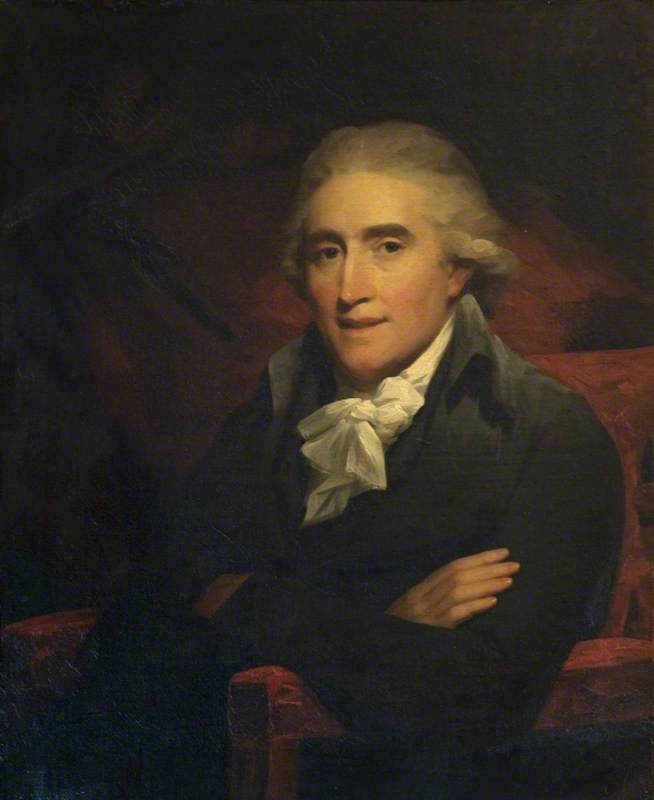
This stunning oil painting portrays Henry Erskine (1746–1817), a Scottish lawyer and Whig politician, seated elegantly on a crimson velvet chair. Raeburn's meticulous realism captures the subject’s character with subtle expression and masterful lighting, reflecting the Romantic era's emphasis on emotion and detail.
A Portrait of Dignified Reflection
In the quiet corridors of the National Trust for Scotland’s Alloa Tower collection, there exists a window into the soul of the Scottish Enlightenment. Henry Raeburn’s The Honourable Henry Erskine is far more than a mere likeness of a prominent figure; it is a profound study of character and the weight of intellectual life. Completed around 1784, this oil masterpiece captures Erskine, a distinguished Scottish advocate and Whig politician, not in a moment of theatrical grandeur, but in a state of serene, thoughtful repose. As he sits within the plush embrace of a richly upholstered red velvet chair, the viewer is invited into a private moment of contemplation that transcends the centuries.
Raeburn, a master of realism, eschews the overly idealized or dramatic flourishes common among his contemporaries. Instead, he employs a soft, diffused illumination that gently caresses Erskine’s features, creating a sense of naturalism that feels remarkably modern. This subtle technique allows for a delicate interplay of light and shadow, highlighting the meticulous textures of the era—from the crisp white collar to the expertly styled wig that speaks to the fashion of the late 18th century. The artist’s ability to render such fine detail without sacrificing the emotional depth of the subject is what elevates this work from a standard portrait to a psychological narrative.
Symbolism and the Spirit of an Era
Every element within the frame of this composition serves a deliberate purpose, weaving a tapestry of status and intellect. The deep crimson of the velvet chair acts as a powerful symbol of prestige and authority, anchoring Erskine within his high social standing. Yet, there is a subtle tension held within the subject's gaze; while he looks directly at the viewer with an air of self-assuredness, his eyes betray a mind engaged in the weighty political and constitutional debates of his time. This duality—the outward appearance of stability paired with an inner world of intense thought—perfectly encapsulates the spirit of the Scottish Enlightenment.
For the discerning collector or interior designer, this piece offers an unparalleled sense of gravitas and timeless elegance. The dark, indistinct background ensures that the subject remains the undisputed focal point, making it a commanding presence in any curated space. Whether placed in a traditional study or used as a sophisticated accent in a contemporary gallery-style room, the painting radiates a quiet confidence. It is an evocative work that does not merely decorate a wall but enriches the atmosphere of a home with history, intellect, and the enduring beauty of classical realism.