The Subject and Its Time
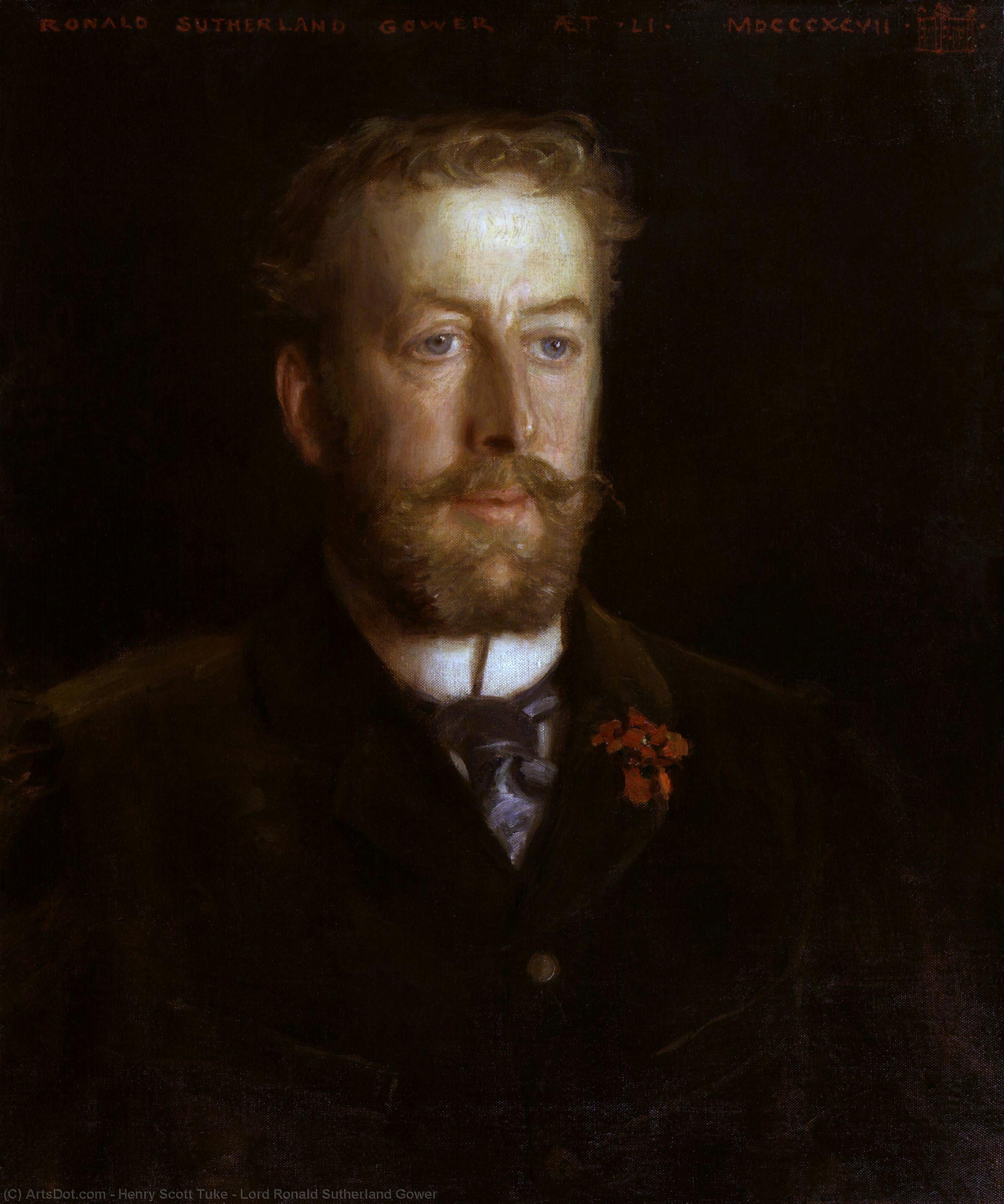
Henry Scott Tuke’s 1897 painting, “Lord Ronald Sutherland Gower,” isn't merely a likeness; it’s a carefully constructed tableau of late Victorian society. The subject himself, Lord Ronald Charles Sutherland-Leveson-Gower, was a figure of considerable standing – a sculptor renowned for his statue of William Shakespeare in Stratford-upon-Avon, and a man deeply embedded within the intellectual and artistic circles of London. Born into a distinguished lineage tracing back to the Earls of Carlisle, Gower’s life intersected with some of the most prominent artists and writers of the era, including Oscar Wilde. The painting captures him not as a flamboyant celebrity, but as a man of quiet authority, radiating an understated sense of dignity and bearing – a reflection of his social position and the expectations placed upon gentlemen of his station.
A Masterclass in Realist Detail
Tuke’s artistic approach is firmly rooted in realism, yet transcends simple representation. He employs a meticulous attention to detail, rendering every facet of Gower's appearance with remarkable precision. The artist skillfully captures the texture of his tailored suit, the subtle lines etched by age and experience on his face, and the carefully arranged poppy pinned to his lapel – a small emblem that subtly hints at remembrance or perhaps even loyalty. The brushwork is deliberately controlled, creating a sense of solidity and depth, while simultaneously conveying a remarkable level of intimacy. Notice how Tuke uses light and shadow to sculpt Gower’s form, imbuing the portrait with a palpable three-dimensionality.
Impressionistic Techniques in a Formal Setting
Despite its adherence to realism, “Lord Ronald Sutherland Gower” reveals subtle influences of Impressionism. Tuke's use of broken color and short brushstrokes creates a shimmering surface that captures the play of light on the subject’s clothing and features. The dark background serves not as mere emptiness but as a carefully considered element, drawing attention to the figure and enhancing its presence. The painting is executed in oil on canvas, a traditional medium that allowed Tuke to build up layers of color and texture with remarkable control. This combination of formal portraiture techniques with Impressionistic touches creates a captivating visual experience – a harmonious blend of tradition and innovation.
Symbolism and Emotional Resonance
Beyond the surface details, “Lord Ronald Sutherland Gower” is rich in symbolic meaning. The poppy, as mentioned earlier, carries connotations of remembrance and loyalty, potentially alluding to Gower’s service within Parliament or his connections to various noble families. The subject's stern expression – a hallmark of Victorian portraiture – suggests a man of seriousness and responsibility. Yet, there is also an underlying sense of melancholy in his gaze, hinting at the complexities and burdens of a life lived within the constraints of social expectations. The painting evokes a feeling of quiet contemplation, inviting viewers to consider not only Gower’s individual character but also the broader context of Victorian society – its values, its anxieties, and its aspirations.
A Legacy in Reproduction
Today, “Lord Ronald Sutherland Gower” stands as a testament to Henry Scott Tuke's artistic skill and his ability to capture the essence of his subjects. High-quality reproductions offer an accessible way to appreciate this remarkable portrait, bringing its beauty and historical significance into any home or gallery space. Consider commissioning a hand-painted reproduction from ArtsDot.com – a faithful recreation that preserves the painting’s original charm and detail, allowing you to experience the artistry of Tuke's vision firsthand.