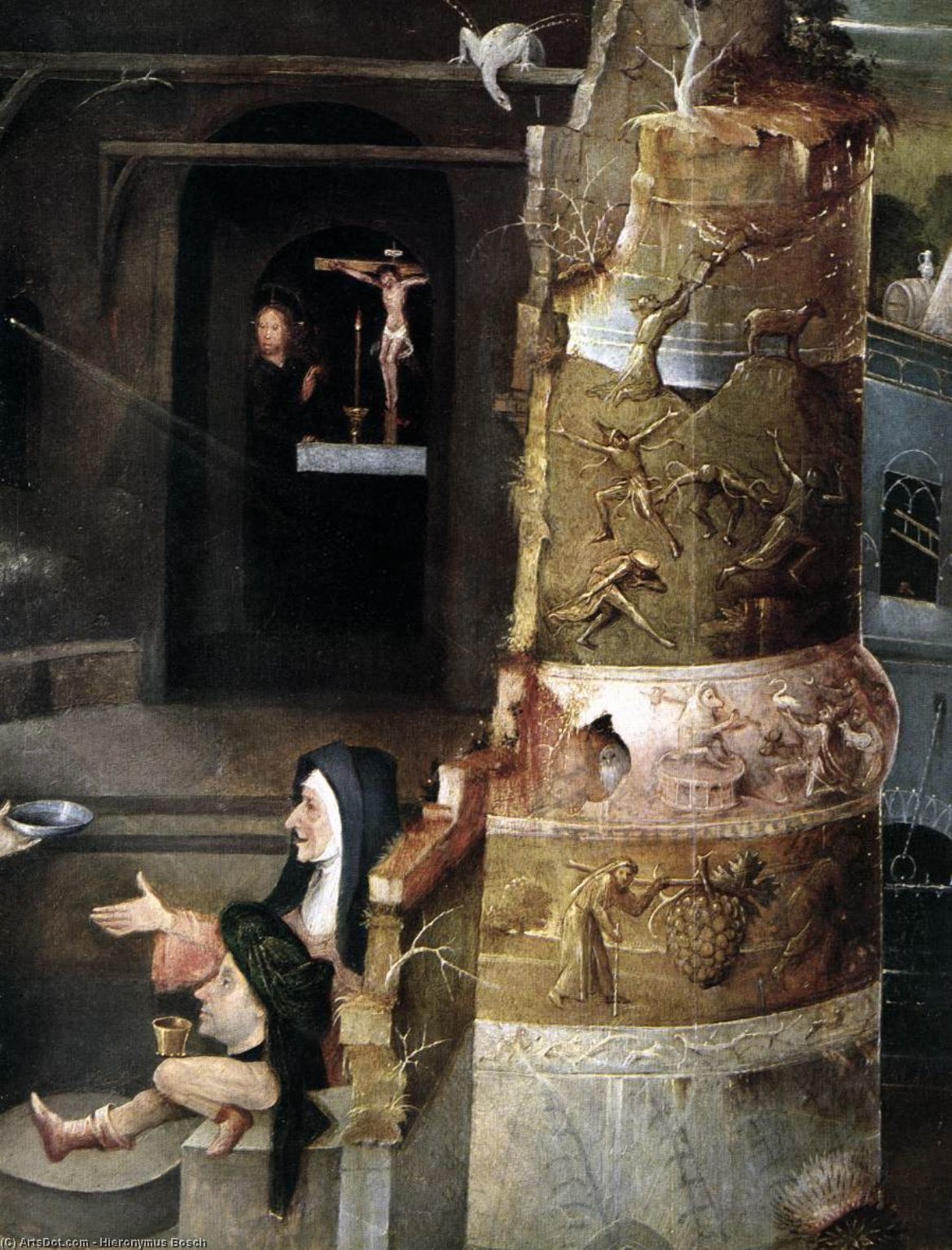
Das Mystische Spiel der Versuchung: Ein Detail aus Boschs Triptychon
Hieronymus Bosch’s “Triptych of Temptation of St Anthony” – specifically this captivating detail – is not merely a painting; it's an immersion into a world teeming with anxieties, desires, and the unsettling beauty of the late Middle Ages. Painted around 1505 in his workshop in ’s-Hertogenbosch, Bosch’s work remains one of art history’s most enduring enigmas, a testament to his singular vision and profound understanding of human psychology. This particular section offers a glimpse into the heart of this complex narrative – a man seated on the ground, seemingly lost in contemplation, surrounded by a chaotic yet strangely ordered landscape.
The figure at the center is immediately arresting. His posture suggests weariness, perhaps even despair, while his hand rests upon a cup—a potent symbol of earthly pleasures and temptations. Notice the meticulous detail in his clothing; the heavy fabrics, the intricate patterns – they speak to a world of material wealth and social status, yet simultaneously hint at the burden of those possessions. Around him swirl an array of fantastical creatures: birds, some soaring freely, others perched precariously, all contributing to the painting’s unsettling atmosphere. These aren't simply decorative elements; they are integral to Bosch’s symbolic language, representing fleeting desires, anxieties, and the constant struggle between earthly and spiritual realms.
Die Technik und der Einfluss des Netzherlandish Malers
Bosch’s technique is instantly recognizable – a masterful blend of meticulous realism and fantastical invention. He employed oil paints on panel, a medium that allowed for incredible detail and layering of color. Observe the subtle gradations in tone, particularly in the rendering of the figures' skin and clothing. This realism serves as a foundation upon which he builds his elaborate, dreamlike scenes. His use of perspective is deliberately skewed, creating a sense of disorientation and drawing the viewer into the painting’s unsettling space. Bosch was deeply influenced by the traditions of Netherlandish painting, particularly the work of Jan van Aken (his grandfather) and Anthonius van Aken (his father), both skilled artists who instilled in him a strong foundation in technique. However, Bosch quickly surpassed these influences, developing his own unique style characterized by its grotesque imagery, complex symbolism, and profound psychological depth.
Symbolik und die Interpretation der Versuchung
The “Temptation of St Anthony” is not simply a depiction of a biblical story; it’s an allegory for the human condition. The saint's temptation isn’t by demonic figures in the traditional sense, but rather by the distractions and pleasures of earthly life – represented here by the cup, the surrounding animals, and the bizarre landscape. The birds, often associated with folly and fleeting desires, are a key element. They represent the transient nature of worldly possessions and the constant pull towards indulgence. The setting itself—a desolate, almost lunar landscape—reflects the saint’s inner turmoil and his struggle to maintain spiritual purity. Bosch masterfully uses symbolism to explore themes of sin, redemption, and the eternal battle between good and evil.
Emotionale Wirkung und die Bedeutung für die Kunstgeschichte
Bosch's work continues to resonate with viewers centuries after its creation because it taps into fundamental human anxieties and desires. The painting’s unsettling atmosphere, combined with its complex symbolism, creates a powerful emotional response – a sense of unease, curiosity, and perhaps even fear. It is this potent combination that has cemented Bosch’s place as one of the most important and influential artists in Western art history. A reproduction of this detail offers an opportunity to bring this extraordinary vision into your home, allowing you to contemplate its layers of meaning and appreciate the genius of a truly unique artist. ArtsDot's hand-painted reproductions capture not only the visual details but also the emotional intensity of Bosch’s masterpiece, ensuring that his unsettling yet beautiful world continues to captivate audiences today.